
Superhero Simulator · Getting Started · Guide
Superhero Simulator Walkthrough — Gameplay, Missions and Progression
A Superhero Simulator walkthrough of the opening and the full gameplay loop: missions, mini-games, combat, skills, jobs and rent in Goldpine City.
By the New Game Wiki team · Updated 2026-10-08
On this page (11)
- The Opening: Hero Setup and Your First Morning
- Your First Missions and How the Dispatch Loop Works
- Mini-Games, Timers and the Cost of Ignoring Calls
- Combat, Villains and Chases
- The Daily Loop Between Patrols
- Skills, Progression and What 1.0 Changed
- How does a Superhero Simulator walkthrough start?
- What mission types does the game throw at you?
- Do the mini-games get easier?
- Does destroying the city matter?
- What changed in the 1.0 walkthrough compared with Early Access?
A Superhero Simulator walkthrough runs in two parallel tracks: the dispatch loop of crimes and rescues, and the daily loop of needs, jobs and rent that keeps the hero alive. The sources here cover the Early Access build and the version 1.0 launch material, so treat anything described from the older build as the shape of the systems rather than a fixed script. This page walks the opening, the mission types, the mini-games, combat, and the progression that ties them together.
The Opening: Hero Setup and Your First Morning
Character setup is quick. The creator asks for a hero name, a body and skin tone, and offers male and female bodies, although only the male hero was selectable in the builds these sources cover. You then wake up in your apartment, where a roommate pushes you toward the day and your needs are already dropping. Launch gameplay shows the productive first steps as taking a shower, eating from the fridge, and choosing a suit, mask and color scheme from the wardrobe.
Leaving the building starts the introduction to the city. A HUD bar reports the Peace level of Goldpine, which began around 93% in the recorded session, and the game explains that keeping it intact is your job. From that point on, everything you do either feeds that number or drains it.
Your First Missions and How the Dispatch Loop Works
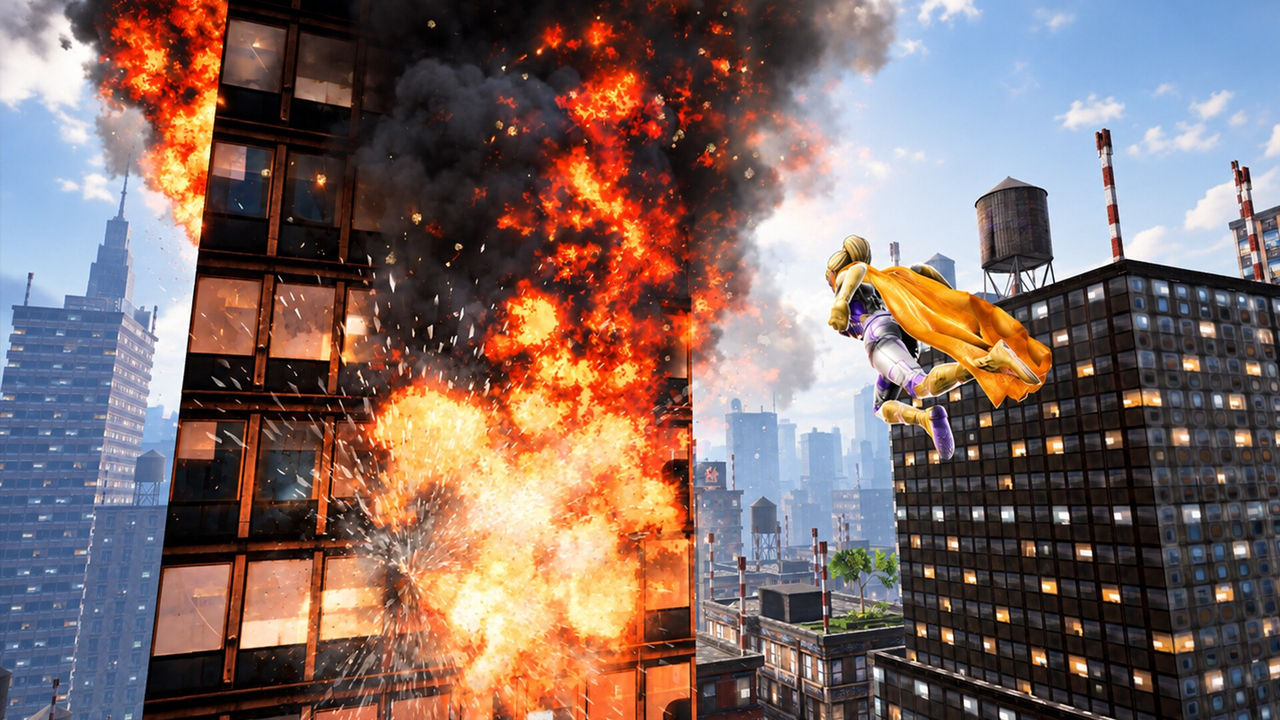
Missions arrive as dispatch calls rather than a quest log, and they spawn around you while you fly. The order is roughly fixed for the first few: a fight, then a fire, then a rescue, then a robbery, after which the game is happy to hand you several at once. Because the map is large and a call expires on a timer, choosing which one to answer is the real decision.
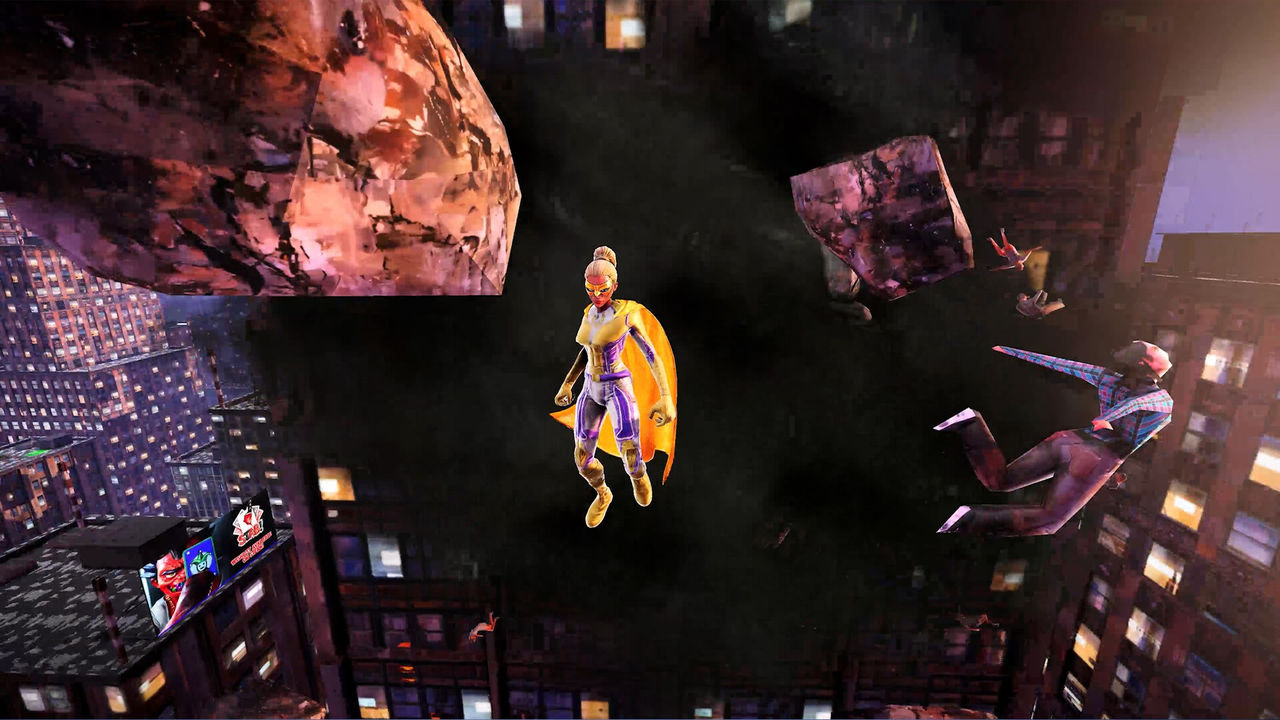
| Call type | What you actually do | Failure cost |
|---|---|---|
| Robbery or armed thugs | Land, focus the enemy and fight until none remain | Peace level drops |
| Burning building | Approach, hold the interact prompt and fill the bar | Fire spreads, peace drops |
| Injured civilian | Carry them to the hospital inside the timer | The call is lost |
| Drowning swimmer | Reach them at sea or at the docks and lift them out | Civilian dies |
| Trapped in rubble | Hold the interact prompt until the capture ring is green | Rescue fails |
| Lost child | Reach each marked location before time runs out | Child stays lost |
| Hostage situation | Stop a moving marker in the green zone using the jump key | Hostage dies |
| Bomb threat | Stop the sweeping marker in the highlighted line before detonation | Explosion, peace drops |
Mini-Games, Timers and the Cost of Ignoring Calls
The mini-games are all timing checks with the same base idea dressed differently. Bomb defusal asks you to stop dots inside a yellow line; hostage rescues ask you to stop a bar inside a green zone; fires and rubble rescues invert it by asking you to hold a prompt until a bar fills. Launch gameplay showed the windows tightening as the session progressed, and a failed bomb or hostage call costs you the civilian and a chunk of city peace. That account comes from a single recorded playthrough, so treat the exact prompts and windows as to confirm.
The pacing problem is visible in the same footage: crisis events can spawn two or three at a time while you can realistically answer one, so failures stack up without a mistake on your part. Community feedback asked for slider settings to stagger crises and to tune the peace impact of successes and failures, alongside adjustable drain rates for the personal needs. Those requests are documented player feedback, not confirmed features.
Combat, Villains and Chases
Combat is simple by design: lock on, hit, block, and dodge when the visual warning appears above your head. The warning borrows the spider-sense idea from superhero games and, as a Steam reviewer noted, it is visual only, with no matching audio cue for an incoming hit or a successful dodge. Villains escalate from street thugs to named chases with their own dialogue, and the 1.0 release added boss battles and combat finishers on top of that structure.
Chases are the most polarizing part. A villain run has you follow a target through the city while trying not to level the scenery, and one Steam thread is entirely about how punishing the vehicle chases feel. Expect to lose peace level the first few times while you learn how the flight model turns.
The Daily Loop Between Patrols
Between calls you are a civilian with a body that decays. Needs run down on their own, and the documented ways to push them back up are sleeping, eating food bought from your phone, showering, and buying better meals once you can afford delivery. Money comes from jobs, and the documented work is taxi driving, burger flipping and cashier shifts, with taxi fares paying out in the low hundreds of Gollars for a few deliveries in the recorded session.
Rent is the deadline that forces all of it. A Steam Community answer states the charge lands automatically every 5 days at 300 Gollars, and the in-game eviction notice in the recorded session gives you five days to clear the balance or leave. Both figures come from single sources, so treat the numbers as to confirm against your own save. That combination is what makes the life-sim half matter instead of being background noise.
- Answer a mix of calls rather than chasing one type, because peace level is the sum.
- Bank rent before buying cosmetics or better gear.
- Sleep when energy bottoms out; eating alone is a short-term top-up.
- Fly above buildings where possible; collisions are the main peace drain you control.
Skills, Progression and What 1.0 Changed
Progression is split across panels instead of one level bar. Launch gameplay shows a skills panel with points to spend, an achievements panel that also teaches techniques, and a villains panel that fills in as you meet them. Movement upgrades arrived this way in the recorded session, including a dodge and a dash on top of flight. The skill points page covers the one documented bug where points could not be spent.
The 1.0 release is what the walkthrough above is building toward, and the Steam announcement lists it plainly: Story Mode progression and new challenges, boss battles, combat finishers, Hero Rank progression, a day/night cycle, adjustable Living City settings, performance work and bug fixes. For the systems ahead of a first session, see the guide, the controls and the map.
FAQ
How does a Superhero Simulator walkthrough start?
In the apartment. You create the hero, pick a body and skin tone, then wake up with your needs already draining. The documented first steps are taking a shower, eating something from the fridge, and picking a suit and mask from the wardrobe before you go outside. Only then does the dispatch loop begin.
What mission types does the game throw at you?
The documented set is robberies, burning buildings, injured civilians who need a lift to hospital, drowning swimmers, people trapped in rubble, lost children, hostage situations, defusal scenarios and villain chases. They appear as dispatch calls while you travel, and several can be live at the same time, so you cannot answer everything.
Do the mini-games get easier?
No, they escalate. Bomb defusal asks you to stop a marker in a highlighted zone on a timer, hostage rescues use the same timing idea with a narrower window, and fire fighting wants you to hold an interact prompt until a bar fills. Launch gameplay showed the windows tightening as more crimes spawn at once, and failing one costs city peace.
Does destroying the city matter?
Yes. Flying through buildings and wrecking traffic lowers the city peace level, which the HUD tracks as a percentage. Early gameplay started around 93% and dropped into the sixties after careless flying, so the game treats collateral damage as a real cost rather than decoration.
What changed in the 1.0 walkthrough compared with Early Access?
The full release added Story Mode progression with new challenges, boss battles, combat finishers, Hero Rank progression, a day/night cycle and adjustable Living City settings. The earlier Early Access build the walkthrough sources cover had the open-world loop and mini-games but no story structure to follow.
More in Getting Started
More getting started pages in Superhero Simulator.
- Superhero Simulator Guide — Where to Play and How to StartGuideUpdated 2026-10-08
References
- Superhero Simulator — Steam Community Guides
- Superhero Simulator - Part 1 - The Beginning — YouTube
- SUPERHERO SIMULATOR Gameplay Walkthrough FULL GAME No Commentary PART 1 — YouTube
- Superhero Simulator on Steam
Facts on this page are compiled from the references above. Items marked "to confirm" are single-source and not yet verified.