
OpenFront · Game Guides · Guide
OpenFront Guide — How to Play and Win Your First Games
An OpenFront guide to your first matches: spawn choice, the 42% troop-growth sweet spot, annexing, early builds, alliances and the late-game nuclear race.
By the New Game Wiki team · Updated 2026-10-04
On this page (12)
- What You Actually Do in a Match
- Spawn Choice: Terrain, Neighbours and Water
- The 42% Troop Rule
- Early Builds: City, Port or Factory
- Bots, Nations and Annexing
- Alliances, Betrayal and the Late Game
- Quick-Start Checklist
- How many players are in one OpenFront match?
- Why should I keep my troops near 42% of maximum?
- What is annexing in OpenFront?
- What should I build first in OpenFront?
- Can I play OpenFront for free?
OpenFront is a massively multiplayer real-time strategy game where hundreds of players fight over one shared world map at the same time. You begin with a small patch of land, expand into unclaimed territory, build an economy, and try to be the side left standing when one player crosses the map's conquest threshold. This OpenFront guide covers the decisions that actually decide a first match: where you spawn, how many troops you commit, what you build, and when to make friends.
What You Actually Do in a Match
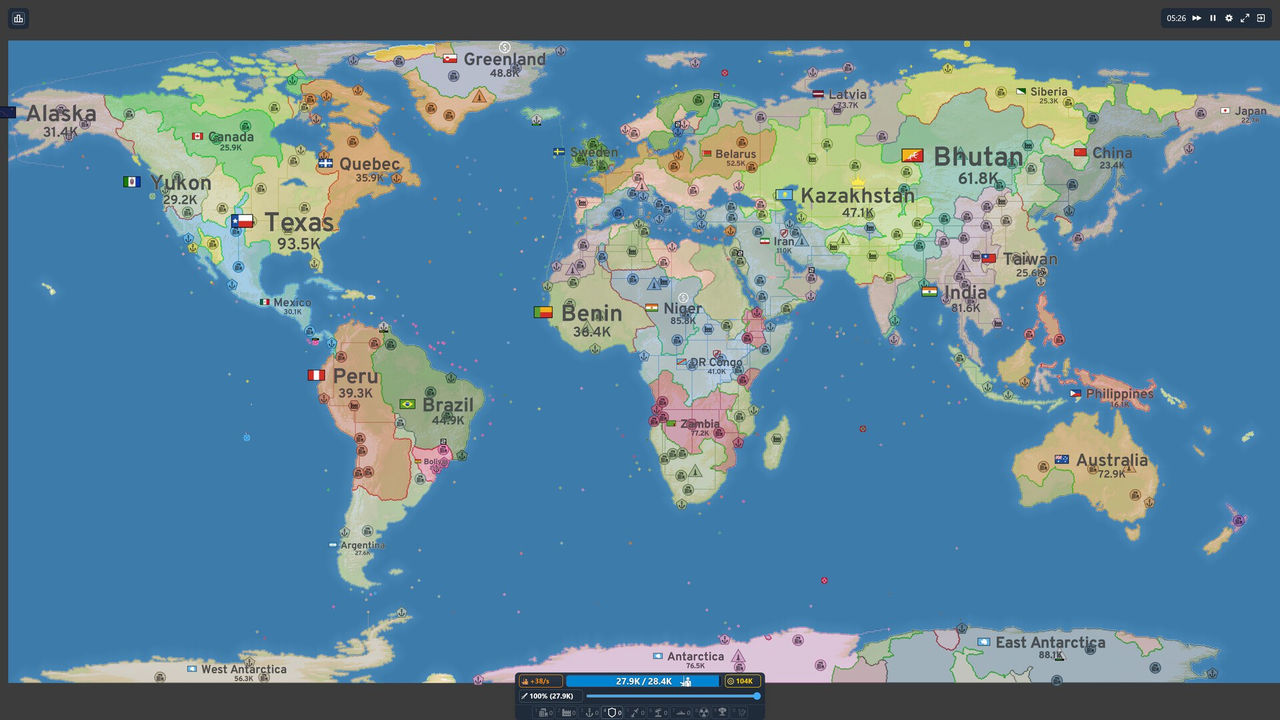
Every match follows the same broad shape. You capture wilderness first, then push into AI tribes, then handle the stronger AI nations, and finally share borders with real players where diplomacy matters as much as army size. A game ends when one side controls enough of the map; the community wiki puts the common threshold at around 80% of the map conquered. Matches run on the same live client as the Steam release, and the official lobby browser rotates free-for-all, team and humans-versus-nations modes with optional modifiers such as 2x gold, compact maps or a large starting treasury.
Spawn Choice: Terrain, Neighbours and Water
Spawn selection is the one decision you make before the game starts, and it is worth the few seconds it takes. Look for three things: green terrain, because green is the easiest elevation to capture and lets you expand with fewer troops; nearby bots rather than nearby real players, because tribes are the cheapest early targets and they hand over land and gold; and water access, because a coastline or river is what later lets you build ports, the strongest economic building in the game. You can hold the space bar at any time to read the terrain under your cursor.
The 42% Troop Rule
Your army does not grow at a constant speed. The OpenFront.io community wiki documents a population-growth formula that is optimised at roughly 42% of your maximum population, meaning growth is fastest near that share and slower both above and below it. The practical version: do not spam attacks until your bar is empty, and do not sit at maximum troops either. The official client shows a troop-growth number that stays green while you are approaching peak growth and turns orange once you have passed the sweet spot, which is the easiest in-game cue to follow.
Early Builds: City, Port or Factory
Cities raise your maximum troop capacity, so they are the backbone of a growing army. Ports generate trade income from shipments that sail to other players' ports, and factories do the same for landlocked economies through rail and trains. Ports and factories share a single price ladder, so buying one raises the cost of the next of either type. The exact opening costs documented by the community are:
| Building | 1st | 2nd | 3rd | 4th and later |
|---|---|---|---|---|
| City | 125,000 | 250,000 | 500,000 | 1,000,000 |
| Port or Factory (shared ladder) | 125,000 | 250,000 | 500,000 | 1,000,000 |
| Defense Post | 50,000 | 100,000 | 150,000 | 200,000 then 250,000 |
A workable opening, based on the widely watched beginner walkthrough, is to alternate city and economy building: city, port, city, port if you have a coast, or city, factory, city, factory if you are landlocked. Gold sitting unused is the common beginner mistake, because the sooner a building is finished the sooner it pays for itself.
- Coastal spawn: prioritise ports, then keep building cities on the same rhythm.
- Landlocked spawn: factories replace ports and connect your cities and neighbours by rail.
- Contested border: a defense post is cheap insurance before you spend on economy.
- Never bank for no reason: if you are saving toward a specific structure, set a deadline.
Bots, Nations and Annexing
After the wilderness is gone you share borders with AI tribes, then AI nations, then real players. Tribes are the easiest conquests; nations behave more like players, generate their own troops, build structures and will attack you if your army looks weaker than theirs. The mechanic worth planning around is annexing: if you fully surround an opponent, it is instantly absorbed and you take all of its remaining land and gold for no troop cost. Better players plan enclosures instead of grinding the closest target, because an annex is free territory.
| Neighbour | Threat | Best first response |
|---|---|---|
| Tribe | Low; passive early target | Conquer for cheap land and gold |
| Nation | Medium to high; builds and attacks weakness | Ally or out-scale before fighting |
| Real player | Variable; can read your every move | Ally the strong, punish the weak |
| Surrounded pocket | Annex bait | Close the ring and absorb it free |
That positioning-first mindset carries into the player phase. Before committing a large attack, check whether another border is left undefended, because the most common way to lose a winning game is to empty one front while a third party walks into the other.
Alliances, Betrayal and the Late Game
Alliances are temporary agreements, not friendships. An accepted alliance stops both sides attacking each other for a set window and protects your trade ships from an ally's warships. Breaking one marks you a traitor for 30 seconds, halves your defence and lets every other player break their alliance with you penalty-free, which is why it is rarely worth breaking one unless you already hold a dominant position. In the late game the biggest weapons appear: missile silos launch atom bombs, hydrogen bombs and MIRVs, while SAM launchers intercept incoming missiles. A focused player can survive a smaller army with a stronger economy, because economy is what buys the cities, silos and SAMs that decide the endgame.
Quick-Start Checklist
- Spawn on green terrain, near bots, and beside water if the map allows it.
- Keep the troop bar near 42% of maximum and watch the growth number's colour.
- Build cities early, then alternate economy buildings on the shared price ladder.
- Look for annexations rather than grinding the nearest target.
- Spend gold as soon as it has a purpose instead of hoarding it.
- Check every border before a big push, and treat alliances as expiring deals.
- Screen your cities with SAMs once missiles start flying.
FAQ
How many players are in one OpenFront match?
OpenFront is built around hundreds of players sharing a single world map in real time. The Steam page describes a massively multiplayer real-time strategy game pitting hundreds of players against one another, and the official client shows lobbies such as Free for All, 3 teams of 8 and 50 Humans vs 50 Nations. The web version reports over one million monthly active players, so match sizes vary with the map and mode.
Why should I keep my troops near 42% of maximum?
Population growth in OpenFront is not linear. The community-maintained attacking guide documents a growth formula that peaks at roughly 42% of your maximum population, which is why experienced players hover near that share rather than emptying the bar or sitting at the cap. The official client gives you a simpler read: while your troop-growth number is green you are still approaching peak growth, and it turns orange once you pass the sweet spot.
What is annexing in OpenFront?
Annexing happens when you completely surround another side, whether it is a tribe, a nation or another real player. Instead of fighting tile by tile you absorb all of its remaining territory and collect its gold without spending troops. The widely watched beginner guide calls it one of the strongest mechanics in the game because it converts positioning, not army size, into free land.
What should I build first in OpenFront?
Cities, ports and factories are the three early economic structures, and cities are usually first because each one raises your maximum troop capacity. On the community wiki the first city costs 125,000 gold, the second 250,000, the third 500,000 and later ones 1,000,000. Ports and factories share one price ladder and both generate trade income, so a coastline spawn usually favours ports while a landlocked spawn leans on factories.
Can I play OpenFront for free?
Yes. The browser client at openfront.io is free to play and is where over one million monthly players are reported, while the paid Steam version adds faster launches, better performance, Steam achievements and exclusive cosmetics for $6.99 during Early Access. Both share the same multiplayer world, so the Steam purchase is a convenience and cosmetics upgrade rather than a different game.
More in Game Guides
More game guides pages in OpenFront.
- OpenFront Tips — Habits That Win More MatchesGuideUpdated 2026-10-04
References
- OpenFront on Steam
- OpenFront — official web client
- Attacking Guide - OpenFront.io Wiki - Miraheze
- OpenFront Beginner Guide (2026) | How to Win Your First Games — YouTube
- OpenFrontIO Releases — GitHub
Facts on this page are compiled from the references above. Items marked "to confirm" are single-source and not yet verified.