
OpenFront · Buildings · Guide
OpenFront Buildings — Categories, Prices and Upgrades
OpenFront buildings explained: the four build categories, placement and upgrade rules, the full gold price table, and the defence and missile structures.
By the New Game Wiki team · Updated 2026-10-04
On this page (9)
- What Counts as a Building
- Placement and Upgrade Rules
- Economic Structures
- Military, Ships and Missiles
- How many building categories does OpenFront have?
- How far apart do buildings have to be in OpenFront?
- Can you upgrade buildings in OpenFront?
- What does a defense post actually do?
- How do missile silos and SAM launchers work?
OpenFront buildings are the interface between gold and power: every city, port, factory, defence post and missile in the game is bought from one build menu and placed on tiles. Because prices scale with how many you already own, and because a few structures unlock others, the order you buy them in matters as much as the amounts. This page covers the four categories, the placement and upgrade rules, and the full gold cost of every structure.
What Counts as a Building
The buildable list is small and stable. Economic structures are cities, factories and ports; military structures are defence posts, missile silos and SAM launchers; warships are the one ship bought from the menu; and the missiles, atom bombs, hydrogen bombs and MIRVs, are fired from a silo rather than placed directly. Two more units never appear in the menu: transport ships, created by attacking across water, and trade ships, which spawn automatically from ports. You can open the menu by right-clicking (or long-pressing on mobile) a tile, or by using the number-key shortcuts shown on the controls page.
Placement and Upgrade Rules
Structures take a few seconds to construct, with a progress bar, unless the lobby has Instant Build enabled, and they must be at least 15 tiles apart according to the current community wiki. Some have extra rules: ports need a coastal tile, warships launch onto water, and missiles need a silo in range. Most structures can be upgraded by building the same structure on top of an existing one, which raises its level and makes it more effective, whether that means a larger troop cap, a wider SAM radius or more silo ammunition. Upgrade levels also make you look like a juicier target to the AI nations.
| Structure | 1st | 2nd | 3rd | 4th | Later | Upgradable |
|---|---|---|---|---|---|---|
| City | 125,000 | 250,000 | 500,000 | 1,000,000 | 1,000,000 | Yes |
| Factory | 125,000 | 250,000 | 500,000 | 1,000,000 | 1,000,000 | Yes |
| Port | 125,000 | 250,000 | 500,000 | 1,000,000 | 1,000,000 | Yes |
| Defense Post | 50,000 | 100,000 | 150,000 | 200,000 | 250,000 | No |
| Missile Silo | 1,000,000 | 1,000,000 | 1,000,000 | 1,000,000 | 1,000,000 | Yes |
| SAM Launcher | 1,500,000 | 3,000,000 | 3,000,000 | 3,000,000 | 3,000,000 | Yes |
| Warship | 250,000 | 500,000 | 750,000 | 1,000,000 | 1,000,000 | No |
Ports and factories share one ladder, so the second structure of either kind already costs 250,000. If a lobby enables Infinite Gold, every structure is free for human players in single player and private matches.
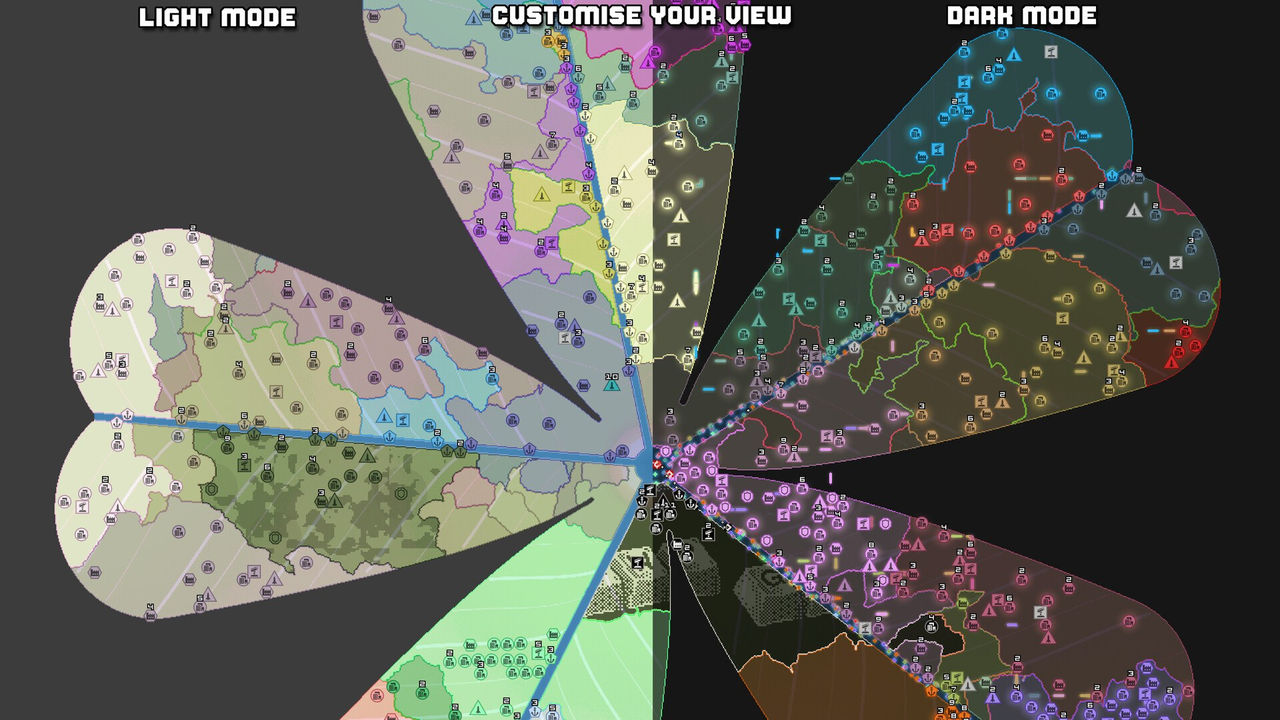
Economic Structures
Cities are the backbone: they raise maximum population, which is the ceiling your army grows into, and the current community wiki puts the increase at 250,000 per level while the older wiki recorded a much smaller figure. Treat the exact number as patch-sensitive. Ports must sit on a coast, spawn trade ships that pay both ends of the route and are required before any warship can be built. Factories are the inland answer, linking cities and ports by rail and spawning trains that pay every station they pass. None of the three is glamorous alone, but together they fund everything else.
- City: raises the army ceiling; buy early and often.
- Port: coastal only; income plus the warship unlock.
- Factory: inland income; strongest where several neighbours will connect.
- Shared ladder: alternating port and factory purchases gets expensive fast, so pick a lane early.
Military, Ships and Missiles
Defence posts are the cheapest border upgrade and the only non-upgradable structure. Missile silos gate the entire nuclear tree and cost a flat million each. SAM launchers shoot down incoming warheads, with the current wiki describing roughly nine-second interceptions and a radius that grows with level. Warships launch from a port, patrol, and capture enemy trade ships as well as sinking transport ships and other warships; the current wiki gives them 1,000 HP and 250-damage shells with veterancy over their service life.
| Missile | Cost | Note |
|---|---|---|
| Atom Bomb | 750,000 | Small blast, good against clustered structures |
| Hydrogen Bomb | 5,000,000 | Large blast that destroys everything in the area |
| MIRV | 25,000,000 plus 15,000,000 per earlier MIRV | Splits into many warheads across a target's whole territory |
- Silo first: no silo, no missile, and each launch puts it on cooldown.
- SAM before silo: a silo without interception invites a counter-strike you cannot answer.
- Spread the cluster: one hydrogen bomb can erase a tight group of cities or ports.
- Level matters: upgraded structures are stronger and more tempting, so defend the ones you level.
FAQ
How many building categories does OpenFront have?
Four. The community wiki sorts buildables into economic structures with round icons that sit on land, military structures with square icons that also sit on land, ships launched onto water, and missiles with triangle icons that are fired from a missile silo. Transport ships and trade ships are not bought from the build menu at all: transports are created by attacking across water and trade ships spawn automatically from ports.
How far apart do buildings have to be in OpenFront?
The current community wiki states that structures must be at least 15 tiles apart, and that some have extra placement rules of their own. Ports need a coastal tile, warships are launched onto water, and every structure takes a few seconds to finish while a progress bar runs. Private and single-player lobbies can enable an Instant Build setting that removes the construction delay entirely.
Can you upgrade buildings in OpenFront?
Most of them, yes. Building the same structure on top of an existing one raises its level, making it more effective, and the current community wiki notes that higher levels also count toward the AI nations' assessment of how attractive a target you are. Defense posts are the documented exception: they cannot be upgraded, and their price instead climbs in 50,000 steps to a 250,000 cap.
What does a defense post actually do?
It turns a border into an expensive fight. The current community wiki describes a 30-tile radius where attackers lose five times as many troops per tile and advance three times slower, while the older Mirage wiki describes a 40-tile zone that multiplies attacker losses by six and cuts attack speed by 66%. The two sources disagree on the numbers, so treat the exact figures as patch-sensitive, but both agree the effect is strong and does not stack from multiple posts on one tile.
How do missile silos and SAM launchers work?
A missile silo is required to launch atom bombs, hydrogen bombs and MIRVs, and it costs 1,000,000 gold each. SAM launchers shoot down incoming missiles and cost 1,500,000 for the first and 3,000,000 for each one after. The current community wiki gives the SAM a radius of about 70 tiles at level one, growing toward a cap of 150, and a cooldown of roughly nine seconds between interceptions, with upgrades improving both range and ammunition.
References
- Buildings - OpenFront.io Wiki - Miraheze
- Buildings
- Gold - OpenFront.io Wiki - Miraheze
- OpenFront — official web client
- OpenFront on Steam
Facts on this page are compiled from the references above. Items marked "to confirm" are single-source and not yet verified.