
OpenFront · Mechanics · Guide
OpenFront Doomsday Clock — Rules, Waves and Counterplay
OpenFront Doomsday Clock explained: the battle-royale doom zone, its ten-minute grace period, the troop drain floor, and how to outlast the squeeze.
By the New Game Wiki team · Updated 2026-10-04
On this page (8)
- What the Doomsday Clock Is
- How the Doom Zone Works
- Surviving and Winning Under the Clock
- What is the Doomsday Clock in OpenFront?
- Is there a grace period before the Doomsday Clock starts?
- How much damage does the Doomsday Clock do?
- Do doomed warships return to port during the Doomsday Clock?
- Does the Doomsday Clock work the same in team games?
The OpenFront Doomsday Clock is the game's answer to the late-game stalemate. Added in Update 33.0 and part of the public modifier rotation, it drops a shrinking battle-royale zone onto the map and steadily drains the sides it judges doomed. That changes the endgame from a grinding siege into a race against the clock. This page covers what the modifier does, how the waves work, and the counterplay that keeps you on the right side of the shrink.
What the Doomsday Clock Is
The modifier is a zone game, not a one-off event. A shrinking doom zone closes in over the course of a match, and the sides judged to be doomed lose troops and warships over time. It is part of the public modifier rotation, which means you can run into it without opting in, and the official client lists it among the options hosts can enable when creating a lobby. Its design goal is explicit in the community documentation: break late-game stalemates that would otherwise leave several strong players unable to convert a lead into a win.
- It can appear uninvited. The modifier sits in the public rotation, so you may meet it without choosing it.
- It drains, it does not delete. The documented floor keeps a doomed side alive but crippled.
- It rewards finishing. Deactivated once a winner exists, in Update 34.0.
- It changes the map, not the rules, so terrain and combat maths still decide every fight inside the zone.
How the Doom Zone Works
The mechanics are a sequence of soft landings rather than a single hard cut, which gives you time to react if you read it early.
| Element | Documented behaviour |
|---|---|
| Grace period | Ten minutes at the start of the match before the clock engages |
| Pressure pattern | A wave-based squeeze that ramps up later to break stalemates |
| Troop drain | Floored at 5% of a side's maximum, so doomed sides are crippled, not deleted |
| Warship decay | Doomed warships lose strength too, at a gentler but steeper rate |
| Warship position | Doomed warships stay out on patrol rather than idling at port |
| Team treatment | Teams are judged against the same bar as solo sides |
| End condition | The clock is deactivated once the game has a winner (Update 34.0) |
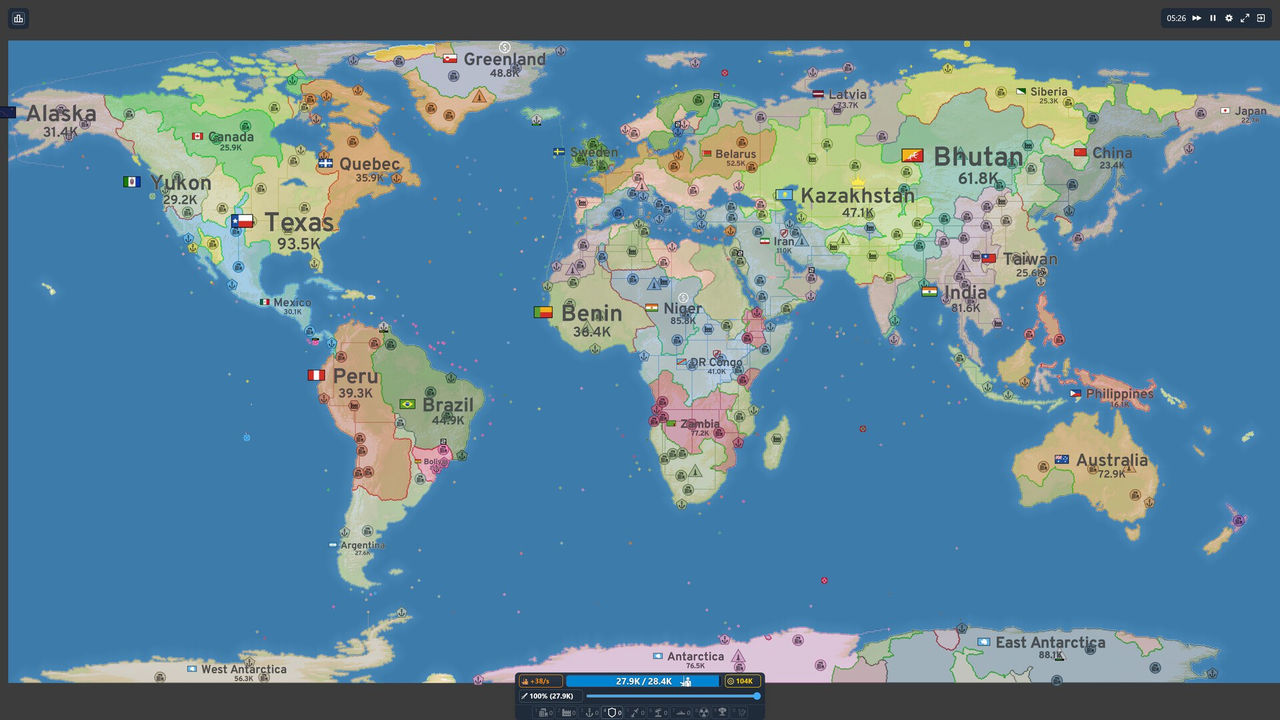
The 5% floor is the detail that matters most for planning. Because the drain cannot take you below a fraction of your maximum, a doomed side is not simply erased; it is put on a clock of its own, which means the fight is about whether you can convert your remaining army into territory or a finishing strike before the pressure compounds.
Surviving and Winning Under the Clock
- Read the zone early. The grace period is your information window; decide whether you are inside or outside the safe area before the waves begin.
- Do not sit on a doomed fleet. Warships that stay out on patrol keep decaying, so commit them or accept the loss.
- Trade distance beats trade volume. If you are doomed, long trade routes are at risk from both the clock and raiders, so favour shorter, defensible income.
- Convert troops into land fast. The drain hits a percentage of maximum, so spending troops on expansion and annexation removes value the clock would otherwise take.
- Use the pressure on others. A neighbour judged doomed is on a timer; attacking them while the wave builds can finish what the zone started.
- Finish before the winner condition. Once a winner is decided the clock deactivates, so a decisive push ends the pressure entirely.
| Your situation | Best move under the clock |
|---|---|
| Outside the safe zone, troops intact | Attack outward immediately to reach safe land |
| Outside the safe zone, fleet at sea | Recall and commit the fleet rather than let it decay |
| Inside the safe zone, neighbour doomed | Push the doomed side while their drain is compounding |
| Team game | Coordinate one shared push, because teams are judged on the same bar |
FAQ
What is the Doomsday Clock in OpenFront?
It is a battle-royale style zone modifier added in Update 33.0 and part of the public modifier rotation, so it can appear in ordinary matches. When active, a shrinking doom zone closes in over the course of the game and the sides judged to be doomed steadily lose troops and warships. Its purpose is to break late-game stalemates that would otherwise drag on with nobody able to finish the map.
Is there a grace period before the Doomsday Clock starts?
Yes. The community wiki on the modifier states that a ten-minute grace period holds the clock off at the start of a match, so the opening and early expansion are not distorted by the zone. After the grace period ends, a wave-based squeeze ramps up in stages rather than applying one sudden effect, which gives players a window to reposition and spend before the pressure peaks.
How much damage does the Doomsday Clock do?
It drains rather than deletes. The documented troop drain is floored at 5% of a side's maximum, so a doomed player is crippled without being instantly wiped to zero. Warships decay alongside troops for doomed sides at a gentler but steeper rate of attrition, which means a doomed player also loses the naval screen that would normally protect their trade routes and coasts.
Do doomed warships return to port during the Doomsday Clock?
No. The wiki notes that doomed warships stay out on patrol instead of idling at their ports, which raises the stakes of being caught on the wrong side of the zone. A fleet that would normally retreat and repair keeps taking attrition in place, so the correct play is to decide early whether to spend ships aggressively or bring them somewhere they can still matter.
Does the Doomsday Clock work the same in team games?
Teams are judged against the same bar as solo sides, according to the community wiki, so being on a team does not exempt you from the doom zone. One important change landed in Update 34.0: the clock is deactivated once the game has a winner, so it can no longer keep draining players after the match has effectively been decided.
More in Mechanics
More mechanics pages in OpenFront.
- OpenFront How to Beat Hard AI — Scaling and TacticsGuideUpdated 2026-10-04
References
Facts on this page are compiled from the references above. Items marked "to confirm" are single-source and not yet verified.