
Olympus 2249 · Getting Started · Guide
Olympus 2249 Guide — Karmic Types, 35 Perks and Turn-Based Combat After Olympus 2207
An Olympus 2249 guide to the five Karmic Types, how to spend 35 perks, turn-based combat with hazards and limb aiming, and what Act 1 of 3 means.
By the New Game Wiki team · Updated 2026-10-08
On this page (10)
- What Olympus 2249 Is, and What Olympus 2207 Is Not
- Karmic Types: Five Worldviews That Gate Content
- Perks and Specializations: A Framework for the 35 Perks
- Turn-Based Combat: Positioning, Hazards and Limb Aiming
- Early Access: What Act 1 of Three Means for You
- What do the Karmic Types actually do in Olympus 2249?
- How many perks are there and how should I spend them?
- Is Olympus 2249 turn-based like Fallout?
- How much of Olympus 2249 do I get in Early Access?
- Do I need to have played Olympus 2207 first?
An Olympus 2249 guide comes down to four decisions: which of the five Karmic Types you play, where the 35 perks go, how you use the turn-based battlefield, and whether you want to buy into an Early Access build that ships with only the first of three story acts. This page works through all four in the order you meet them, and it uses the official Steam description, the developer's own Early Access notes and the public dev diaries rather than guesswork. The predecessor, Olympus 2207, is background reading only: the developers describe Olympus 2249 as a standalone story, so nothing about the old mod's balance carries over.
What Olympus 2249 Is, and What Olympus 2207 Is Not
Olympus 2249 is an isometric post-apocalyptic cRPG set in a brutal dieselpunk world, built around the idea that your Karmic Type shapes dialogue, quests and story. It is single-player only, it is turn-based rather than real-time, and it launched on Steam on October 6, 2026 at $19.99 on Windows in Early Access. The store genres are Adventure, Indie, RPG and Early Access, with CRPG, Choices Matter, Turn-Based Combat, Multiple Endings and Dark Humor among the most common player tags.
Olympus 2207 is a different product in the same bloodline. It began as a total conversion mod for Fallout 2 and grew into a full standalone release, and the same team now works as Dieselship Studio. When the sequel was first announced, the pitch was explicit: it would be pretty stand-alone, and it would not be another Fallout 2 total conversion but a full-featured commercial game in its own right. The developer's own one-line summary of the difference between the mod and this game is that everything changed except the lore, which is the right way to read both: shared setting, separate systems and separate numbers.
| Choice you make | What it changes | Documented effect |
|---|---|---|
| Karmic Type (one of five) | Dialogue lines, quests and story | People react differently; some quests only open for a specific karmic type |
| Karma drift during play | Access to quests and locations | A faction can close itself to you and you may lose access to an entire location |
| Peaceful specialization (five options) | Dialogue branches and non-combat solutions | Each one unlocks new dialogue options and new ways to solve problems |
| Faction standing | Quests and whole locations | A pure good character cannot join the caste of ruthless warriors, per the developer |
Karmic Types: Five Worldviews That Gate Content
The official page states that your Karmic Type, one of five, shapes the entire playthrough, and that you can start as a Moralist, an Asshole, or somewhere in between. Press coverage quoting the announcement names the two ends of that range, but the full list of five names is not documented in the sources used here. What matters mechanically is that karma is not a label you lock in at creation: it shifts with your choices, and the developers describe the character who starts the story as not having to be the person who finishes it.
The developer has explained the dialogue side in more detail on the Steam forums. Dialogue options depend on your karma, so you have access both to responses tied to your own archetype and to the two adjacent archetypes, which is how you migrate your worldview over a run instead of jumping between extremes. You also see options tied to the non-combat specialization you chose at creation, plus situational choices triggered by holding a specific item or standing in a particular situation. Quests and dialogue feed karma, and karma feeds back into quests and dialogue.
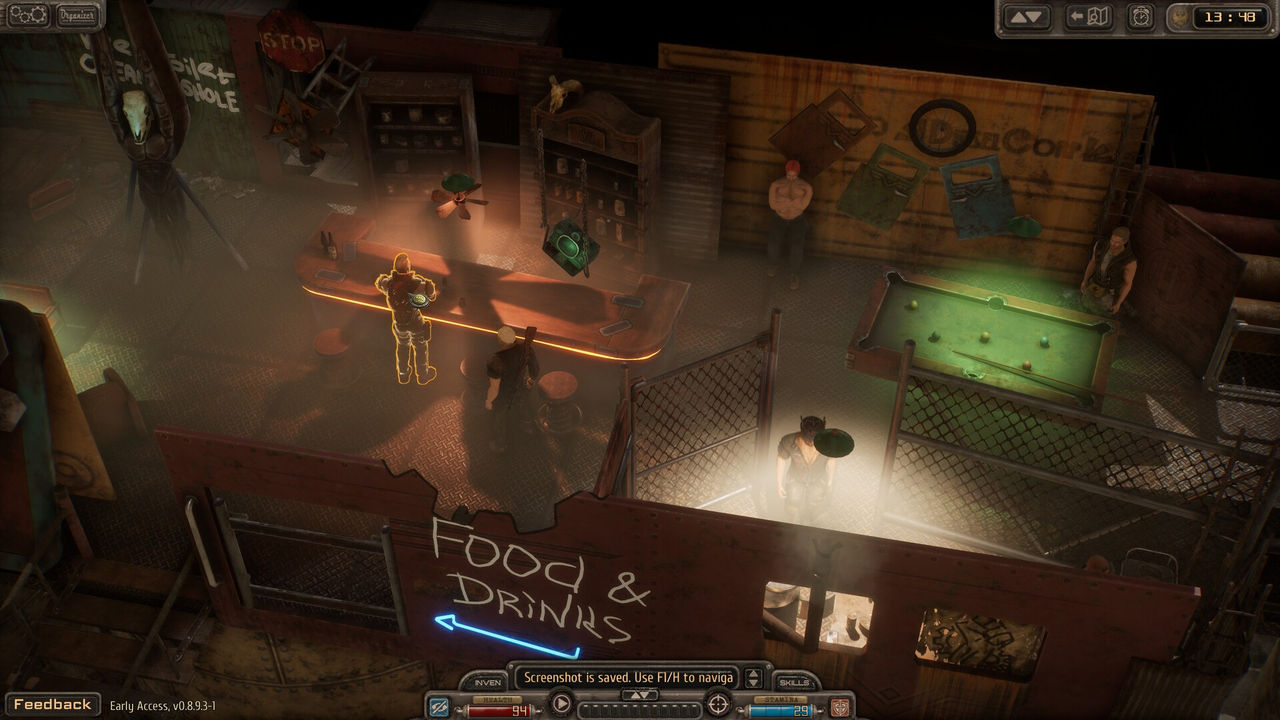
Several consequences are worth planning around rather than discovering by accident. A quest or an entire location can be permanently closed to a given worldview. One careless line can turn a faction against you for the rest of the game. The two published examples are that a pure good character will never be able to join the caste of ruthless warriors, and that a self-centered jerk will never take a job as a warehouse manager. If you want a specific quest line, the Karmic Type you pick at creation is part of that decision, not a cosmetic choice.
Perks and Specializations: A Framework for the 35 Perks
Olympus 2249 ships 35 perks, and the way they are distributed follows the game's two-specialization structure: one combat line and one peaceful line, chosen at character creation. Official material confirms there are five peaceful specializations, each unlocking new dialogue options and new ways to solve problems. A hands-on first-look video puts the perk count per specialization at seven, which would account for part of the 35, but that split is a single-source claim and is worth treating as to confirm until it appears in official material. The exact perk list itself is not documented yet.
The reason a framework matters more than a tier list here is that you cannot build a generalist. Attributes are grouped into opposing pairs rather than independent stats, so investing in one side of a pair automatically limits the other, and a balanced 5-to-5 split leaves you without the peak bonuses of either end. A hands-on video gives the example of six points in strength capping agility at four. That is a single source and should be treated as to confirm, but the design intent is confirmed by the developer: the role-playing system will not let you build a character who is good at everything, only a unique one.
- Decide the problem you want to solve before you spend anything: talking, sneaking, crafting or shooting.
- Commit to the specialization that matches that answer, and treat the other one as support rather than a second build.
- Accept that a balanced stat split costs you the extreme perks, and plan around the ceiling instead of fighting it.
- Re-check your karma path before committing to a faction, because some perk and quest lines are gated by worldview rather than by stats.
- Save before irreversible dialogue, since the consequences documented here include losing a faction or a whole location.
Turn-Based Combat: Positioning, Hazards and Limb Aiming
Combat in Olympus 2249 is turn-based, and the official pitch is built on the battlefield rather than on your character sheet. You position yourself, kick a fuel barrel toward an enemy and blow it up, set oil spills ablaze, and use electricity and traps. You aim for arms, legs or the head, and you spend Stamina on special combat abilities. The deliberate framing is that hard fights are puzzles with more than one correct solution, so the environment is meant to be read before the first shot rather than after a failed attempt.
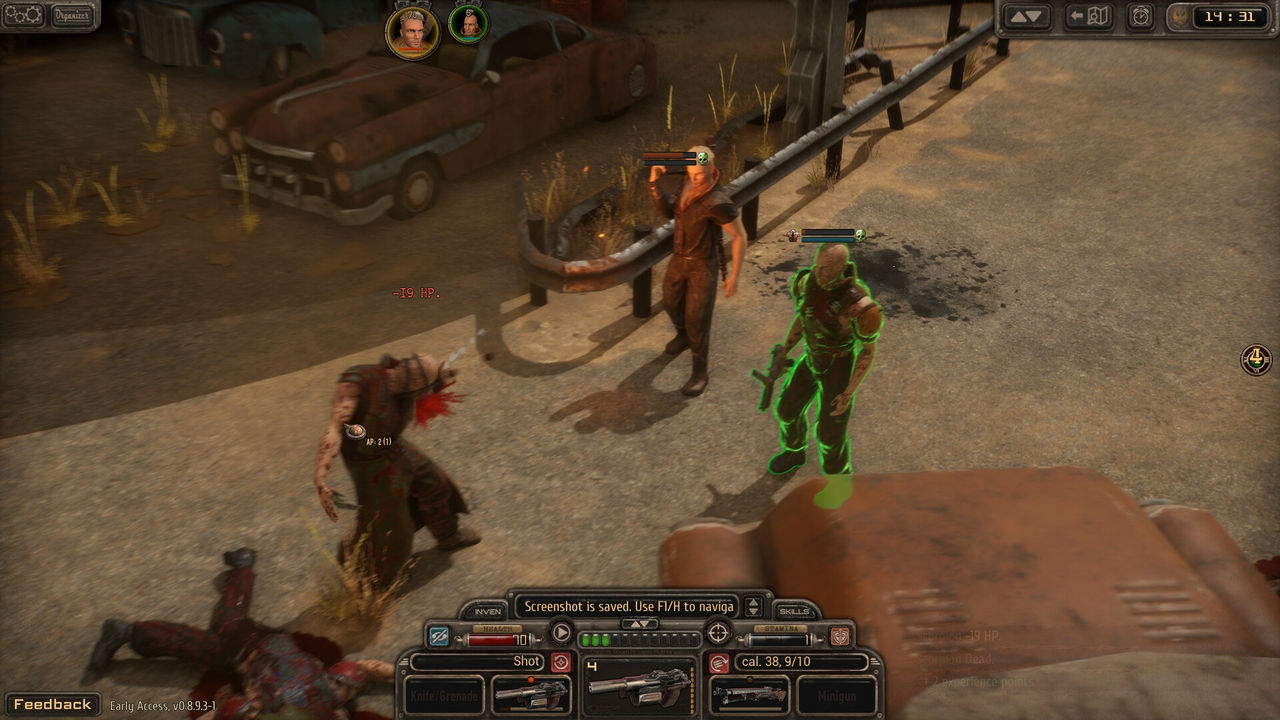
A hands-on first look adds detail that the store page does not spell out: action points decide how much you do per turn, while a separate Stamina pool pays for the special combat abilities, and limb shots are real tactical actions rather than animations, with arm hits disarming an enemy and leg hits slowing them down. The same video reports that stealth works and that armor matters in practice. Those specifics come from one source and are marked to confirm, but they are consistent with the official list of systems, which includes stealth, an armor system, dismemberment and hazardous environments.
| Battlefield element | What you can do with it | Where it is documented |
|---|---|---|
| Fuel barrel | Kick it toward a group, then detonate it with a shot | Official Steam description |
| Oil spill | Shoot the spill to set the floor under enemies alight | Official Steam description |
| Electricity and traps | Use panels and placed traps as part of the fight, not scenery | Official Steam description |
| Limb targeting | Arms to disarm, legs to slow, head for damage (effects from a hands-on video, to confirm) | Official page for the targets, video for the effects |
| Radiation and poison zones | Hazardous environments that carry into fights and travel | Official Steam description |
Early Access: What Act 1 of Three Means for You
The developer's Early Access statement on Steam is unusually specific, and it is the most useful paragraph on the store page. All of the planned game systems and mechanics are already implemented and balanced for different playstyles, and Early Access includes the first of the three story acts the team has in mind. The current build is about a quarter of the story and is fully playable, and a run takes roughly 3 to 7 hours depending on your build, playstyle and how many side quests you finish. The team expects to stay in Early Access for around 18 to 24 months, and plans to add significantly more locations, factions, quests, characters and items while continuing to balance the existing systems.
The practical reading is that you are buying a complete mechanical toolkit and an incomplete story. Systems will not be missing, but content will run out, the ending is not in the build, and the price is scheduled to rise gradually as content is added, so the $19.99 launch price is the floor rather than the ceiling. The review sample is also still forming: the game sat at Mixed from a small number of reviews in its first days, so early scores say more about launch-state rough edges than about the finished game. There is also a built-in bug report and feedback system, which the developers say they use both to collect problems and to prioritise them.
If you want the full picture before buying, the release date page covers the launch timeline and the Early Access window in detail, the Steam page covers price, features and platforms, the lore page covers the setting, and the Fallout comparison covers how this game relates to the older series it is so often compared with.
FAQ
What do the Karmic Types actually do in Olympus 2249?
Your Karmic Type is one of five worldviews chosen at character creation, and the Steam description says it shapes the entire playthrough. People react to you differently, dialogues change, quests change and opportunities change, and karma keeps shifting with the choices you make, so the archetype you start with is not necessarily the one you finish with. A quest can only open for a specific karmic type, and others become unavailable to you.
How many perks are there and how should I spend them?
The game ships 35 perks, spent across the specializations you pick for your character. Because attributes are grouped into opposing pairs and maxing one side limits the other, you cannot build a character who is good at everything, so the practical frame is to commit to one combat line and one peaceful line and let the opposite ends of the stat pairs stay average.
Is Olympus 2249 turn-based like Fallout?
Yes. Olympus 2249 is a single-player, turn-based cRPG set in a post-nuclear dieselpunk America, and the official page describes hard fights as puzzles with more than one correct solution. You position your character, kick fuel barrels into enemies and detonate them, set oil spills ablaze, use electricity and traps, aim for arms, legs or the head, and spend Stamina on special combat abilities.
How much of Olympus 2249 do I get in Early Access?
The developer states that Early Access already includes all of the planned game systems and mechanics, plus the first of the three story acts, which is about a quarter of the story and roughly 3 to 7 hours of play per run. The full version is planned to add significantly more locations, factions, quests, characters and items, and the price will rise gradually as that content arrives.
Do I need to have played Olympus 2207 first?
No. Olympus 2207 was the team's earlier Fallout 2 total conversion and Olympus 2249 is described as a standalone story, with references that returning players will recognize. The lead developer answered the question of what changed from the mod with a short answer: everything except the lore.
More in Getting Started
More getting started pages in Olympus 2249.
- Olympus 2249 Walkthrough — From Character Creation to a Stable StartGuideUpdated 2026-10-08
References
- Olympus 2249 on Steam
- Olympus 2249 - Steam News Hub (Dev Diary #1-4)
- Olympus 2249 announced - cRPG from the creators of Olympus 2207 (ixbt.games)
- Olympus 2249: a post nuclear RPG Trailer
- ПОИГРАЛ В OLYMPUS 2249 - first look (YouTube)
Facts on this page are compiled from the references above. Items marked "to confirm" are single-source and not yet verified.