
Olympus 2249 · Reference · Compare
Olympus 2249 Fallout Comparison — Is It a Fallout Successor After Olympus 2207?
Olympus 2249 Fallout comparison: the isometric cRPG Fallout 2 fans keep comparing it to, where it diverges, and what Olympus 2207 has to do with it.
By the New Game Wiki team · Updated 2026-10-08
On this page (7)
- Where the Fallout Comparison Comes From
- What Is Actually Different: Dieselpunk, Karmic Types and Opposing Stats
- Olympus 2207: The Fallout 2 Mod Behind the Comparison
- Is Olympus 2249 a Fallout game?
- Why do people compare Olympus 2249 to Fallout?
- What does Olympus 2249 do differently from Fallout?
- Do I need to know Fallout or Olympus 2207 to play Olympus 2249?
An Olympus 2249 Fallout comparison is really a comparison with the ghost of Fallout 2, because the link runs through the studio rather than through a license. The developers behind Olympus 2249 came out of the team that made Olympus 2207, a total conversion mod built on the Fallout 2 engine, and then turned that work into a standalone commercial cRPG. Olympus 2249 itself is an isometric, turn-based, post-nuclear game with Choices Matter, Multiple Endings, Dark Humor and Lore-Rich among its player tags, which is why every outlet reaches for the same reference point.
Where the Fallout Comparison Comes From
The comparison is editorial and mechanical, not official. Press coverage of the announcement carried the line that the game is a cRPG from the creators of the Russian mod Olympus 2207 for Fallout 2, and a Turn Based Lovers piece carried by RPGWatch framed Olympus 2249 as a possible Fallout spiritual successor. Let's-play coverage uses the same shorthand, with one video titled around the game being similar to Fallout and Atom RPG. None of that is a developer claim about lineage in the Fallout universe; it is a description of genre and shape.
| The comparison you will see | Where it comes from | How well it holds up |
|---|---|---|
| A Fallout 2 successor | Press coverage, based on the mod the team came from | Only in genre: same isometric, turn-based, post-nuclear shape |
| A Fallout spiritual successor | An editorial overview carried by RPGWatch | Editorial framing rather than a developer statement |
| Similar to Fallout and Atom RPG | A let's-play video title | A look-and-feel comparison, not a systems comparison |
| From the creators of a Fallout 2 mod | Announcement coverage and the studio's own history | Accurate as lineage, but the sequel is a standalone game |
What the sources agree on is narrower than the headlines suggest. Olympus 2249 is its own product, sold under its own name on Steam by Dieselship Studio as both developer and publisher, and it is not endorsed by or affiliated with the Fallout rights holders. The Fallout 2 engine connection belongs to the previous project, not to this one.
What Is Actually Different: Dieselpunk, Karmic Types and Opposing Stats
The clearest divergence is the setting. The official description calls Olympus 2249 an isometric post-apocalyptic cRPG set in a brutal dieselpunk world, and the studio's own trailer leans on diesel, gunpowder, soot and rusted iron rather than the glossy retro-futurism the Fallout comparison implies. A hands-on first look makes the same point bluntly by telling viewers to forget about plasma guns, glossy robots and high tech, and noting the game was built on Unreal Engine 4 rather than on the Fallout 2 engine, though that engine claim is single-source and should be treated as to confirm.
Karma is the other structural difference. Instead of one sliding moral scale, Olympus 2249 opens with five Karmic Types, and the Steam description says that this choice shapes the entire playthrough: people react differently, dialogues change, quests change and opportunities change, and karma keeps shifting with your decisions. Some quests only open for a specific karmic type and others close permanently, with a faction or an entire location as a possible loss. The developer's published examples are that a pure good character cannot join the caste of ruthless warriors, and that a self-centered jerk will never take a warehouse manager job.
- Five Karmic Types chosen at creation, rather than one reputation bar that drifts.
- Dialogue options tied to your archetype and the two adjacent ones, so your worldview can migrate mid-run.
- Five peaceful specializations, each unlocking different dialogue branches and problem-solving routes.
- Attributes grouped into opposing pairs, so a character good at everything is not possible by design.
- 35 perks spread across a combat and a peaceful specialization rather than a single universal tree.
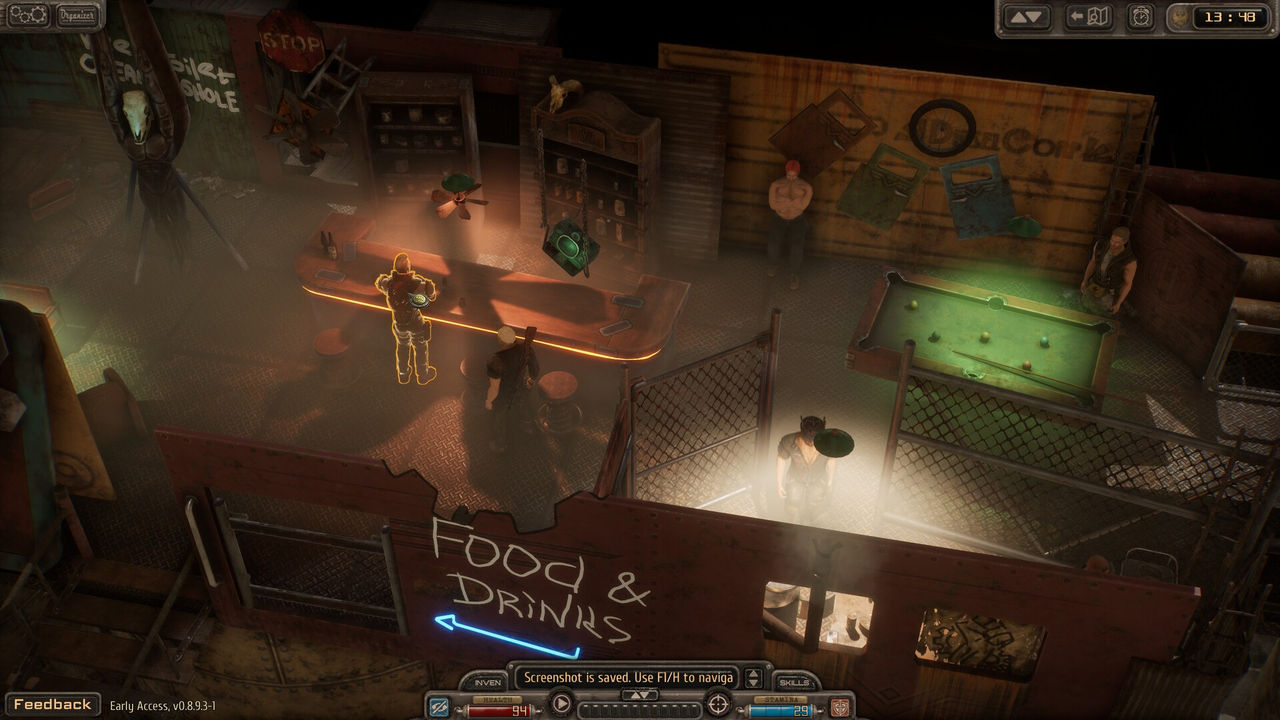
The opposing-stat design is the point that most clearly separates it from a generalist-friendly RPG, and it comes with a caveat. A hands-on video reports that the game pairs stats such as strength and agility as two poles of one trait, so investing heavily in one caps the other, and it gives six points in strength limiting agility to four as an example. That specific detail is single-source and should be treated as to confirm, but the developer's own statement matches the intent: you cannot build a character who is good at everything, only one who is unique.
Olympus 2207: The Fallout 2 Mod Behind the Comparison
Olympus 2207 is the actual Fallout connection, and it is worth stating plainly what it is. It was a total conversion mod for Fallout 2, meaning it was built on that game's engine and later released as a standalone project, and it was made by the team that went on to found Dieselship Studio. When the sequel was announced, the post made two promises: that players who had not played the mod need not worry because the sequel would be pretty stand-alone, and that it would not be another Fallout 2 total conversion but a full-featured game by itself.
Coverage of the launch repeats that Olympus 2249 is a standalone story while noting that veterans of the earlier game will appreciate the references, and the developer's own one-line answer about what changed from the mod is that everything changed except the lore. In practice that means the comparison to Fallout belongs to Olympus 2207's history and to the genre both share, not to Olympus 2249's identity. If you want the systems side of that answer rather than the setting side, the guide covers karma, perks and combat, and the release date page separates the two games' timelines.
FAQ
Is Olympus 2249 a Fallout game?
No. It is an original commercial game from Dieselship Studio, and the connection to Fallout is historical: the studio grew out of the team behind Olympus 2207, a total conversion mod built on the Fallout 2 engine. The sequel is described as a standalone game rather than another total conversion, and it is set in its own dieselpunk America rather than in the Fallout universe.
Why do people compare Olympus 2249 to Fallout?
Because of the shape of the game rather than its ownership. It is isometric, it is turn-based, it is set in a post-nuclear America, and its player tags include Choices Matter, Multiple Endings, Dark Humor and Lore-Rich, which together read like the checklist people use to describe classic Fallout. Press coverage and let's-play videos lean on that comparison heavily, and one editorial piece framed it as a possible Fallout spiritual successor.
What does Olympus 2249 do differently from Fallout?
The biggest difference is tone and technology level: the setting is dieselpunk, built on diesel, gunpowder, soot and rusted iron, and the official description never mentions plasma weapons, robots or high technology. Karma also works differently, using five Karmic Types chosen at creation that gate dialogue, quests and whole locations, rather than a single sliding moral scale.
Do I need to know Fallout or Olympus 2207 to play Olympus 2249?
No. The original announcement said players who had not played the earlier mod had nothing to fear because the sequel would be pretty stand-alone, and coverage of the launch repeats that it is a standalone story. Familiarity with Olympus 2207 gets you references rather than an advantage, and the developer's own summary of what changed from the mod is everything except the lore.
More in Reference
More reference pages in Olympus 2249.
- Olympus 2249 Perks — 35 Perks, Opposing Attributes and How to Plan a BuildIndexUpdated 2026-10-08
References
- Olympus 2249 on Steam
- Olympus 2249 - Spiritual Successor of Fallout @ TBL (RPGWatch)
- Olympus 2249 announced - cRPG from the creators of Olympus 2207 (ixbt.games)
- ПОИГРАЛ В OLYMPUS 2249 - first look (YouTube)
- Olympus 2249 announcement thread, Olympus 2207 english translation (NMA)
Facts on this page are compiled from the references above. Items marked "to confirm" are single-source and not yet verified.