
Olympus 2249 · Mechanics · Guide
Olympus 2249 Gameplay — Core Loop, Difficulty and Pacing Explained
Olympus 2249 gameplay explained: the explore, talk, fight and loot loop, how perks and karma feed it, difficulty options, pacing and per run length.
By the New Game Wiki team · Updated 2026-10-08
On this page (9)
- What the Core Loop Looks Like
- How Character Building Drives the Loop
- Difficulty, Fail States and Restart Cost
- Pacing and Run Length
- How the World Systems Interact
- What do you actually do in Olympus 2249 moment to moment?
- Does Olympus 2249 punish you for failing?
- How long is a run of Olympus 2249?
- Is Olympus 2249 hard?
Olympus 2249 gameplay is a classic cRPG loop with a dieselpunk skin and one strong twist: karma is a resource you spend constantly, because the choices you make in conversation and quests change what the world will offer you later. You explore, you talk, you fight when talking fails, you loot and craft, and you grow through perks. The whole thing runs turn-based and single-player, with difficulty you can adjust and saves you can take at any time.
What the Core Loop Looks Like
The loop starts with exploration. You move through a post-nuclear America, meet people, and pick up work. From there it branches: a situation can be resolved by conversation, by stealth, by crafting a solution, or by a turn-based fight. Whichever route you take, you come out with loot, experience and a karma shift. Experience and perk choices make your character better at the routes you favor, and the karma shift quietly changes which routes are open next time. Then you explore further, and the loop repeats with a different set of options.
How Character Building Drives the Loop
Character building is the engine that decides which parts of the loop you actually use. You pick a Karmic Type at creation, one of five worldviews, and a peaceful specialization from five options, each unlocking new dialogue and new ways to solve problems. Perks then let you sharpen that identity. The developer states that the role-playing system will not let you build a character who is good at everything, only a unique one, so the specs you choose genuinely narrow the game rather than merely buffing numbers. That is why the loop feels different across runs: a stealth character and a talker meet the same map and solve it in different ways.
Difficulty, Fail States and Restart Cost
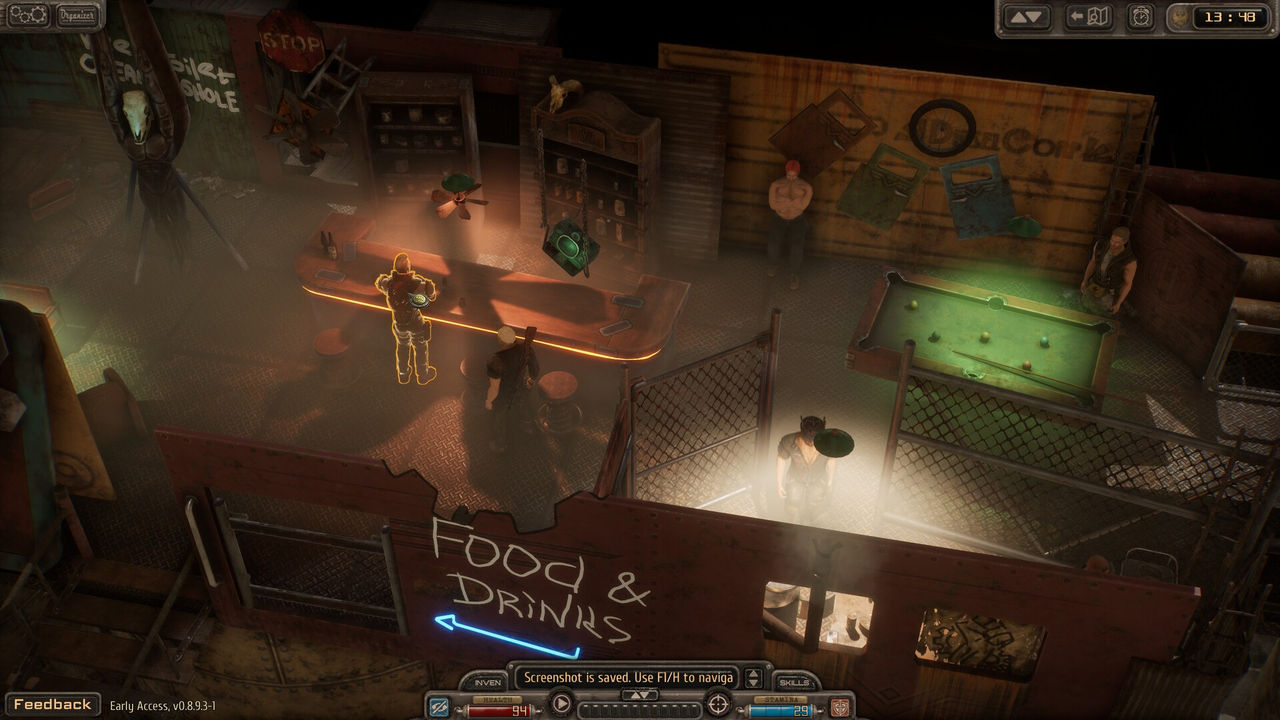
The documented fail model is forgiving by design. Save anywhere is a listed feature, difficulty is adjustable, and the game is playable without timed input, so careful play is supported rather than punished with lost progress. No permadeath or ironman mode is documented, so nothing on the record makes a single lost fight end your run. The pressure in this game comes from decisions rather than reflexes: the developer warns that a conversation can close a faction to you or lock a quest away permanently, and those consequences do not have a reload button unless you kept a save.
| Question | Documented answer |
|---|---|
| Combat style | Turn-based, positioning and hazards |
| Fail state | No permadeath documented; save anywhere is available |
| Difficulty | Adjustable |
| Timed input | Not required; playable without it |
| Permanent losses | Faction and quest access, not your save |
Pacing and Run Length
Measured pacing is the point. A run of the current build takes roughly 3 to 7 hours, a spread wide enough that your build and your appetite for side quests are the deciding factors. Fights are turn-based and can be paused over, which lowers the moment-to-moment pressure and shifts the challenge to planning. The developer also says the game has a built-in bug report and feedback system, which is a reminder that this is a live Early Access build rather than a finished one.
How the World Systems Interact
The systems list is what keeps the loop from flattening. Weather is a genuine variable: desert storms reshape gameplay rather than just tinting the screen. Hazardous environments such as radiation and poison zones persist and travel with you. A day and night cycle gives NPCs their own routines and their own beds, so timing a conversation matters. Armor and dismemberment make gear and body state matter in a fight, and procedural enemy and loot generation keeps random encounters and raids from being solved once and memorized.
Put together, that set of systems is why the loop is more than explore-fight-loot. To go deeper on any one piece, read the combat page for turn structure, the perks page for character building, the karmic types page for the choice system, and the features page for the full system list.
FAQ
What do you actually do in Olympus 2249 moment to moment?
You explore a post-nuclear dieselpunk map, talk your way through situations, fight in turn-based battles when talking fails, loot and craft, and spend perks as you level. Every step feeds the next, because the karma you build in dialogue and quests changes what the world offers you.
Does Olympus 2249 punish you for failing?
No permadeath or ironman rule is documented, and save anywhere plus adjustable difficulty are both listed features, so a bad fight is not designed as a run-ender. What is permanent is the consequence of choices, not death.
How long is a run of Olympus 2249?
The developer puts a run at roughly 3 to 7 hours in the current Early Access build, depending on your build and how much optional content you chase. That is Act 1 alone, about a quarter of the planned story.
Is Olympus 2249 hard?
Difficulty is adjustable, so the answer is partly yours to set. The design leans toward tactical difficulty instead of reflexes: fights are turn-based and playable without timed input, and the developer frames hard fights as puzzles with more than one solution.
More in Mechanics
More mechanics pages in Olympus 2249.
- Olympus 2249 Act 1 — What the Early Access Build Actually ContainsGuideUpdated 2026-10-08
- Olympus 2249 Combat — Turn-Based Positioning, Hazards and Limb AimingGuideUpdated 2026-10-08
- Olympus 2249 Factions — How Reputation Changes Quests and Whole LocationsGuideUpdated 2026-10-08
- Olympus 2249 Features — The Full Confirmed Feature List and What It ExcludesGuideUpdated 2026-10-08
References
Facts on this page are compiled from the references above. Items marked "to confirm" are single-source and not yet verified.