
Leafy Corner · Plants · Guide
Leafy Corner Plant Guide — 100+ Houseplants, Traits and Variegation
Leafy Corner plant guide: 100+ houseplants, sizes, watering needs, pet-safe traits, variegation and propagation, plus which plants to stock first.
By the New Game Wiki team · Updated 2026-10-04
On this page (9)
- What Each Plant Record Tells You
- Plant Sizes, Traits and the Stock Mix
- Variegation and Propagation
- Which Plants to Stock First
- How many plants are in Leafy Corner?
- How do you propagate plants in Leafy Corner?
- What is a variegated plant in Leafy Corner?
- Does repotting affect a plant in Leafy Corner?
- Which plants should a new Leafy Corner shop stock?
The Leafy Corner plant guide starts with one number: the official Steam page lists more than 100 unique real-life houseplants to grow, care for and sell, and each one carries its own watering needs, size, and traits. That is what makes customer matching a real puzzle rather than a colour-matching exercise, because a request like pet friendly and low light narrows the shelf to a specific few. This page explains what each plant record tells you, how sizes and traits shape a stock mix, how variegation and propagation work, and which plants are worth unlocking first.
Plant facts here come from the official Steam description, a credited Leafy Corner wiki-style guide, and credited reviews. Where a trait list is drawn from a small checked database rather than the full catalogue, that is stated as to confirm.
What Each Plant Record Tells You
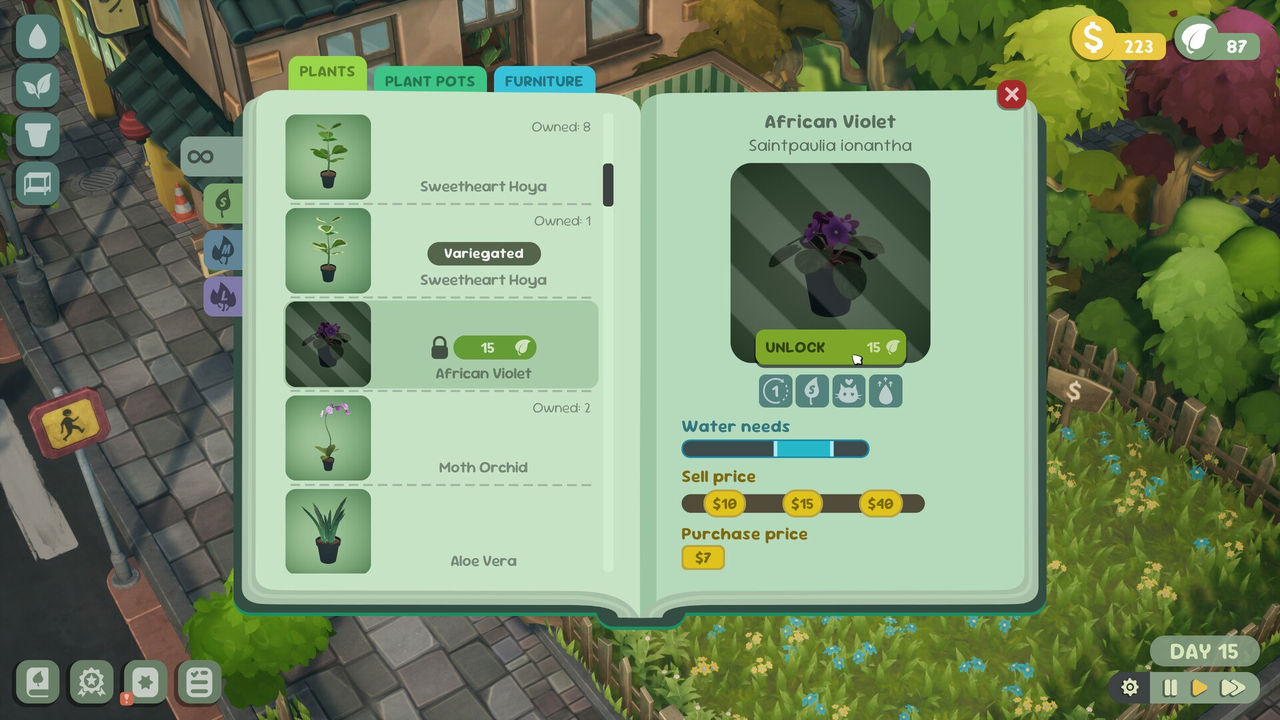
Every plant has a description page in the store, and a credited review explains what it holds: how often you need to water it, whether it is pet friendly, and how the price progresses as the plant matures. The same review notes that knowing these needs and traits is what lets you fulfil customer orders, which is why the compendium is the tool you will open most often. A separate credited review describes the book as sorting plants by size, small, medium and large, alongside pots and furniture, current and unlockable.
The official Steam description confirms the wider feature set around those records: you grow, care for and sell the plants, discover variegations, fulfil orders and help customers, and complete tasks to progress the shop. A credited wiki-style guide breaks the plants into practical categories for matching, including small plants for tight spaces, medium plants as dependable everyday stock, large plants for impact, trailing plants with hanging growth, upright plants, broad-leaf plants, and plants chosen for distinctive leaf colour or pattern.
| Record field | What it tells you | How you use it |
|---|---|---|
| Watering need | How often the plant must be watered | Plan your watering passes |
| Pet friendly | Whether the plant is safe for pets | Match pet friendly requests |
| Size | Small, medium or large | Match room and space requests |
| Price progression | How value rises as it matures | Decide when to sell |
Three habits that make the compendium useful:
- Check a plant's record before you buy it, not after a customer asks.
- Note which traits you already cover so you do not stack duplicates.
- Use size first when filtering a request, then traits, then appearance.
Plant Sizes, Traits and the Stock Mix
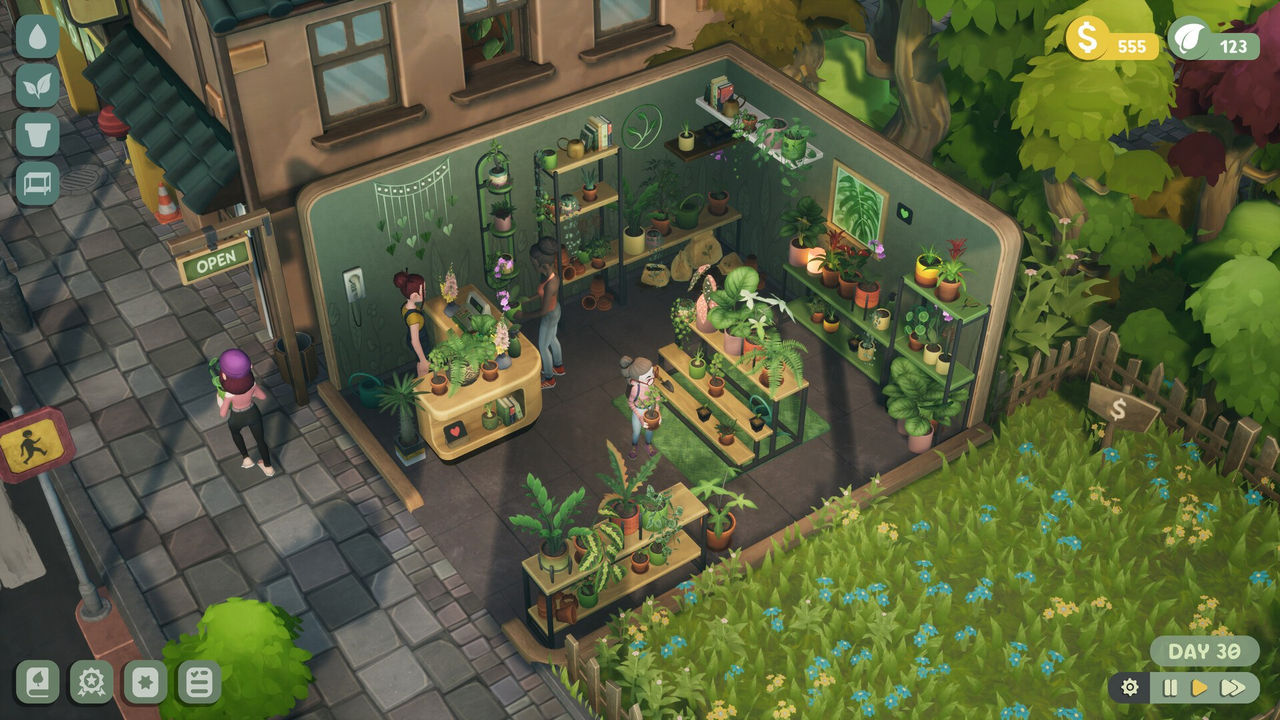
The credited wiki-style guide's advice on a balanced inventory is direct: maintain several different plant options instead of relying on a single type, because a broader selection makes it easier to satisfy different customer clues and complete more sales. Its beginner guide warns against filling the shop with plants that serve the same kind of request, which is the most common early mistake because the cheapest plants tend to share traits.
Traits are the other half of the mix. A credited guide names a concrete shortlist for a medium, pet friendly, low light request: Boston Fern, Maranta and Spider Plant. A credited trophy guide adds that Cat Grass is the first and cheapest pet friendly plant, which makes it the safe default when a customer's request is vague, and notes that a succulent is a plant attribute recognised by a cactus-like icon, with the Snake Plant given as an example. Trailing plants are the trickiest trait, and the same guide says the earliest you can unlock one is level 3, with String of Hearts costing 15 plant tokens.
| Plant | Size or trait | Why it matters |
|---|---|---|
| Cat Grass | Small, pet friendly | First and cheapest pet friendly stock |
| Boston Fern | Medium, pet friendly, low light | Fits the common multi-trait request |
| Maranta | Medium, pet friendly, low light | Same shortlist as the fern |
| Spider Plant | Medium, pet friendly, low light | Third option for the same request |
| Snake Plant | Succulent trait | Covers succulent requests |
| String of Hearts | Trailing | Earliest trailing unlock, level 3 |
A stock plan that covers most requests:
- Keep at least one pet friendly plant of each size on the shelf.
- Carry a succulent and a trailing plant once they unlock.
- Reserve one of each common trait so an order never forces emergency planting.
- Rotate slow sellers out rather than letting them occupy display space.
Variegation and Propagation
Variegation is the collection layer that keeps plant hunting interesting. A credited trophy guide defines a variegated plant as a different version of a plant, essentially a hybrid with different colours, worth more money, and says that after planting seeds for a plant there is a chance a variegated version is unlocked, with the trophy requiring three. A credited review describes the same system from the player's side: variegated plants develop from existing specimens rather than being grown directly, which is why they feel like a lucky find.
Propagation is what turns a single lucky find into a collection. The credited review explains that mature plants can be propagated to create new seedlings and that this slows the main plant's growth, and crucially that if you propagate a new variety, the new seedling keeps the unique traits. A credited magazine review adds the practical reason to care: propagation is especially handy once you have unlocked a variegated version, because it lets you multiply the good find instead of hoping for another.
| System | Trigger | Result |
|---|---|---|
| Variegation | Chance when planting seeds | A higher-value patterned plant |
| Propagation | Available on mature plants | New seedlings that keep unique traits |
| Growth cost | Propagation slows the parent | A trade-off between copies and speed |
Two propagation habits worth keeping:
- Propagate a variegated plant as soon as it matures so the trait is not lost to a sale.
- Mark the parent not for sale while it grows the seedling, since a customer could buy it otherwise.
Which Plants to Stock First
The credited wiki-style guide keeps a provisional tier list, and the top band is about flexibility rather than price: compact plants with broad customer usefulness and medium plants that match several common request types, rated excellent profit, fast growth, broad demand and low care. The next band covers distinctive colourful foliage and upright plants with clear size and shape, rated high profit and low to moderate care, and it ranks below the top band only because their appeal is narrower. Lower bands cover situational placement plants, narrow-compatibility plants, and high-care specialists that should only be bought once the shop has dependable income.
The credited beginner guide's advice lines up with that: unlock new plants steadily because it raises your rank faster, place plenty of them on racks so more reach maturity, and do not be afraid to spend money, since a single plant can return a large profit. A credited review notes you start with only three unlocked plants and that bigger plants cost more tokens than smaller ones, so the early sequence is unlock breadth first, then size.
An early-game stocking order:
- Unlock breadth across sizes before unlocking the largest pots.
- Add a succulent and a trailing plant as soon as their levels allow.
- Keep the fast, low-care plants as the backbone of the shelf.
- Buy specialist high-care plants only after income is steady.
For how these plants feed the order system, see the orders page, for the space to display them see shop-expansion, and for the shelf arrangement itself see layout.
In short: read every plant record, keep a spread of sizes and traits rather than one species, chase variegation through propagation, and treat fast low-care plants as the backbone of the shelf.
FAQ
How many plants are in Leafy Corner?
The official Steam page lists 100+ unique real-life houseplants to grow, care for and sell. You start with only three unlocked plants, and plant tokens earned from tasks are what unlock the rest, with bigger plants generally costing more than smaller ones.
How do you propagate plants in Leafy Corner?
A credited review explains that mature plants can be propagated to create new seedlings, and that this slows the main plant's growth. The same review notes that if you propagate a variegated plant, the new seedling keeps the unique traits, which is how you build a collection of the special varieties.
What is a variegated plant in Leafy Corner?
A variegated plant is a different version of a plant with unique colours or patterns, worth more money. A credited trophy guide says that after planting seeds for a plant there is a chance a variegated plant will be unlocked, and a separate review adds that variegated plants develop from existing specimens rather than being grown directly.
Does repotting affect a plant in Leafy Corner?
Yes. A credited review says repotting a plant into a new pot resets its watering needs, which is useful when you reorganise shelves or want to slow a plant's care cycle. You can also mark a favourite plant as not for sale so it stays in the shop permanently.
Which plants should a new Leafy Corner shop stock?
Start with a spread of traits rather than one species. A credited guide names Boston Fern, Maranta and Spider Plant as examples that satisfy a medium, pet friendly, low light request, and a trophy guide notes Cat Grass is the first and cheapest pet friendly plant, which makes it the safest early stock.
References
- Leafy Corner - Plants, Orders & Shop Guide (leafycornerwiki.wiki)
- Leafy Corner Tips And Tricks Guide For Beginners (Into Indie Games)
- Leafy Corner Review (LadiesGamers)
- Leafy Corner Trophy Guide (PSNProfiles)
- Leafy Corner on Steam
Facts on this page are compiled from the references above. Items marked "to confirm" are single-source and not yet verified.