
DustFall · Mechanics · Guide
DustFall Terrain — Fires, Powder Caches and Cave-Ins
DustFall terrain is fully destructible pixel terrain where oil and fire spread, powder caches blast routes through rock, and removed supports drop cave-ins.
By the New Game Wiki team · Updated 2026-10-14
On this page (9)
- Fully Destructible Pixel Terrain
- Fire, Powder and Collapse
- Why Terrain Control Is a Weapon
- What Is Not Documented
- Is the DustFall terrain fully destructible?
- How do fires work in DustFall?
- What do powder caches do in DustFall?
- Can you cause cave-ins in DustFall?
- Does every layer use the same terrain in DustFall?
DustFall terrain is not decoration. The store page calls the underground fully destructible, simulated pixel terrain, and then spends a full section explaining what that means: the pixels flow, burn, explode and collapse, and the player is expected to weaponize all four behaviours rather than shoot around them.
That design choice is why the game reads as a demolition sandbox and a shooter at the same time. Alien life has overrun the surface, so the terrain below is the only resource you have, and the same act of destruction that opens your escape route can also bury you.
Fully Destructible Pixel Terrain
The official line is that the underground is made of pixels that flow, burn, explode and collapse. The feature list states it again as fully destructible, simulated pixel terrain, which puts simulation ahead of any fixed tile map: terrain is a material with behaviour, not a wall with hit points.
| Terrain interaction | What the store page says it does |
|---|---|
| Oil and fire | Ignite oil and let fire spread through the terrain |
| Powder caches | Detonate them to blast a route through solid rock |
| Supports | Remove crucial supports and bring a collapse down on enemies |
| Tunnels and cavities | Every tunnel carved and cavity blasted changes the battle and your escape route |
| Per-layer materials | Each of the six layers has its own terrain materials and environmental reactions |
Because the reactions are per-layer, the terrain you learn in the first ruin is a starting vocabulary rather than a fixed rulebook. The store page is explicit that the six layers differ in materials and environmental reactions, which is why a route that is trivial in one layer can be unavailable in the next.
Fire, Powder and Collapse
The three documented reactions divide cleanly by purpose. Fire is area denial, because you ignite oil and let it spread, so the terrain itself becomes a hazard that grows on its own. Powder is excavation, because detonating a cache blasts a route through solid rock, which is the tool for material that ordinary digging cannot handle. Collapse is a trap, because removing crucial supports brings a mass of terrain down on whatever is underneath, and enemies count as whatever is underneath.
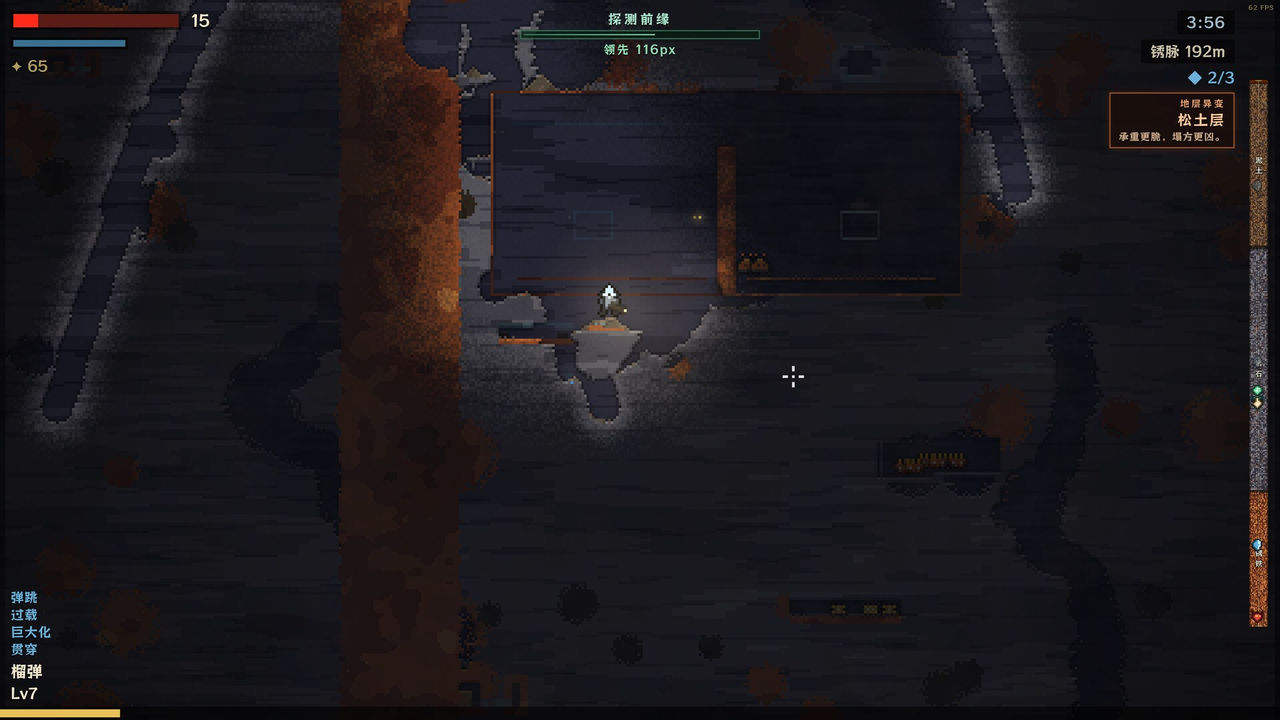
The warning that comes with all three is the same sentence. Every act of destruction may open a path to survival, or bring an entire ruin down on top of you, so none of these tools is free. Fire you set is fire that spreads toward you as well as away from you, and a collapse you trigger is a collapse you are standing near.
Why Terrain Control Is a Weapon
The store page frames the whole system under the heading THE TERRAIN IS YOUR WEAPON, and the sentence that follows explains the tactical claim: every tunnel you carve and every cavity you blast open changes the battle and your escape route. In practice that merges two resources most shooters keep separate, because map control and firepower become the same action.
For a new player the practical reading is that the level is a consumable. You are not clearing a room and moving on; you are choosing which parts of the ruin to remove and which to keep as cover, and the payloads page covers which tools apply to which material. The terrain is also the reason depth is safety, since the same digging that opens a route downward is what takes you away from the surface scan described on the hunters page.
What Is Not Documented
The store page does not name the individual terrain materials, does not quantify how fast fire spreads or how much rock a powder cache removes, and does not state which layer contains which reaction. Whether oil, powder and support structures appear in every ruin or only in some is also unstated, and no official source publishes destruction numbers for any of them. Those details are not documented yet.
FAQ
Is the DustFall terrain fully destructible?
Yes. The store page describes the underground as fully destructible, simulated pixel terrain, and says the pixels flow, burn, explode and collapse. The feature list repeats the point with the line Fully destructible, simulated pixel terrain.
How do fires work in DustFall?
The store page says you ignite oil and let fire spread through the terrain. That makes oil a placed hazard rather than scenery, because the fire propagates through the pixel terrain itself instead of staying inside a scripted object.
What do powder caches do in DustFall?
They blast a route through solid rock. The store description lists detonating powder caches as the way to open a path through material that is otherwise too solid, which makes them both a movement tool and a demolition tool.
Can you cause cave-ins in DustFall?
Yes. The store page says to remove crucial supports and bring a collapse down on your enemies, and it warns that every act of destruction may open a path to survival or bring an entire ruin down on top of you.
Does every layer use the same terrain in DustFall?
No. The store page states that each of the six layers has its own terrain materials and environmental reactions, so a reaction that works in one ruin is not guaranteed to be available in the next.
More in Mechanics
More mechanics pages in DustFall.
- DustFall Cataclysm Mode — The Post-Ending Mode on SteamGuideUpdated 2026-10-14
- DustFall Controls — Keyboard and Mouse on WindowsGuideUpdated 2026-10-14
- DustFall Features — Destructible Terrain, Payloads and Six RuinsGuideUpdated 2026-10-14
- DustFall Gameplay — The Descent Loop, Payloads and the Surface ScanGuideUpdated 2026-10-14
References
Facts on this page are compiled from the references above. Items marked "to confirm" are single-source and not yet verified.