
The Crimson Hunt · Mechanics · Guide
The Crimson Hunt Gameplay — Core Loop, Light, Ammo and Co-op
The Crimson Hunt gameplay loop explained: explore the mansion, solve mechanisms, ration ammo and light, and survive each encounter or start over.
By the New Game Wiki team · Updated 2026-10-08
On this page (10)
- The Core Loop: Explore, Solve, Fight, Ration
- Light and Ammunition Are the Two Meters That Matter
- Combat, Positioning and Unpredictable Enemies
- Failure, Retries and Pacing
- Co-op Changes the Resource Maths
- What is the gameplay loop in The Crimson Hunt?
- Is The Crimson Hunt a hard game?
- What happens when you die in The Crimson Hunt?
- Can you play The Crimson Hunt in third person?
- How does co-op change the gameplay loop?
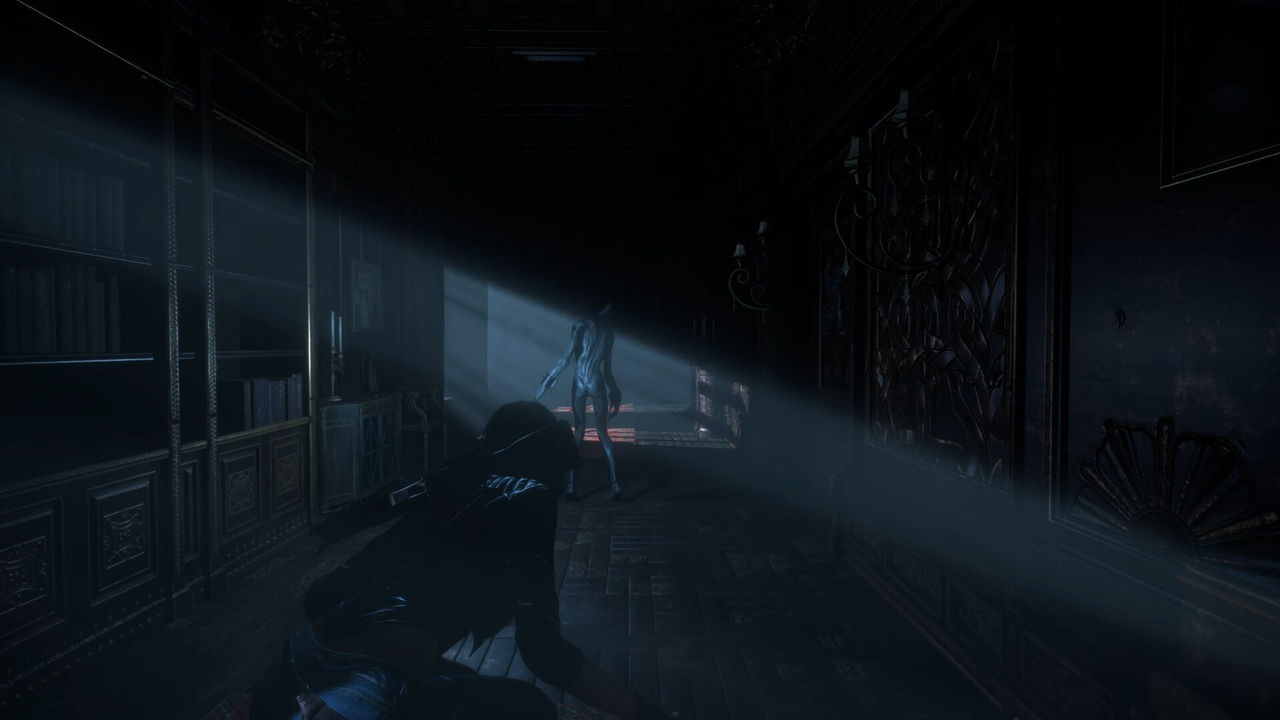
The Crimson Hunt's gameplay is a modernised classic survival horror loop played from a third-person camera: you push through a decaying Victorian mansion, solve the mechanisms and locks that gate the route, and decide how to answer every enemy while ammunition, healing and even light are scarce. The developer frames it as exploring oppressive environments, solving environmental puzzles and carefully managing resources, with every encounter supposed to matter. That is the whole design in one line, and everything else on this page is how it actually plays.
The Core Loop: Explore, Solve, Fight, Ration
Each wing of the mansion runs the same loop. You arrive in a dark room, read it for the thing that opens the next area, meet at least one enemy you would rather not have met, and then choose between spending a resource or spending time finding another route. The store description calls the environments oppressive and says danger hides around every corner, which is the game telling you that slow, thorough movement is the intended pace rather than a cautious deviation from it. Because puzzles and locks gate progress, clearing a room is not about killing everything but about noticing what the room is for.
Light and Ammunition Are the Two Meters That Matter
Two resources drive almost every decision. The first is light: the store page says light is vital, and the walkthrough goes further, with Victoria explaining that the creatures are sensitive to UV radiation, that the light blinds and weakens them, and that keeping the beam on a head is what lets the pair finish an enemy off. The second is ammunition, which the store page calls scarce and which the developer's co-op note implicitly protects by giving the second character stun and avoidance tools. Treat light as the free weapon and bullets as the expensive confirmation.
| Resource | What the official material says | What that implies in play |
|---|---|---|
| Light | Store says light is vital; walkthrough says UV blinds and weakens enemies | Aim before you shoot, and treat darkness as a cost |
| Ammunition | Store says it is scarce and every encounter matters | Choose fights instead of accepting them |
| Healing | Store says healing is scarce and every item counts | Bank it for rooms with a mechanism and two enemies |
| Inventory | Store calls smart management the difference between life and death | Carry tools and utility, not duplicate firepower |
| Co-op partner | Second character can carry any weapon plus stun or avoidance tools | Use the partner to buy windows, not to double your ammo use |
Combat, Positioning and Unpredictable Enemies
Combat is third-person and built around defence as much as damage. The demo's documented control scheme gives you run on Shift, interact on E, crouch on C, inventory on I, dodge on Space, and block while holding Alt, plus separate heavy attack and shoot inputs, which is a wider defensive kit than most small horror games bother with. The store description says encounters demand strategy, positioning and steady nerves, and separately calls the enemies unpredictable, so the intended rhythm is to create a window with the light or a dodge and then take one clean hit rather than to trade blows.
Failure, Retries and Pacing
What happens when you die is not documented yet, and this page will not guess at a checkpoint system. What is documented is that the game expects you to feel the loss of resources rather than the loss of a life, with the store description repeatedly stressing scarcity and consequence. Pacing-wise, the first hotfix on 7 October significantly reduced scene loading times, which matters for a game that asks you to retry rooms, and the walkthrough shows a linear push with no sign of open-area grinding between chapters.
Co-op Changes the Resource Maths
Local split-screen co-op is not a separate campaign so much as a second answer to the game's central problem. The developer's launch post says there are no weapon restrictions based on character and that the second character additionally gets passive tools that stun enemies or help avoid combat, which means a pair can sustain pressure without matching the single-player ammunition spend. Both players are on one machine, with Remote Play Together as the way to bring in someone who is not in the room, so the co-op version of the loop is best read as the single-player loop with a second set of hands on the stun button.
For the systems inside that loop, the useful next pages are the puzzles and weapons pages, the tips page for the opening-hours habits, and the walkthrough for the order the mansion's challenges actually arrive in.
FAQ
What is the gameplay loop in The Crimson Hunt?
The store description sets it out clearly: explore oppressive environments, solve environmental puzzles, and carefully manage your resources, because ammunition is scarce, light is vital and every encounter matters. In practice you push through decaying corridors, read the room for the mechanism or clue that opens the next area, and decide whether each enemy is worth spending a bullet, a stun tool or a detour on.
Is The Crimson Hunt a hard game?
It is designed around pressure rather than difficulty modes. The store pitch says every encounter demands strategy, positioning and steady nerves, and that smart inventory management is the difference between life and death, while the difficulty options themselves are not documented yet. The pressure comes from scarce ammunition and healing rather than from a published difficulty setting.
What happens when you die in The Crimson Hunt?
Not documented yet. No official material describes the death, respawn or save system, so it is not possible to confirm whether you restart at a checkpoint, lose progress, or lose items on death. The store description says every encounter matters, which is language that fits a punishment for careless fights, but the exact rule is unpublished.
Can you play The Crimson Hunt in third person?
Yes. The store description promotes third-person combat and the game's people describe it as a modernised take on classic survival horror, with a third-person camera behind the characters. The itch.io demo listing also carries a third person tag, so the perspective is confirmed rather than inferred.
How does co-op change the gameplay loop?
It adds a second source of crowd control rather than a second gun. The developer's launch post says the second character can equip any weapon and also gets passive tools that stun enemies or avoid combat, so a co-op pair can keep fighting while spending fewer bullets, which is the loop's one real pressure valve.
More in Mechanics
More mechanics pages in The Crimson Hunt.
- The Crimson Hunt Co Op — Local Split-Screen, Roles and Remote PlayGuideUpdated 2026-10-08
- The Crimson Hunt Enemies — Vampires, Ghouls and How UV Light WorksGuideUpdated 2026-10-08
- The Crimson Hunt Features — Store Feature List, Co-op and LanguagesGuideUpdated 2026-10-08
- The Crimson Hunt Puzzles — Ancient Mechanisms, Safes and CluesGuideUpdated 2026-10-08
References
- The Crimson Hunt on Steam
- THE CRIMSON HUNT Gameplay Walkthrough Part 1 — YouTube
- The Crimson Hunt by Farelas — itch.io
- The Crimson Hunt — Steam news and patch notes
Facts on this page are compiled from the references above. Items marked "to confirm" are single-source and not yet verified.