
Shroom and Gloom · Walkthrough · Guide
Shroom and Gloom Walkthrough — Two Decks, Camps and the Gloom
A Shroom and Gloom walkthrough of the run structure: explore and combat decks, camp upgrades, enemy order, food recovery and the descent toward the Gloom.
By the New Game Wiki team · Updated 2026-10-04
On this page (9)
- How the Run Is Built
- Explore and Combat Decks
- Fighting Encounters in Order
- Recovery, Camp and Reaching the Gloom
- How is a Shroom and Gloom run structured?
- What is the difference between the explore deck and the combat deck?
- When should I rest at a camp in Shroom and Gloom?
- What order should I kill enemies in?
- How do I recover health in a run?
A Shroom and Gloom walkthrough is not a room-by-room script, because the run is a roguelike that reshuffles rewards and routes each time. The credited walkthrough frames it as a repeatable loop instead: explore, prepare, fight, recover, consolidate. You move through hand-drawn, fungus-choked tunnels in first person, splitting every decision between two decks, and the run ends when you reach the heart of The Gloom. What follows is that loop, the deck roles behind it, and the combat order that keeps a run alive.
How the Run Is Built
Shroom and Gloom has no chapters. The run is a first-person dungeon crawl where the layout, the card rewards and the encounter order vary, and the credited walkthrough says to treat any published route as a decision guide rather than a fixed path. That matters because a build that works for one hand of cards can fail on the next.
| Run stage | What to do | What success looks like |
|---|---|---|
| Opening | Review starting cards and pick one reliable attack | A dependable way to reduce danger |
| Scouting | Use explore cards to move, search and open locks | Reaching upgrades and resources safely |
| Fights | Read intent, remove attackers, amplify damage | Encounters ending before health drains |
| Recovery | Roast and eat enemies, cook soups | Health restored without stalling the route |
- Explore cards are not filler; they decide what the combat deck can become.
- Fight reward screens are the main place a deck changes shape.
- Camps are where upgrades, seasoning and card removal happen.
- Expect balance to move while the game is in Early Access.
Explore and Combat Decks
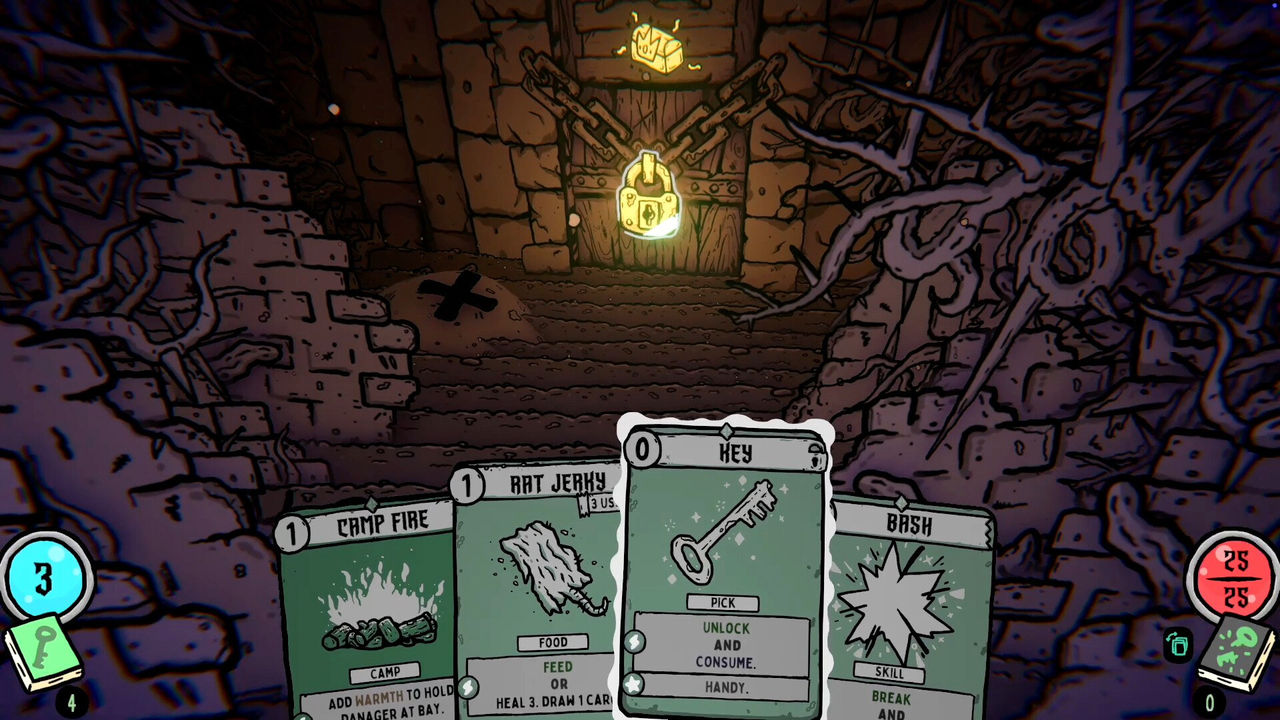
The official store text calls Shroom and Gloom a double-deckbuilder and describes both halves plainly: the combat deck survives fierce battles, while the explore deck navigates dungeons, modifies cards and unlocks weapons and abilities. The walkthrough's core warning is that the two must be built as one engine, because the explore deck is what earns you the upgrades the combat deck needs.
| Deck | Job | Draft toward |
|---|---|---|
| Explore | Movement, searching, locks, upgrades, healing choices | Keys, shovels, light and card improvement |
| Combat | Attacks, skills, damage modifiers and food effects | One main damage plan plus sustain |
| Foresight | Passive premonitions that trigger as you play | Triggers that match your food or draw engine |
One community database for the Early Access build counts hundreds of explore and combat cards and a separate pool of Foresight passives, which is a useful reminder that no single card list is complete. Community notes also describe Gunk, a status that lingers on a card and raises its energy cost, plus cards such as Sweep and Rinse that clean it off. Treat the exact card names here as build-scoped rather than final.
Fighting Encounters in Order
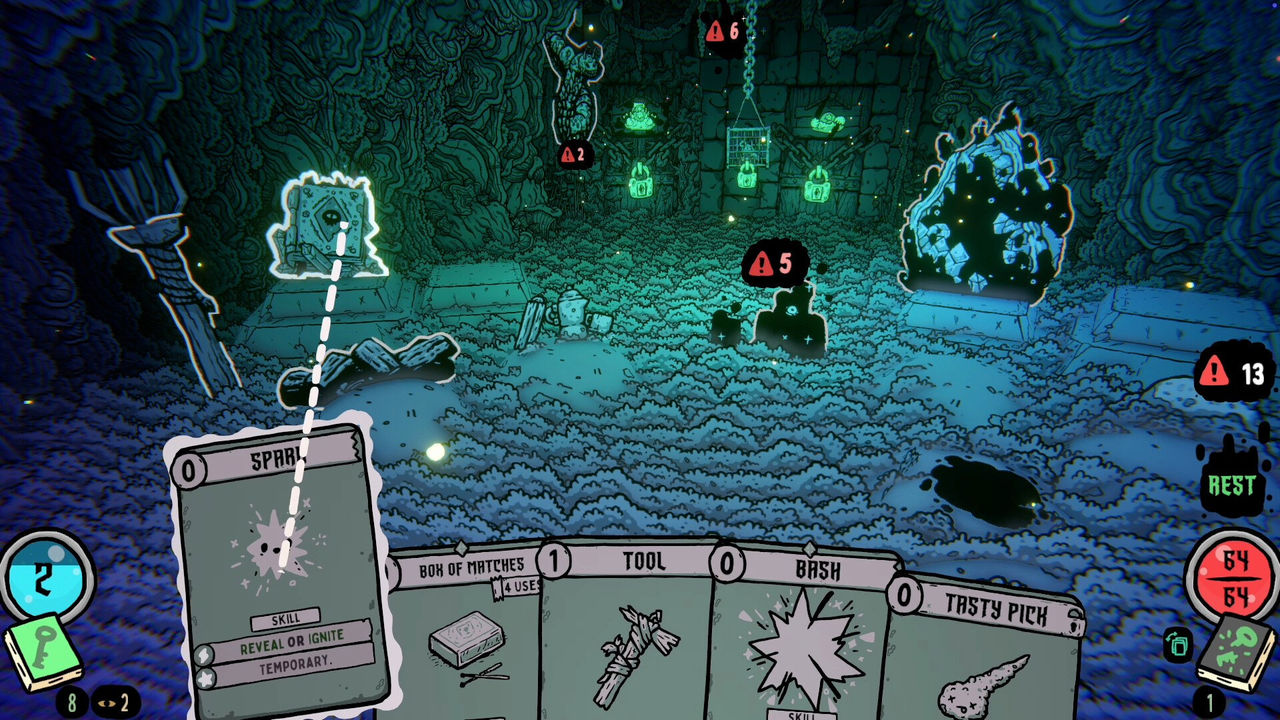
Combat is intent-reading first, damage second. The Into Indie Games tips page says multiple enemies act each turn and the signs above their heads tell you which will attack, which will defend and which will do nothing, so you can choose targets deliberately instead of spreading damage.
- Remove the enemies guaranteed to hit you next turn before anything else.
- Apply vulnerability to a tough target before spending your strongest attacks.
- Do not dump your whole hand; energy limits what can actually resolve.
- Watch for enemies that evolve on death, since killing them early can be worse than late.
Recovery, Camp and Reaching the Gloom
Recovery is designed into the deck rather than bolted on. The official text says you can eat roasted enemies to restore lost health, and that throwing roasted enemies into a pot cooks soups that change the run. Session footage shows a Toasty card that heals when consumed, and a passive that heals when you bash, which is why the walkthrough treats recovery as a build decision.
Camps are the other half of progression. That is where you upgrade attacks, season weapons to drop food, and remove a weak card so it stops clogging your draw. Player notes recommend clearing every camp interaction you can in the first three or four levels, and warn that staying longer raises the danger. When the route finally reaches the Gloom, the same principle applies: keep the deck lean, keep food available, and do not spend the finisher before the setup that makes it lethal. For the picks that carry that plan, see the best cards page, and for the camp and combat habits behind it, the tips and tricks page.
FAQ
How is a Shroom and Gloom run structured?
As a repeatable loop rather than a fixed room list: explore, prepare, fight, recover, consolidate. The credited walkthrough says the game is a roguelike with no published card-by-card route, so the plan has to be flexible. You move through hand-drawn dungeons in first person, choosing between rewards, locks and camps until you reach The Gloom.
What is the difference between the explore deck and the combat deck?
The explore deck handles movement, searching, card modification and unlocking tools, while the combat deck holds attacks, skills and defensive effects. The official Steam description calls the game a double-deckbuilder, and the walkthrough's key lesson is that a strong combat deck is useless if your explore deck cannot move or search.
When should I rest at a camp in Shroom and Gloom?
When the extra camp action is worth the rising danger. Early footage shows the game warning that the longer you stay, the more risky things get, and camps are also where you sharpen attacks, season weapons and remove dead cards. The strategy guide recommends doing everything you can in camp during the first three or four levels.
What order should I kill enemies in?
Start with the enemies guaranteed to damage you next turn. The Into Indie Games tips page says to read the signs above each enemy to learn which will attack, which will defend and which will do nothing, then remove the attackers first. Cards that apply vulnerability are singled out as especially strong against tougher targets.
How do I recover health in a run?
Eat what you kill. The official description says you season, skewer or roast your foes and eat them to restore health, and can throw roasted enemies into a pot for soups. The walkthrough treats food as part of the build rather than an emergency button, and says Foresight passives can add regular healing triggers.
References
- Shroom and Gloom walkthrough: Build Better Decks, Survive Fights — shroomandgloomgame.wiki
- Shroom and Gloom: Best Early Game Tips & Tricks — Into Indie Games
- Shroom and Gloom on Steam
- There's a NEW AREA in Shroom and Gloom... and It's Not Easy — YouTube
Facts on this page are compiled from the references above. Items marked "to confirm" are single-source and not yet verified.