
Shroom and Gloom · Game Guides · Guide
Shroom and Gloom Tips and Tricks — Survive the Early Runs
Shroom and Gloom tips and tricks for the early runs: health and food first, exploration supplies, practice dummy upgrades, enemy intent order and card removal.
By the New Game Wiki team · Updated 2026-10-04
On this page (9)
- Early-Game Priorities: Health Before Damage
- Reading Encounters and Ordering Targets
- Camp Upgrades and Card Removal
- A Practical Early-Run Plan
- What is the best early Shroom and Gloom tip?
- Which camp upgrade should I take first?
- Should I upgrade a card or add a new one?
- How do I read enemy intent in Shroom and Gloom?
- When and how do I remove a card?
Shroom and Gloom tips and tricks mostly protect you from the two mistakes the early game punishes hardest: chasing damage before you can survive, and letting the deck grow until the cards you need never show up. Both credited sources — the Into Indie Games tips page and the shroomandgloomgame.wiki strategy guide — say the same thing in different words: stabilize first, then scale. This page collects the habits that actually change a run.
Early-Game Priorities: Health Before Damage
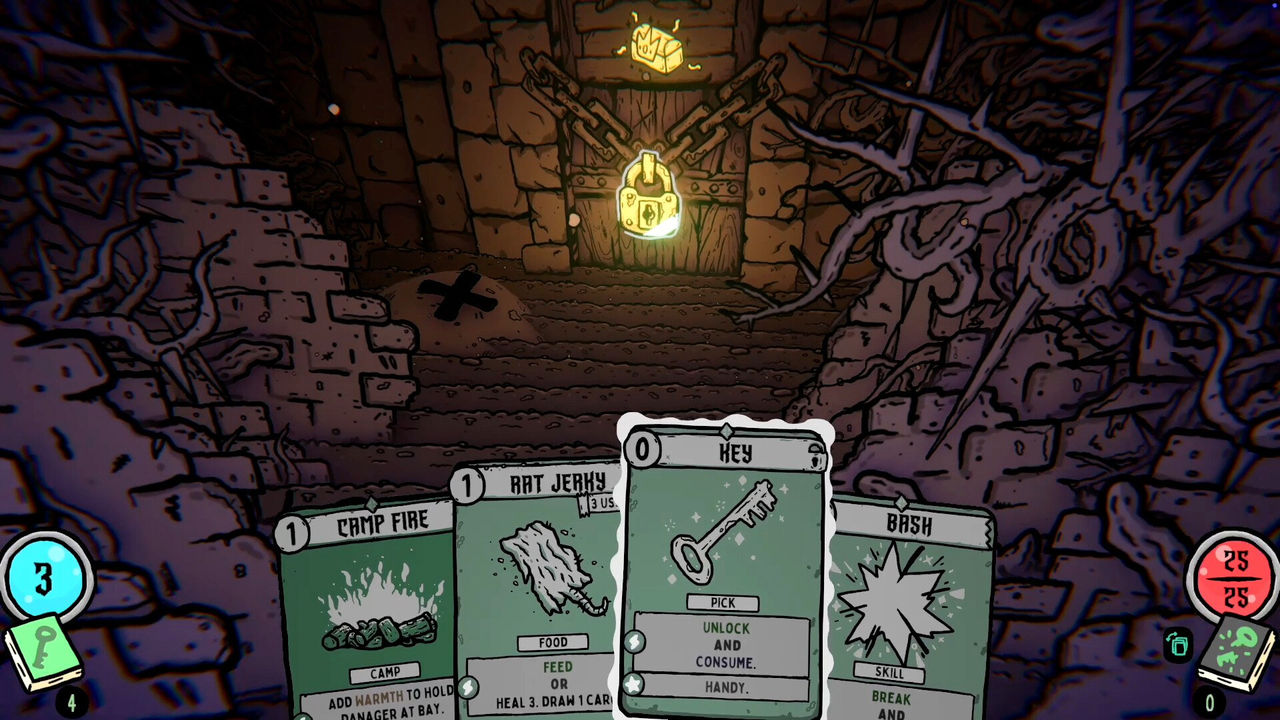
You cannot block in Shroom and Gloom's early fights, so incoming damage is something you absorb and heal, not something you prevent with a defensive card. That single fact reshapes every early reward choice, because a food card is often worth more than a flashy attack you can only play once.
| Priority | Why it matters |
|---|---|
| Healing food | Toasties and similar cards restore health mid-fight |
| Health upgrades | Raise the ceiling before tougher enemies arrive |
| Exploration supplies | Shovels, keys, flashlights and campsites keep routes open |
| Reliable damage | One dependable attack beats several expensive ones |
- Take health buffs whenever they are offered; the time to be greedy is later.
- The bloodthirsty butcher card heals a little after each kill, per Into Indie Games.
- Never run short of keys, shovels or a light source.
- Keep at least one ignition source so you can light torches and campfires.
Reading Encounters and Ordering Targets
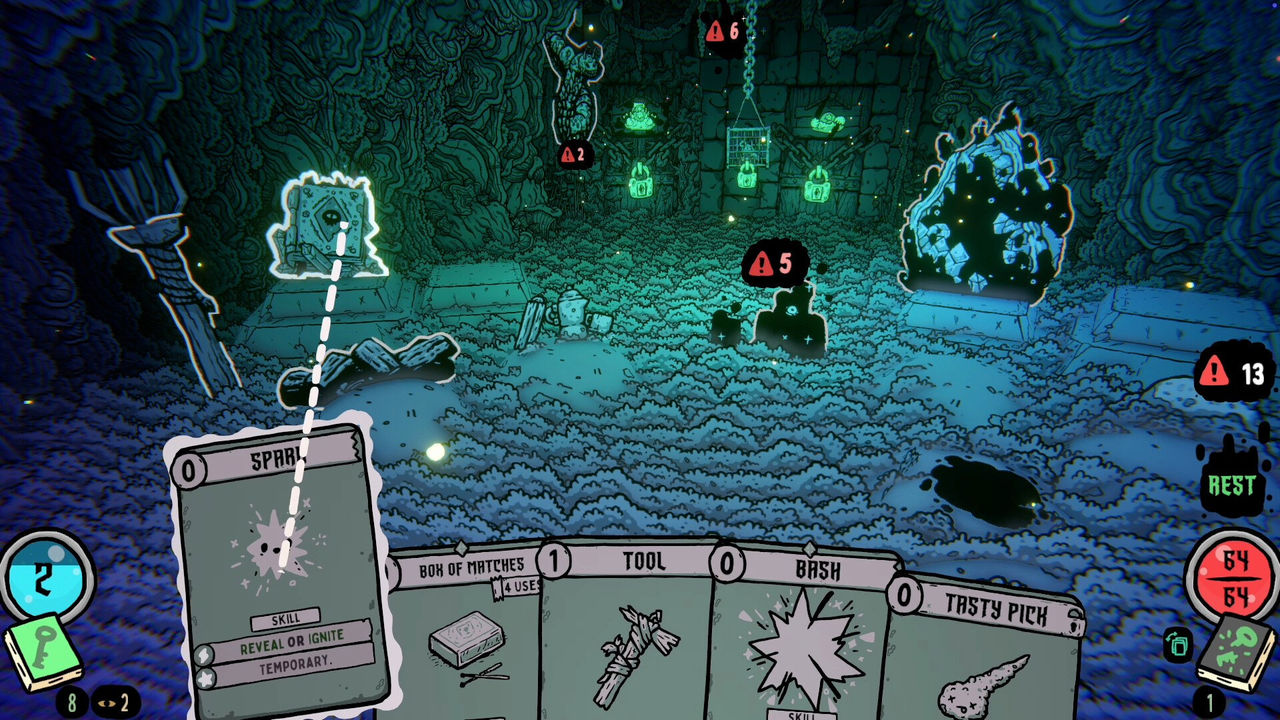
Combat is where the deck meets the enemy's plan. Multiple enemies act each turn, and Into Indie Games says the signs above their heads are the key: learn which one attacks next, which defends and which does nothing, then kill in that order. Applying vulnerability to a heavy target before your burst is the other half of the same idea.
| Signal | Response |
|---|---|
| Attack icon | Kill or interrupt this enemy first |
| Defensive icon | Leave it for later if a bigger threat exists |
| Idle icon | Ignore it unless it buffs or summons |
| Tough target | Apply vulnerability, then spend your burst |
- Fight groups in order of who will hurt you, not who has the least health.
- Do not waste a finisher on a target that is already dying.
- Watch for enemies that change on death; the sequencing matters.
- Food is also a combat resource, so healing is a legitimate turn.
Camp Upgrades and Card Removal
Camps are where a run is won. The strategy guide treats the Practice Dummy as the standout station because a multi-hit or fatal-payoff attack gains the most from extra damage, with Seasoning next because it turns kills into food. Later, the removal option lets you cut a dead card so your best draws come up more often.
- Practice Dummy first, then Seasoning for food generation.
- Improve a card you already draw often, not a rare one you rarely see.
- Use the forget-a-card option on the weakest starter once your plan is set.
- Skip "free" draws that add dead weight to the deck.
A Practical Early-Run Plan
Put together, the early-run plan is deliberately unambitious. Build a versatile explore deck so routes stay open, collect health upgrades while damage is still cheap to find, and let the combat deck lean on one improved attack that also produces food. Fight the group in threat order, heal with what you roast, and only start experimenting once the run can survive a bad draw.
One more habit helps more than any single card: read the card text in your build. The strategy and walkthrough sources are both explicit that exact names, values and upgrade thresholds are tied to a specific demo build and can move during Early Access, so a tip that was true last patch is not a rule. The best cards page lists the picks worth building around, and the build page turns those picks into three coherent deck paths. Verify before you draft around it.
- Stabilize health and food before you chase a combo.
- Keep the deck small enough that your best card shows up.
- Re-check card text after each update rather than trusting a list.
- Treat any published tier list as demo-era guidance.
FAQ
What is the best early Shroom and Gloom tip?
Build health and food before damage. Into Indie Games says not to chase big numbers early because stronger attacks come later anyway, and to stack healing food cards and health upgrades instead. Its single most practical note is that you cannot block attacks in the early game, so you tank the damage and heal through it.
Which camp upgrade should I take first?
The Practice Dummy. The Into Indie Games tips page says to pick the practice dummy card, which increases the raw damage of your attacks, then improve the damage of a combat card that turns enemies into food. The strategy guide agrees, calling the dummy the strongest early camp station because a cheap repeated attack scales best.
Should I upgrade a card or add a new one?
Upgrade what you already draw. The credited walkthrough and strategy guide both say to improve a small number of useful cards rather than adding every card you see, because a bloated deck makes the specific attack or food generator you need harder to find. Add a new card only when your deck clearly lacks damage, survival or exploration utility.
How do I read enemy intent in Shroom and Gloom?
Watch the icons above each enemy. Into Indie Games says the signs show which enemy will attack next turn, which will defend and which will do nothing, and that you should remove the guaranteed attackers first. Cards that apply vulnerability are especially useful on tougher enemies, which should be softened before your burst.
When and how do I remove a card?
Later in a run the game offers the option to forget a card and take it out of the deck permanently. Into Indie Games recommends using it on a weak combat card that wastes a turn, since the right draw matters more than a large deck. Community camp notes also treat the toad station as the removal option.
References
- Shroom and Gloom: Best Early Game Tips & Tricks — Into Indie Games
- Shroom and Gloom strategy: Smart Tips for Winning More Roguelike Runs — shroomandgloomgame.wiki
- Shroom and Gloom on Steam
- Welp I started generating dozens of free cards and MELTED this run! — YouTube
Facts on this page are compiled from the references above. Items marked "to confirm" are single-source and not yet verified.