
Shroom and Gloom · Cards · Guide
Shroom and Gloom Best Build — Three Deck Paths That Work
The Shroom and Gloom best build options: toasty sustain, hit-count growth and draw-and-energy tempo, with the drafting rules that keep each plan on track.
By the New Game Wiki team · Updated 2026-10-04
On this page (7)
The Shroom and Gloom best build is whichever path solves the problem that is currently ending your runs, not a fixed optimal list. The credited builds guide frames this as three flexible directions rather than classes, and it is careful to say you may not see every card in every run, so you build around the effects you actually find. Each path below has a clear win condition and a clear failure mode.
Three Build Paths
The three paths cover sustain, scaling and consistency. Toasty sustain converts kills into healing, hit-count growth turns repeated attacks into a finisher, and draw-and-energy tempo keeps a hand moving so expensive cards stay playable. A run usually commits to one after the first two or three meaningful upgrade choices.
| Build path | Win condition | Main risk |
|---|---|---|
| Toasty sustain | Finish enemies into edible rewards, then heal | Damage falls behind if you draft too much food |
| Hit-count growth | Scale a repeated attack into a huge turn | Retaliation and energy pressure |
| Draw-and-energy tempo | Keep the hand moving and pay for expensive cards | Self-damage and dead high-cost hands |
- Pick the path that matches the upgrades you were actually offered.
- Toasty sustain wants fatal effects and food, not raw attack numbers.
- Hit-count growth wants one attack you will see every fight.
- Draw-and-energy tempo wants cheap cards that replace themselves.
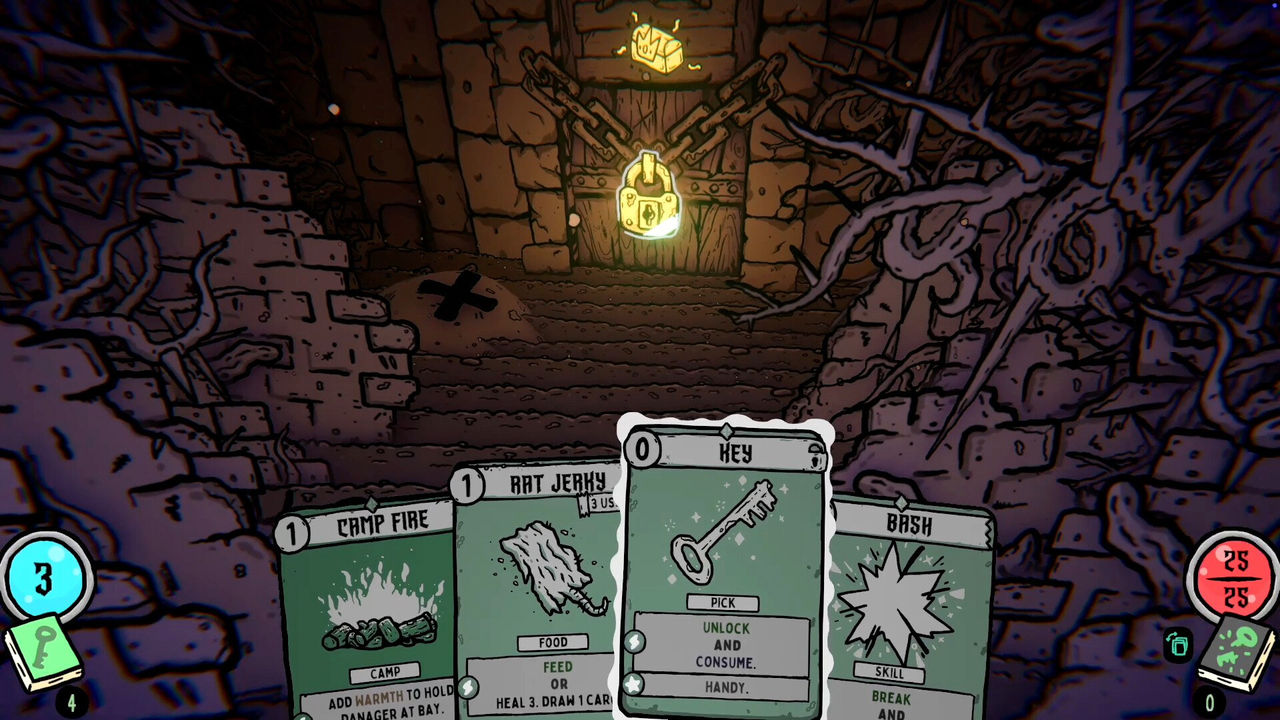
Drafting Toward the Plan
Every build decision should answer one question: does this improve my combat win condition or make the route safer and more rewarding? A card can be excellent for exploration without dealing damage, and a powerful combat card is a poor pick if it leaves your route unable to reach the next upgrade.
| Decision | Default |
|---|---|
| Upgrade or new card | Upgrade a card already carrying your plan |
| Explore or combat reward | Strengthen whichever deck is failing |
| Flashy or consistent | Prefer the card you can play every turn |
| Food or payoff | Hold food when the next route has fights |
- Draft toward one win condition instead of collecting good cards.
- Improve the small number of cards you draw most often.
- If health is low, value food and safe route cards over finishers.
- The guide's baseline claim is a scale of around 300 cards per pathway, so consistency beats completion.
FAQ
What is the best build in Shroom and Gloom?
There is no single best build, because the credited guide describes three flexible paths rather than official classes and warns you may not see every card in a run. Toasty sustain, hit-count growth and draw-and-energy tempo are its three tested directions, and the right one is whichever fixes the problem currently killing your runs.
How does the toasty sustain build work?
You finish enemies into edible rewards, then heal off them. The guide pairs fatal-toasty effects with food and Bite-style healing so a successful kill becomes recovery. Its main warning is that drafting too much food leaves your damage too low to actually secure the kills the loop depends on.
What is the hit-count growth build?
You stack upgrades onto repeated attacks so a multi-hit card scales into a massive turn. The guide names Hot Poker, Practice Dummy upgrades and eating or rage-based growth as its ingredients. Retaliation and energy pressure are the risks, because a card that hits many times also spends heavily on energy.
Should I balance the explore deck in a build?
Yes, always. The guide is explicit that Shroom and Gloom is a double-deckbuilder and that a huge attack is much less valuable if the explore deck cannot provide routes, upgrades and unlocks. Exploration cards determine how often you reach the resources your combat plan needs.
How many cards does a pathway have?
The Early Access notes referenced by the guide describe two pathways, unique characters and roughly 300 explore and combat cards per pathway. That is why the guide refuses to publish a permanent tier list: the card pool is large and still changing during Early Access.
More in Cards
More cards pages in Shroom and Gloom.
- Shroom and Gloom Best Cards — Picks, Combos and Food LoopsGuideUpdated 2026-10-04
References
- Shroom and Gloom builds: 3 Reliable Deck Paths — shroomandgloomgame.wiki
- Shroom and Gloom on Steam
- Suggestions by a roguelike enjoyer — Shroom and Gloom Steam Community
Facts on this page are compiled from the references above. Items marked "to confirm" are single-source and not yet verified.