
CONVRGENCE · Game Guides · Guide
Convrgence Gameplay — The VR Extraction Loop Explained
Convrgence gameplay explained: the VR extraction loop, Chernokamensk raids, loot and insurance, demon nights, the loyal dog companion, and gear progression.
By the New Game Wiki team · Updated 2026-10-04
On this page (10)
- What CONVRGENCE Gameplay Actually Is
- The Raid Loop: Prepare, Scavenge, Extract
- The Dog, the Diegetic Interface, and a Recorded Tutorial
- Demons, Nightfall and Reading the Zone
- Progression: Selling Loot and Rebuilding a Kit
- What is CONVRGENCE?
- How does a CONVRGENCE raid work?
- What happens if you die in CONVRGENCE?
- Does CONVRGENCE have a dog companion?
- Why do you have to extract before nightfall in CONVRGENCE?
CONVRGENCE gameplay is a VR extraction loop wrapped around a hostile anomaly zone, and the pitch is compact: prepare a kit, raid the Chernokamensk Anomaly Zone, grab loot and artifacts, and get out before nightfall turns the map against you. The Steam store page describes it as an atmospheric VR extraction shooter with procedurally generated locations, made by Monkey-With-a-Bomb, the developer behind Paradox of Hope, and it lists the companion dog, a deep weapon system, leaderboards, and accessibility options as core features. This page breaks the loop into its parts: preparation, the raid, the dog and interface, the demon night, and the sell-and-rebuild progression.
This page is compiled from the official Steam store page and a full recorded 1.0 launch session; details that appear in only one source are marked to confirm.
What CONVRGENCE Gameplay Actually Is
This is a single-player, VR-only extraction shooter rather than a multiplayer shooter with a solo mode. Steam lists the categories as single-player, Steam Achievements, tracked controller support, VR Only, Steam Cloud, Steam Leaderboards, and Family Sharing, and the genres as Action and Adventure. The design goal is immersion: the store description promises no floating windows and no laser pointers, with all interfaces diegetic so that reading your PDA, checking your backpack, and handling a weapon all happen inside the world rather than in a menu overlay. That choice shapes every other system, because preparation and inventory management become physical actions rather than abstract screens.
| Core feature | How the Steam page describes it |
|---|---|
| Companion dog | A loyal partner that helps in battle and when scavenging for supplies |
| Extensive weapon arsenal | Realistic weapons with deep customisation options |
| Procedural locations | Each expedition offers a unique layout |
| Diegetic interface | No floating windows or laser pointers; all interfaces are in-world |
| Leaderboards | Compete with other players and win unique rewards |
| Accessibility | Seated mode, left-handed mode, and multiple movement and turning styles |
The Raid Loop: Prepare, Scavenge, Extract
A raid starts long before you leave the hideout. The Steam page tells you to choose and maintain your firearms, stock up on ammo and supplies, and plan the raid wisely, and the recorded session shows the practical version of that advice: the player buys ammo for the first run, takes the free insurance, checks the canteen, and picks up the artifact container before leaving. The zone itself is entered from a map that lets you choose a raid location, and the recorded tutorial warns that some areas are home to demons, which is why an unprepared trip into the wrong zone is a short one. Once inside, the loop is loot, fight when you must, and head for the extraction point.
The extraction rule is the whole tension of the game. The Steam page says to sell what you find and use the proceeds to buy new equipment, a cooler gun, or a more spacious backpack, and it adds that death costs all uninsured equipment. That single rule turns every full backpack into a decision: push for one more building or bank what you have. The recorded session reaches exactly that point when the player decides to extract rather than clear the rest of the village, because the bag is full and a second Mosin is not worth the risk. Extraction, not elimination, is how a raid pays.
- Buy ammo, healing, and the insurance policy before you leave the hideout.
- Take the artifact container if you intend to hunt artifacts, since artifacts need a dedicated slot.
- Check the zone map and avoid areas the game marks as demon territory until you have a UV light.
- Loot buildings methodically and mark anything you cannot carry, because full backpacks force extract decisions.
- Extract early with a full bag rather than clearing a zone for marginal value.
The Dog, the Diegetic Interface, and a Recorded Tutorial
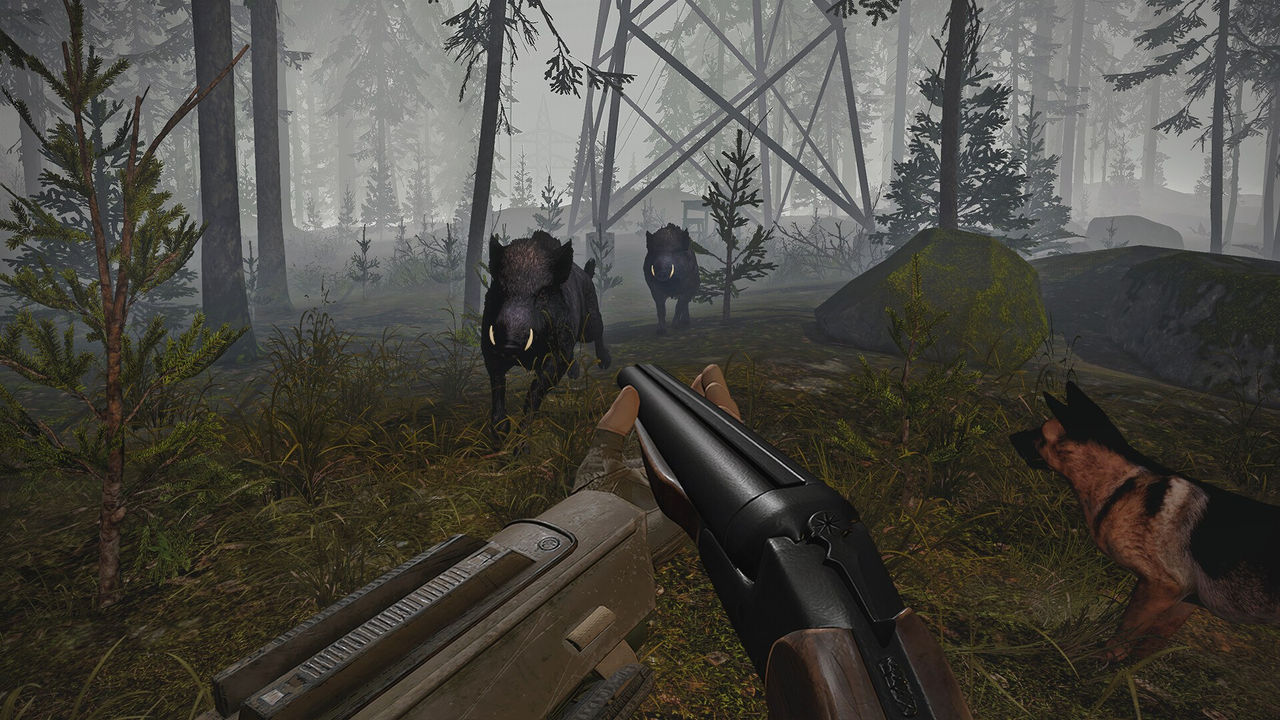
The dog is the feature the store page leads with twice, and the recorded tutorial shows how it works in practice. It fights alongside you, helps find supplies, and alerts you when it senses an enemy, which turns it into a mobile warning system rather than a cosmetic companion. It is also controllable without a menu: two quick whistles call the dog back and a long whistle tells it to wait, and the recorded player uses those commands during a bandit fight to keep the dog close. If you rely on the dog's alert as your early-warning system, the raid becomes about positioning rather than reaction speed.
The interface is the other half of the immersion pitch, and the tutorial is built to teach it physically. The recorded session walks through thumbstick movement, sprint and crouch, drawing the pistol, pulling out the PDA, switching tabs, toggling the flashlight, changing grip, using the UV flash, raising the rifle, taking off the backpack, picking objects up by hand, storing loot, and opening a medkit and bandage. Because all of that is in-world, the tutorial doubles as the control scheme: once you can smoothly move a medkit from your vest to your hand, you can survive a raid.
| In-world action | Why it matters in a raid |
|---|---|
| PDA and tab switching | Objective tracking and the map live on a physical device you raise to read |
| Backpack and vest | Loot capacity is physical, so space management is a real decision |
| UV flash | The documented defence against demons in the dark |
| Artifact container | Dedicated storage for the artifacts the trader pays the most for |
| Whistle commands | Two quick whistles call the dog back, a long whistle tells it to wait |
Demons, Nightfall and Reading the Zone
Nightfall is the raid's soft timer, and the game says so directly. The Steam description warns you to extract before nightfall or face what lurks in the dark, and the recorded tutorial explains that demons are associated with particular areas and that a UV flash can save your life, while also advising you not to take risks without preparation. The store's story material sets the same tone, describing an artifact hunter who has to confront bandits, wild animals, and demons that emerge to hunt under the veil of night. The practical takeaway is that a raid should be planned around daylight, with the demon threat treated as the reason to leave rather than an enemy to farm.
The zone also refuses to be memorised. Procedural generation is listed as a main feature, and the store page tells you that familiar places can change with each visit, so a route that worked yesterday may not exist today. That is why the game leans on tools rather than map knowledge: the trader points you toward the old gas station for refuelling, marked with a green light, and the recorded session notes that fuel is a real concern on a forest run. Between fuel, daylight, and cargo space, the zone is best read as a set of constraints you manage rather than a level you clear.
Progression: Selling Loot and Rebuilding a Kit
Progression is economic rather than level-based. You sell found valuables and artifacts at the hideout, then spend the money on a better gun, more ammo, or a bigger backpack, and the trader Zaharage is explicit in the recorded session that loot and artifacts are the currency for everything you need. The community wiki adds a useful detail about how selling works: altered items sell for 3,000 Rubles and any item marked as high priority on the computer next to the merchant gives double the listed Rubles, which means checking the merchant's priority list before you dump a haul is free money. Insurance is the other half of the economy, because it decides how much of a failed raid you actually lose.
| Loot category | Documented examples | Sell value signal |
|---|---|---|
| Weapons | Revolver, TT-33, PMM, APS Stechkin, PPSh-41, AKM, Saiga-12, SVD | Priced from about 1,000 to 5,000 Rubles on the community loot table |
| Altered items | Artifacts and altered objects | Sell for 3,000 Rubles each, doubled when marked high priority |
| Attachments | Scopes, silencers, lasers, foregrips, bayonets | Roughly 500 to 2,500 Rubles by the community table |
| Utility and food | Medkits, bandages, canteens, food and drink | Small but steady income, useful for early insurance and ammo |
- Check the merchant's priority list before selling, because high-priority items pay double.
- Sell duplicates before buying upgrades, and keep one reliable weapon rather than hoarding spares.
- Insurance is single use, so buy it on runs where the gear you carry is worth more than the premium.
- Use early raids to learn extraction routes, then spend the profit on a larger backpack to widen your margin.
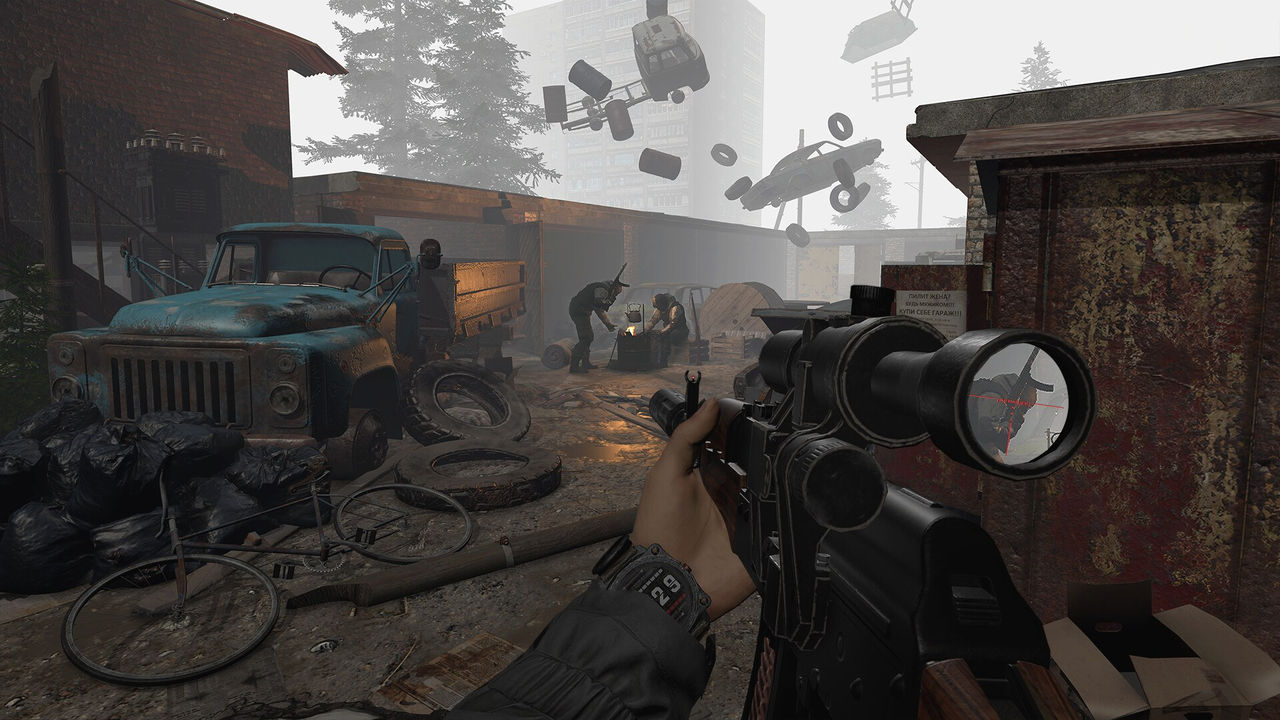
Two more recorded facts explain the 1.0 launch state. The full release added a story with an ending, a new location, side quests, and new weapons, and players who played the Early Access build or the developer's earlier game received cosmetic DLC as a thank-you. For the surrounding systems, the tips page covers loot and nightfall habits, the vr page covers headset setup and comfort, and the mods page lists the community add-ons for the VR build.
FAQ
What is CONVRGENCE?
CONVRGENCE is an atmospheric VR extraction shooter set in the procedurally generated Chernokamensk Anomaly Zone, made by Monkey-With-a-Bomb, the creator of Paradox of Hope. You scavenge loot, fight bandits, hunt artifacts with a dog companion, and extract before nightfall.
How does a CONVRGENCE raid work?
You prepare firearms, ammo, and supplies, travel into the zone, loot buildings for valuables and artifacts, and reach an extraction point before dark. Death costs you all uninsured equipment, so the risk-and-reward loop is the core of the game.
What happens if you die in CONVRGENCE?
The Steam page states that on death, all uninsured equipment is lost. Insurance is a single-use item that returns your equipment after death, and the trader gives the first insurance policy for free, which is why the recorded tutorial stresses picking it up before a raid.
Does CONVRGENCE have a dog companion?
Yes, and it is one of the game's main features. The dog fights and helps scavenge, senses enemies, and responds to whistle commands: two quick whistles call it back and a long whistle tells it to wait.
Why do you have to extract before nightfall in CONVRGENCE?
Night brings demons. The Steam description warns you to extract before nightfall or face what lurks in the dark, and the recorded tutorial adds that a UV flash from your flashlight can save your life against demons, though it is best not to take risks unprepared.
More in Game Guides
More game guides pages in CONVRGENCE.
- Convrgence Tips — Loot, Insurance and Surviving the NightGuideUpdated 2026-10-04
References
- CONVRGENCE on Steam
- CONVRGENCE — Steam Community Hub
- CONVRGENCE 1.0 Is Here… I’m Starting From Nothing (YouTube)
- Loot — CONVRGENCE Wiki (Fandom)
Facts on this page are compiled from the references above. Items marked "to confirm" are single-source and not yet verified.