
Neighbors: Suburban Warfare · Game Guides · Guide
Neighbors Suburban Warfare Guide — Match Flow, Economy and Defense
A Neighbors Suburban Warfare guide to match flow, resource crates, tech upgrades and base defense, with neighbor roles and attacker tips for new players.
By the New Game Wiki team · Updated 2026-10-04
On this page (10)
- How a Match Is Structured
- Early Game: Resources, Money, and Tech
- Base Defense: What Actually Matters
- Attacking the Enemy House
- Neighbor Roles and Team Composition
- What is the first thing to do at the start of a Neighbors: Suburban Warfare match?
- What tech tiers matter most in Neighbors: Suburban Warfare?
- How many oil wells can a team build?
- Do I need to break doors and fences to enter an enemy house?
- How does the day and night cycle change play?
A Neighbors Suburban Warfare guide really comes down to three habits the game never spells out: collect resources before the barrier drops, spend the first chunk of money on ground-floor window upgrades, and stop bashing fences you could simply jump over. This page covers match flow, the economy and tech upgrade tracks, base defense, attacking an enemy house, and how the playable roster shapes a team. It draws on the official Steam listing, the official Neighbors site, the community wiki, and two community walkthroughs, so anything that rests on a single player report is marked as such.
How a Match Is Structured
Every match runs on a day and night cycle wrapped around three short phases: a prep window before the barrier lifts, an open daytime push, and a night phase locked down by guard dogs. The prep phase is the only part with no enemy contact, which makes it the most valuable minute in the game.
| Phase | What changes | What you should be doing |
|---|---|---|
| Prep | Barrier is up, no enemy contact | Grab traps and the free hammer, then break two outer fences for early money |
| Day | Yard is open, deliveries land | Push the enemy house, fight for resource crates, loot uncollected deliveries |
| Night | Guard dogs active, enemy yard is lethal | Defend, upgrade windows, and use ranged damage instead of diving in |
A workable prep route looks like this:
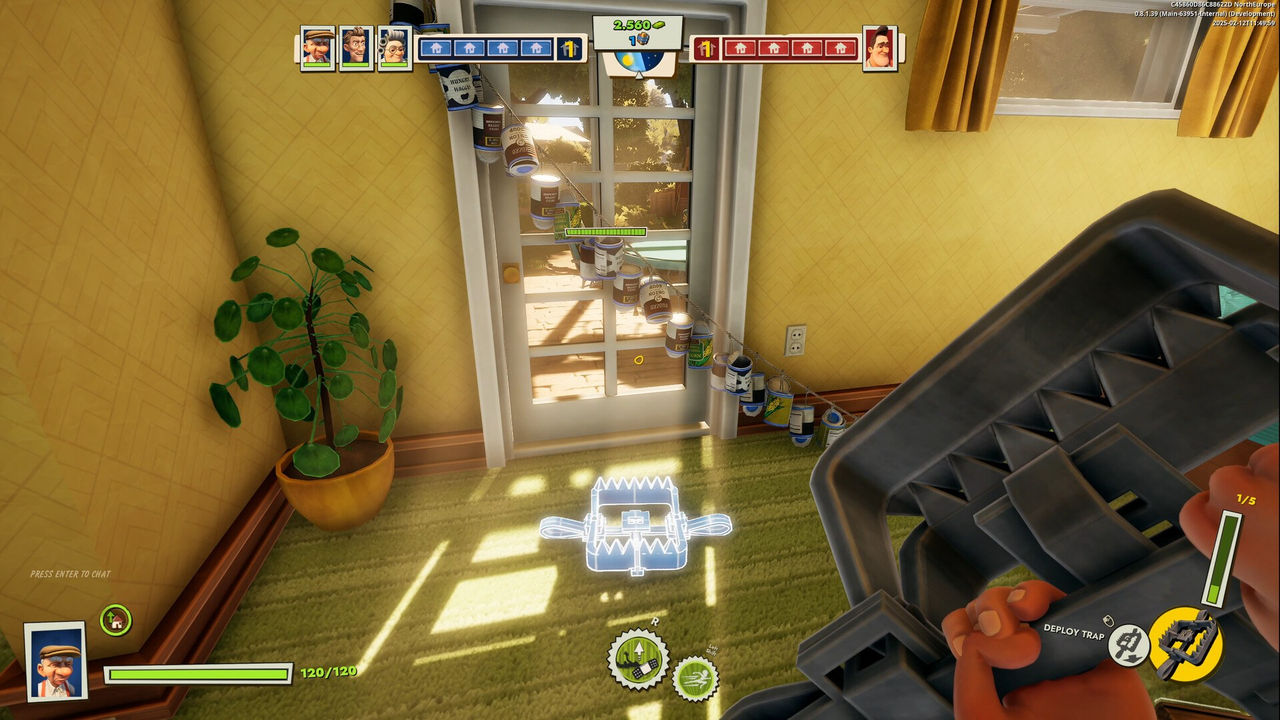
- Go to the garage first for the bear traps, barricades and the single free hammer.
- Let the team's defender, usually Kim, keep the hammer.
- Trap the basement door and the back doors, since those are hit first.
- Check the kitchen and laundry room for extra barricades.
- Add three logs to the fireplace so nobody can drop in through the chimney.
- Finish with two fences near the construction site for early money.
Skipping the route costs opening tempo, because the enemy team is running the same loop on the mirror side of the map.
Early Game: Resources, Money, and Tech
Money and tech are separate currencies that come from the same sources: resource crates, broken props and deliveries. Crates are the important one, because throwing a crate into the garage shop converts it into cash plus one tech point, and tech points unlock the tools that let you break houses.
| Tech counter | Unlock | Why it matters |
|---|---|---|
| 4 | Oil wells | Passive income for the whole team |
| 5 | Saw | Fast damage against doors and windows |
| 9 | Sledgehammer | The heaviest structure damage in the game |
Teams can buy up to three oil wells and they are shared, so buying one blocks a teammate from buying the same one. A community walkthrough recommends placing them inside against the living-room wall rather than in the open yard and calls that an early-economy decision that decides long games; the exact spacing is a single-source tip, to confirm.
Other income sources are smaller but reliable:
- Breaking an outer fence pays 200 money.
- Lockpicking a door or window pays the same as breaking it, and Mary-Jean does it faster.
- Delivery trucks drop crates into your yard, which is exactly why orders should only be placed at night.
- Any crate left uncollected in an enemy yard can be thrown back to your own shop.
Base Defense: What Actually Matters
Defense is mostly about windows, not doors. A community guide argues that ground-floor windows are the real entry points because every other route into the map is a jump away, and that upgrading a window for 250 money with the hammer is the first purchase a defender should make. Upgraded windows seal shut, which also blocks your own team from using them as exits, so that trade-off is worth knowing before you spend.
Attackers rotate around the house, so the priority is to slow them at each entry rather than wall off one. The defender's checklist:
- Upgrade all ground-floor windows as soon as money allows.
- Board the back-middle window first if you cannot upgrade it, because it is described as the most-used window in the game.
- Bear-trap the back doors and the basement stairs.
- Keep the fireplace lit so the chimney route stays closed.
- Only barricade where it blocks a real path; extra boards on a wide window save little time.
Barricade placement is a genuine skill. A community walkthrough notes that horizontal boards can be broken by a running crouch-jump, while a tall cross-section board cannot be stood on and takes far longer to remove, and that Kevin can crawl under boards that stop adult characters; these placement details are single-source, to confirm.
Attacking the Enemy House
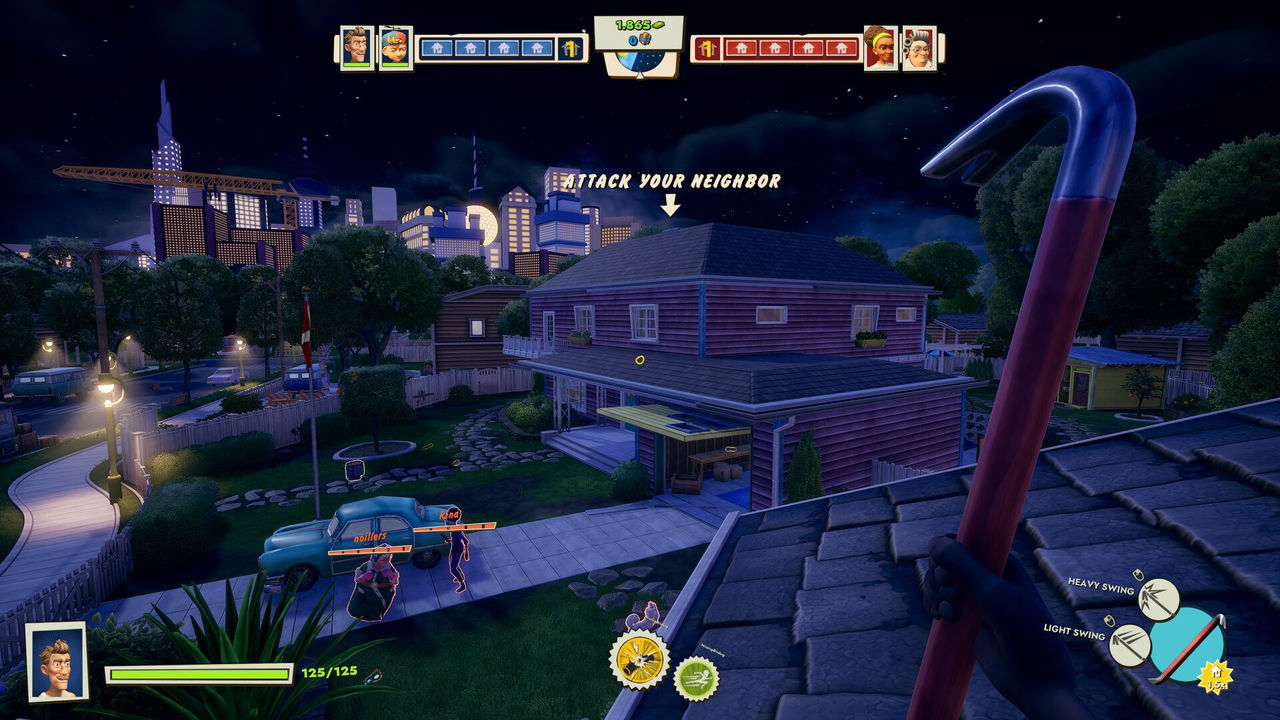
The fastest way into an enemy house is not the front door. Both sides of the map have rooftop access through a fixed ladder that cannot be looted or destroyed, and fences can be hopped or climbed, so the attacker's job is to reach a window while the defender is looking somewhere else.
Once inside, the priority order changes. Removing one log from the enemy fireplace disables it entirely and reopens the chimney as an entry point for your team, which makes it the single most valuable early action against a fortified house. The boiler room is the easiest early objective because it is jumpable and usually not upgraded yet, while late in a match it becomes the hardest room to take.
What to do on offense:
- Enter through a window or the rooftop, not the boarded front door.
- Pull one fireplace log and throw it off the map.
- Hit the boiler room early, while traps and barbed wire are still thin.
- Steal deliveries and crates instead of duelling defenders in the open.
- Watch the street: cars kill players who stand in the road.
Neighbor Roles and Team Composition
The roster is smaller than it looks in practice, because a few roles are close to mandatory. The community walkthrough that produced the first widely shared tier list treats Kim as required, since she is the only character who can repair structures and combines the highest damage with the fastest time-to-kill. Mary-Jean is the other near-lock, as the only ranged root in the game plus a short-cooldown wall-hack ability and faster lockpicking income.
| Role | Neighbor | Job in a team |
|---|---|---|
| Repair and DPS | Kim | The only structure repairer, and the highest-damage fighter |
| Control and economy | Mary-Jean | Roots enemies, reveals them, farms faster with lockpicks |
| Frontline tank | Doreen | Highest melee damage over time and the tankiest character |
| Sustain | Gramps | The dedicated healer |
| Duelist | Chad | Described as the counter to Doreen |
| Specialist | P.A. | Backdoor pressure and a periodic free kill |
| Mobility | Kevin, Louie | Kevin is mobile but fragile; Louie is rated the weakest pick in the same guide |
That read of the roster comes from a single community walkthrough recorded during Early Access, before later patches rebalanced several neighbors, so treat the rankings as a starting point rather than a current verdict, to confirm. For the fuller breakdown, see the tier list, the characters overview, and the how to play walkthrough.
FAQ
What is the first thing to do at the start of a Neighbors: Suburban Warfare match?
Gather resources before the opening barrier drops. The garage and tool shed hold bear traps, barricades and the team's only free hammer, while breaking outer fences on the way to the construction site pays 200 money each. Resource crates then feed your team's tech upgrades.
What tech tiers matter most in Neighbors: Suburban Warfare?
Community walkthroughs describe a three-track upgrade counter that starts at 0/4/7. Level four unlocks oil wells for early income, level five grants the saw, and level nine unlocks the sledgehammer, the strongest house-breaking tool. The counter is shown near the top of the HUD.
How many oil wells can a team build?
Up to three, and they are team-shared, so whoever buys them first locks the others out. A community guide places them against the living-room wall near the shop phone rather than in the front yard. That exact placement is a single-source tip, to confirm.
Do I need to break doors and fences to enter an enemy house?
No. Fences are described as an illusion of defense, because every house can be reached by hopping fences, using the fixed rooftop ladder, or jumping from nearby objects. Breaking doors mainly pays money and draws defenders out; it is not required to get inside.
How does the day and night cycle change play?
At night the guard dogs activate and kill anyone entering the opposing yard, so players stay on their own side and attack from range. During the day the yard is open, which is when deliveries should be ordered and looting runs happen.
More in Game Guides
More game guides pages in Neighbors: Suburban Warfare.
- Neighbors Suburban Warfare Wiki — Characters, Items and GuidesIndexUpdated 2026-10-04
References
- Neighbors: Suburban Warfare on Steam
- NEIGHBORS: Suburban Warfare — Official Site
- Official Neighbors: Suburban Warfare Wiki
- Neighbors: Suburban Warfare — Steam Community Hub
- Neighbors Suburban Warfare - FULL Game Guide, Optimal Strategies, Best Building Placement, Tier List — YouTube
- How to Play Kevin in Neighbors: Suburban Warfare GUIDE — YouTube
Facts on this page are compiled from the references above. Items marked "to confirm" are single-source and not yet verified.