
GRAIN ROT · Game Guides · Guide
Grain Rot Beginner Guide — The First Hour, Spark and the Deep Layers
A grain rot beginner guide to the opening Outpost quests, Spark and Vessel basics, the Deep Layers loop, Rot, and the upgrades worth buying first.
By the New Game Wiki team · Updated 2026-10-04
On this page (10)
- What to Do First in GRAIN ROT
- Spark, Vessels, and Dying Well
- The Deep Layers Loop
- Rot and the First Real Threats
- Which Outpost Upgrades to Buy First
- What is GRAIN ROT?
- When did GRAIN ROT release and what does it cost?
- What should I do first in GRAIN ROT?
- How many players can join a GRAIN ROT run?
- What happens when my vessel breaks?
GRAIN ROT drops you into a scorched wasteland as a Living Spark wearing a fragile wooden vessel, and the first hour is really a guided lesson in three systems: the Outpost you rebuild, the Spark you become when your body breaks, and the Deep Layers you descend into. This grain rot beginner guide follows the same order the game does, so you learn each system before the next one starts asking questions. Everything here is drawn from the credited community guides and the official Steam store page, and anything that only one source claims is marked as unconfirmed.
This page is compiled from the credited community documentation and the official Steam listing; details that rest on a single source are marked to confirm.
What to Do First in GRAIN ROT
The opening chain is handed to you by Biggie and Murch, the two NPCs at the Outpost. Biggie hands out the housekeeping objectives while Murch runs the shop, and the tutorial deliberately teaches you to move objects, clean, repair, and craft before it lets you near the elevator. The practical first moves are short and cheap, which is exactly why skipping them wastes time later: Murch sells the broom for 25 Gold, a wall repair costs 50 Scraps, and the quest chain gates everything behind it, including the rescue quest that unlocks the second floor. Nothing in this chain can be failed or missed, so if Biggie has nothing new to offer, the answer is usually that an earlier step has not been finished.
The opening quest steps are worth memorising because they double as your first economy lesson:
| Step | What you do | What it costs |
|---|---|---|
| Clean Up | Buy a broom from Murch, sweep three dirt piles | 25 Gold for the broom |
| Fixer Upper | Repair a broken wall in any room | 50 Scraps |
| Break & Build | Smash objects with the mallet and craft two structures | Free, tutorial gear |
| Explore the Deep Layers | First real descent with the cursed elevator | Carried currency resets on the way down |
A quick first-hour checklist keeps you from wandering:
- Finish the housekeeping quests before touching the elevator, because the story chain gates Little Buddy and the Second Floor Key.
- Smash crates outside Murch's shop for early Scraps rather than hunting deeper.
- Craft the cheapest structures you can find; two chairs satisfy the tutorial demand.
- Talk to Murch again after every return, since repeat visits are the documented way to keep the shop pipeline moving.
Spark, Vessels, and Dying Well
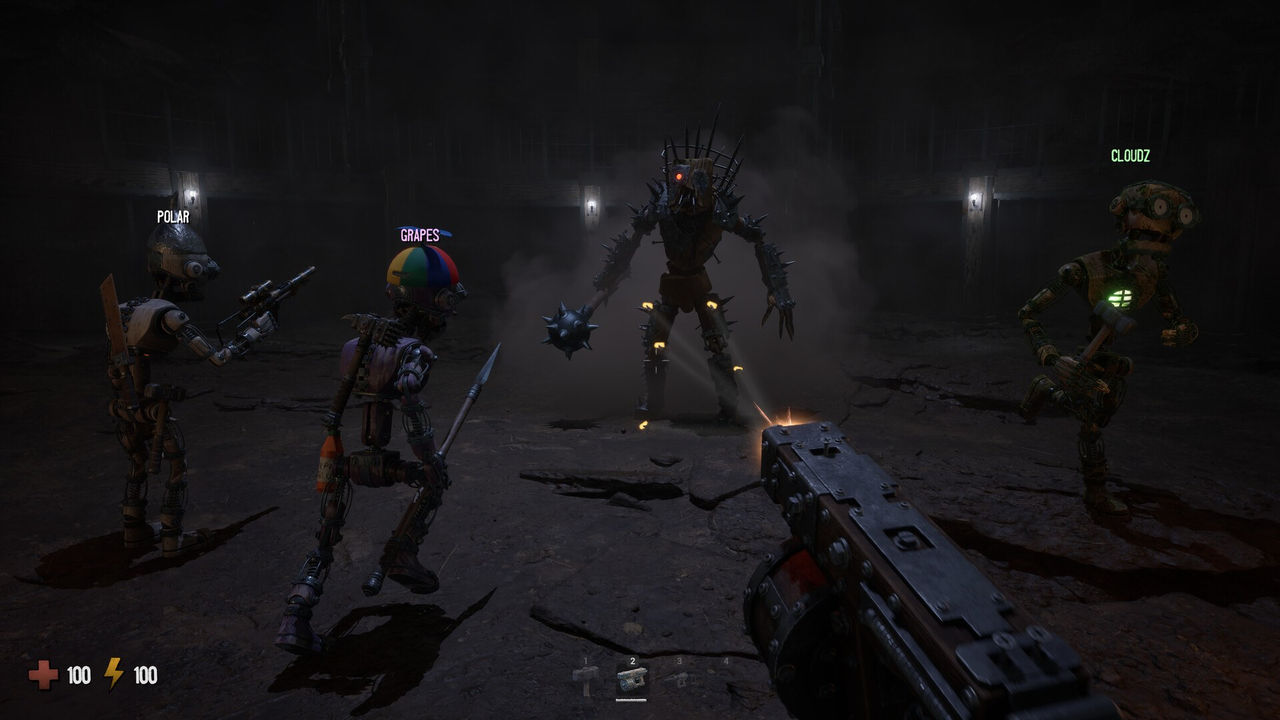
The idea that separates GRAIN ROT from other extraction games is that death is not binary. When your wooden vessel splinters, collapses, or catches fire, the Spark you actually are escapes, and the run continues. As a Spark you have a life bar that drains slowly over time and faster near enemies, it can be healed by allies, friendly NPCs, or light sources, and if it empties you can still drift around but you count as drained. If every player spark is drained at once, the run is over and the loot goes with it. That is the real fail state to watch, not the loss of a single body.
Playing as the Spark is a real tactical mode rather than a punishment screen. You can open and close doors, open chests, and pull levers, which means a bodiless player can still solve problems for the team. You can also scout ahead to read enemy positions and item rarity more easily, or force-push objects to make noise and pull enemies away from teammates. The documented trick is to keep an escape route in mind the whole time: note where spare vessels are before you need one, because finding a new host is never guaranteed and wandering bodiless in the dark is the fastest way to lose a run. One important warning from the guides: leaving in the elevator without a body still counts as a loss.
The Deep Layers Loop
The descent lives in the basement, where the cursed elevator is wired to a slot machine. Going down costs nothing, but your carried currencies reset to zero until you are back at the Outpost, and the floor layout plus enemy set is procedural, so a route you memorised last run does not exist this run. The panel above the elevator is not decoration either: the symbols it rolls describe what the next layer will contain, from extra enemies to rare loot, and reading them before you commit is the single cheapest improvement a new player can make.
Downstairs, the loop is smash, carry, process, and leave. Furniture breaks into Scraps, sparkling objects are worth far more when processed through the Grinder or the smaller machines, and the cursed elevator needs a certain amount of Gold to take you back up. The Grinder is loud, and pulling the lever on the processing machine alerts nearby Corrupted, so the safe pattern is to pay the elevator first and process second, giving yourself a straight run to the exit if the room turns against you. Every clean extraction pushes you one layer deeper on the next ride, while dying resets you to layer one, which is why short profitable runs usually beat ambitious ones early on.
| Resource | Where it comes from | What it is for |
|---|---|---|
| Scrap | Smashing furniture and crates | Repairs, Outpost rooms, crafting |
| Gold | Processing valuables, loot spots, enemies | Shop purchases, elevator fare, upgrades |
| Artifacts | Purple collectibles and machines | Blueprint rolls and constructs |
| Blueprints | Feeding Artifacts to the opener | Unlocking furniture and structures |
Staying alive long enough to spend that loot comes down to three habits:
- Leave the elevator, clear one connected branch, then return to something you recognise.
- Process valuables close to the elevator rather than carrying everything to a distant machine.
- Decide the extract point before the run starts, and stop when it is reached.
Rot and the First Real Threats
Rot is the status system that punishes greedy routing. Certain sections of the Deep Layers are coated in a strange liquid, and standing in it damages you slightly while building Rot; Corrupted enemies can apply it at close range too. The player-facing numbers are documented in the community material: above 50 the character sounds sick to teammates and starts shaking, and at 100 you get random vomiting and worse, and you begin radiating Rot onto the people around you. It is not a death sentence, and the game does not want you to treat it as one, but it does quietly make the rest of the run harder.
Clearing Rot is a fire problem, not a medicine problem. Standing out in the sun on the surface burns the stacks off at the cost of some health, and later on you burn it out with controlled fire, most commonly a lantern you break while it is lit. The community guides are explicit that the cure should stay short: step into the flame long enough to clear what you need, step out, and recover the health you traded. The common beginner mistake is to cure the Rot and then immediately push on at low health, which just swaps one problem for another. Beyond Rot, the first enemies you meet are best treated as hazards to route around rather than fights to win, because killing one only rolls a replacement from the same pool and the noise draws even more.
The opening rules for Rot and early threats:
- Burn Rot off in short bursts, then heal the health you traded.
- Do not board the elevator while symptomatic, because carrying Rot home is a documented risk.
- Route around enemies instead of clearing them; kills only roll replacements.
- Check the rot meter before every extraction, alongside your ammo.
Which Outpost Upgrades to Buy First
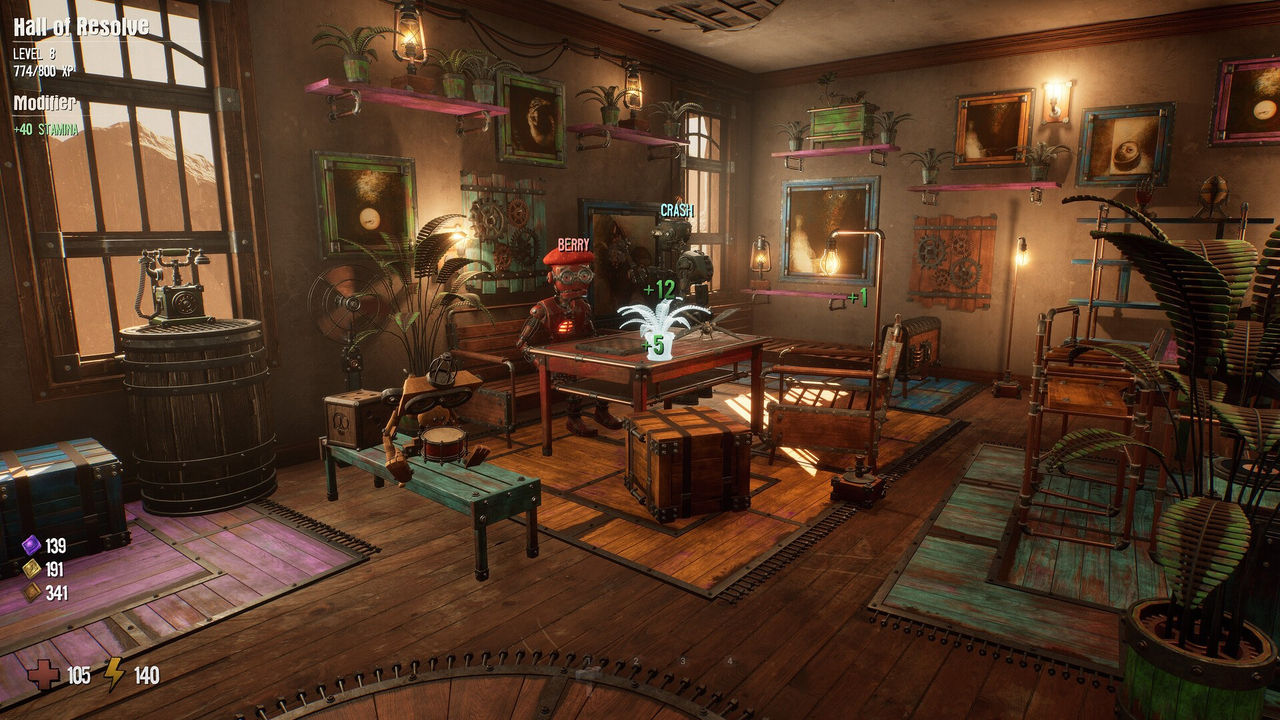
The Outpost is the meta layer, and it is where a beginner's Scrap should actually go. Each room carries a permanent modifier, and the room level is raised by repairing the space and placing structures inside it; furniture on carpets and lit by a light source grants bonus experience, with the documented quirk that lights placed too close together take a penalty. The shop sells the tools and weapons you will carry downstairs, and the general advice from the community guides is to spend on function before decoration: stamina and health first, then inventory capacity, then damage, then cosmetics.
| Upgrade | What it changes | Why a beginner wants it |
|---|---|---|
| Health room | Raises your maximum health | Survives the first mistakes |
| Stamina room | Raises sprint endurance | Escapes Corrupted chases |
| Shop | Unlocks better stock, tier by tier | Weapons and healing items |
| Wardrobe | Lets you reset your condition on the surface | Clears damage and Rot cheaply |
| Elevator | Reduces blank modifier rolls | Fewer wasted descents |
Two habits from the field-tested community lists are worth adopting immediately. First, do not treat the Grinder as optional, because Scrap to Gold is the economy and skipping processing halves your progression pace. Second, extract early and often: a modest run that banks its haul compounds into Outpost power, while a deep run that wipes loses everything carried. When you are ready to go deeper, the walkthrough covers the quest chain in order, the enemies page breaks down each Corrupted type by counter, and the tips page collects the field rules that keep runs alive.
FAQ
What is GRAIN ROT?
GRAIN ROT is a horror co-op extraction builder from Beck & Branch Games, published by Neem Interactive. You play a Living Spark inside fragile wooden vessels, ride a cursed elevator into procedurally shifting ruins, haul loot home, and rebuild the Outpost between runs. Steam lists it under Action, Indie, and Simulation with single-player and online co-op.
When did GRAIN ROT release and what does it cost?
It launched on Steam for Windows on August 7, 2026. The store price is $8.49 during the launch promotion, down from a $9.99 list price, and the game is not in Early Access.
What should I do first in GRAIN ROT?
Follow the Outpost tutorial. Buy a broom from Murch for 25 Gold and clear three dirt piles, then repair a wall with 50 Scraps. Those housekeeping steps unlock the rest of the chain, including the Deep Layers dives, so the quest content is never missable.
How many players can join a GRAIN ROT run?
The unofficial wiki describes 1-4 player online co-op, and community posts in the Steam discussions say the game is designed around four players but does not enforce a hard cap. One player reported a six-person session running for about five hours without issues, so treat anything above four players as unconfirmed.
What happens when my vessel breaks?
Your Living Spark escapes instead of the run ending. You keep playing as the Spark, can still guide the team and interact with doors, chests, and levers, and you can possess another vessel to get a body back. If every player spark is drained, the run ends and carried loot is lost.
More in Game Guides
More game guides pages in GRAIN ROT.
- Grain Rot Tips — Survival, Economy, and Teamwork Rules That Save RunsGuideUpdated 2026-10-04
- Grain Rot Walkthrough — Tutorial Quests to the Second Floor and the AncientsGuideUpdated 2026-10-04
References
- Grain Rot - Ultimate Guide For Beginners (Into Indie Games)
- GRAIN ROT Wiki & Guide — Beginner Help, Enemies, Quests (grainrot.org)
- GRAIN ROT - Ultimate Beginner’s Guide (YouTube)
- GRAIN ROT on Steam
Facts on this page are compiled from the references above. Items marked "to confirm" are single-source and not yet verified.