
Combolands: Roguelike Citybuilder · Game Guides · Guide
Combolands How To Play — First Run, Milestones and Combos
A Combolands how to play guide to the 30-minute run loop: pick two of seven guilds, place building cards, hit score milestones and shop between weeks.
By the New Game Wiki team · Updated 2026-10-04
On this page (9)
- What Combolands Is and How a Run Starts
- The Core Loop: Place a Building, Score, Hit the Milestone
- Guilds, Heirlooms, Potions and the Shop
- Councillors, Ranks and the Road to Better Runs
- What kind of game is Combolands?
- How long does one Combolands run take?
- How many guilds do you pick in a run?
- Do I have to visit the shop between milestones?
- What is the fastest way to improve at Combolands?
Combolands: Roguelike Citybuilder is a single-player roguelike citybuilder and deckbuilder from Crux Games, and it launched on Windows PC via Steam on August 24, 2026 for $7.99. A run is built to last about 30 minutes: you place building cards onto a procedurally generated island, trigger score cascades, and reach each population milestone before the week counter runs out. You choose two of seven guilds before you start, and the official store describes 21 possible guild combinations, so this Combolands how to play guide focuses on the loop that stays the same across all of them.
What Combolands Is and How a Run Starts
Every run opens with a guild select screen and a fresh procedural map. The official Steam page describes the game as a "tiny roguelike citybuilder" where buildings act like cards, and it lists the advertised scale: 120+ buildings, 100+ passive heirlooms, 13+ city councillors and 10 increasingly challenging ranks. You begin with the two starting guilds unlocked and unlock the rest as you play. The separate free demo that existed before launch is no longer offered on the store page, so new players now start directly in the full game.
At the start of a run you are offered a small hand of building cards, with sources describing three choices at a time, and you place one onto the board. Adjacency and range decide whether a placement triggers a neighbour, which is why two players can play the same card in different spots and get very different scores.
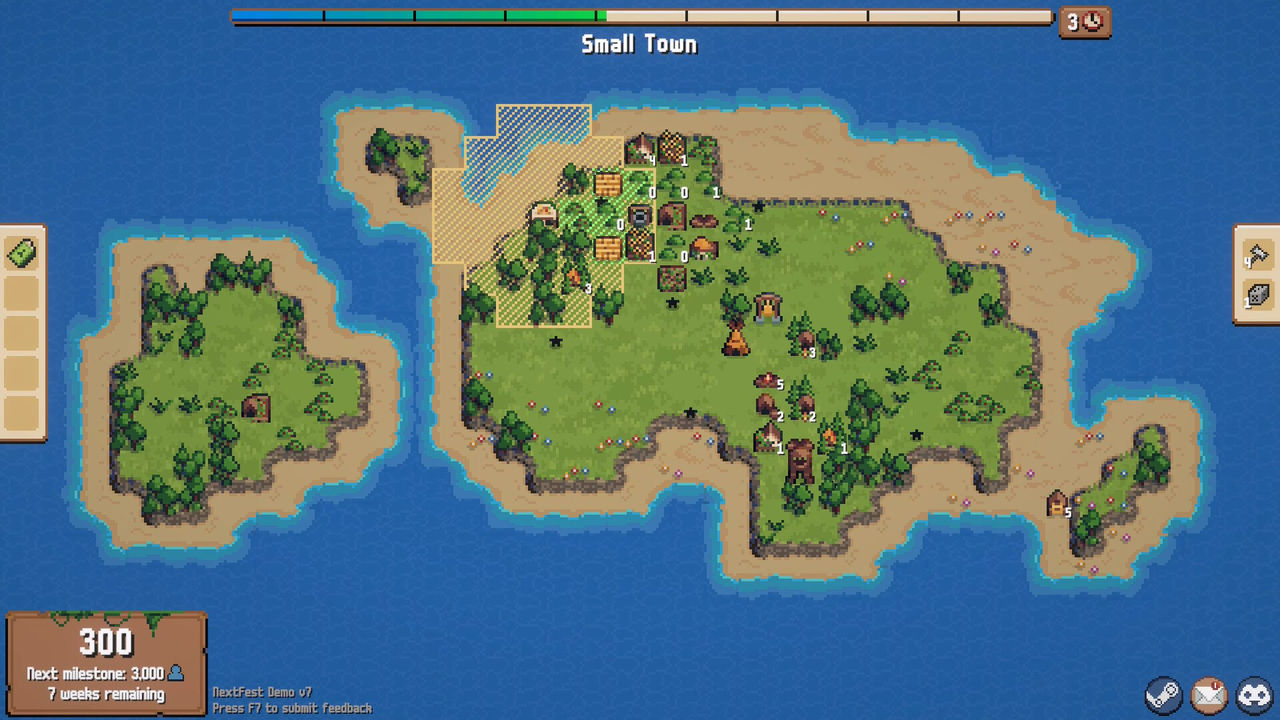
The Core Loop: Place a Building, Score, Hit the Milestone
The loop is simple to state and hard to optimise: place buildings to raise your score, cross the milestone target, then spend the gold you earned before the next milestone begins. Completing a milestone early ends the week immediately and pays a small gold bonus, which is worth taking when you do not need the leftover weeks to set up a scaling engine.
| Run element | What it does |
|---|---|
| Milestone target | The score you must reach to advance; targets rise as the run continues |
| Week counter | A limited number of weeks per milestone; ending early banks an extra gold bonus |
| Guild pick | Two of seven guilds define which building cards can appear |
| Gold | Earned from completed milestones; spent in the shop or on rerolls |
Weekly hazards appear as difficulty rises, so a run is not purely a points puzzle. Community reports also note that a single building can trigger only a limited number of times per week, which makes trigger frequency a real constraint when you plan a long chain (to confirm).
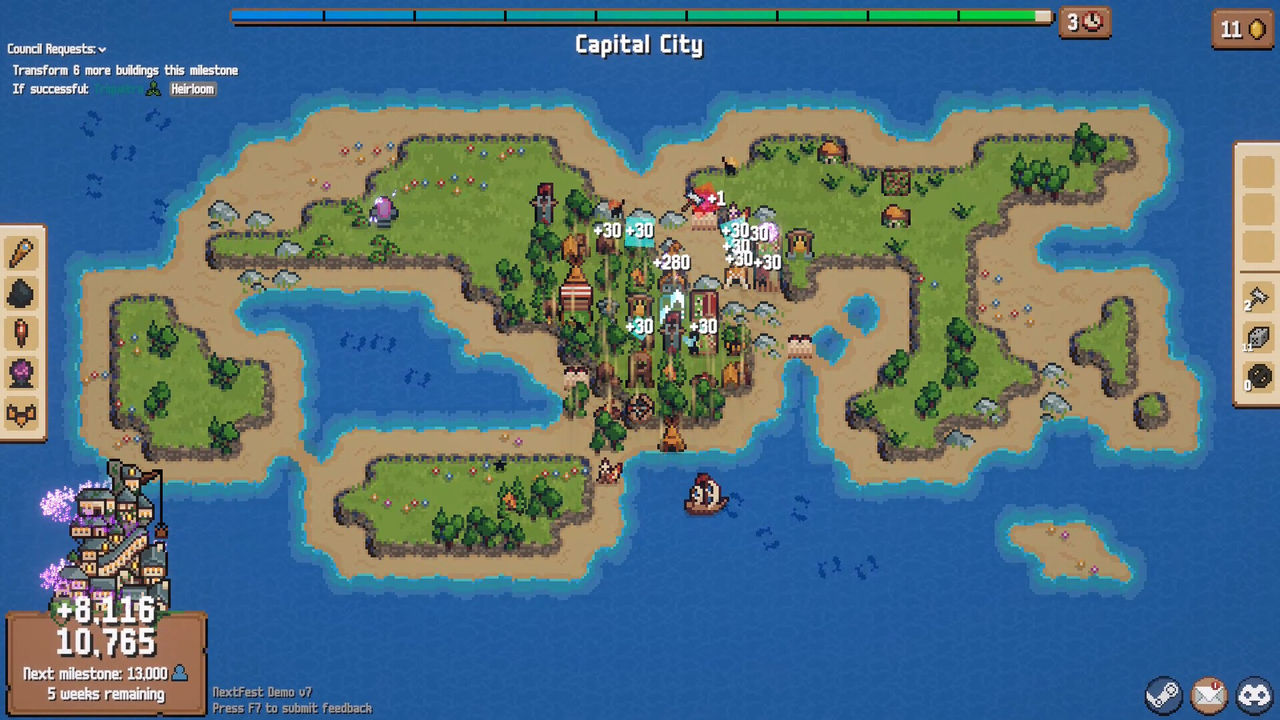
Guilds, Heirlooms, Potions and the Shop
Between milestones you may visit the shop, and skipping it is a legitimate choice because the game rewards passing. The shop stock is random, so the value of a visit depends on whether an offer fits the run you already have.
| Shop category | What it changes |
|---|---|
| Heirloom | A passive run modifier; the store advertises more than 100 |
| Potion | Temporary map and tile manipulation, often to hit a target score |
| Blueprint | A copy of a target building, useful for repeating a key card |
| Building upgrade | Alters how a placed building behaves for the rest of the run |
- Heirlooms are passive modifiers; the store advertises 100+, and the wiki notes that only a few specific interactions are publicly confirmed so far (to confirm).
- Potions let you repaint or otherwise change tiles, usually for a temporary bonus.
- Blueprints and upgrades change how an existing building behaves rather than adding a new one.
- Rerolls let you shop again for a better offer when your gold allows it.
Councillors, Ranks and the Road to Better Runs
Beyond the shop, you recruit councillors through milestone requests and climb ten ranks, and the game ships with 21 Steam achievements. Exact rank names, rewards and unlock thresholds are not set out in a clean official list, so treat specific rank tables from third parties as to confirm. The reliable beginner habits are to build around one strong scoring pair instead of many weak ones, to keep gold for the offers that unlock more tools, and to end a milestone early only when the bonus is worth more than the setup time you give up.
- Start with placements that trigger every few weeks rather than one-time effects.
- Watch range: a Town Bell or similar range effect can bring a whole cluster into one chain.
- Read the Compendium added in update v1.0.5 for building and heirloom details while a run is live.
- Compare your results across the 21 guild pairings before repeating the same build.
FAQ
What kind of game is Combolands?
It is a single-player roguelike citybuilder and deckbuilder. The official Steam page calls it a tiny roguelike citybuilder where you place building cards on a procedurally generated island, and the run is designed around short 30-minute sessions with 21 possible guild combinations.
How long does one Combolands run take?
The official store describes runs as satisfying 30-minute bursts. A run is divided into population milestones with a limited week counter, so you can finish a milestone early once the score target is met, and the whole run is built to be finished in one sitting.
How many guilds do you pick in a run?
You pick two of seven guilds. The official page lists a pantheon of seven guilds with unique buildings and playstyles, and the wiki calculates 21 distinct two-guild pairings from those picks.
Do I have to visit the shop between milestones?
No. Skipping the shop is a valid choice because the game offers a reward for passing on it, and that reward can be coins or a larger item such as a random heirloom. The shop stock is random, so buying is only worth it when an offer fits the build you are already running.
What is the fastest way to improve at Combolands?
Build around one strong scoring pair instead of many weak placements. A trigger that fires every few weeks is usually worth more than a large one-time effect, range effects such as the Town Bell can pull more tiles into a chain, and the in-game Compendium added in update v1.0.5 lets you read building and heirloom details during a run.
More in Game Guides
More game guides pages in Combolands: Roguelike Citybuilder.
- Combolands Tips — Milestones, Shopping and Placement HabitsGuideUpdated 2026-10-04
References
- Combolands: Roguelike Citybuilder on Steam
- Combolands Wiki - Guilds, Buildings & Combo Guide
- Building a fantasy society in Combolands – My Review
- Combolands is a Great New Roguelike (YouTube)
- Combolands: Roguelike Citybuilder General Discussions
Facts on this page are compiled from the references above. Items marked "to confirm" are single-source and not yet verified.