
Backrooms: Code Yellow · Game Guides · Guide
Backrooms Code Yellow Guide — Tasks, Funding and Survival Basics
A Backrooms Code Yellow guide to the co-op loop, the documented task types, how funding works, and what the Early Access build still leaves unconfirmed.
By the New Game Wiki team · Updated 2026-10-04
On this page (11)
- What Backrooms: Code Yellow Is
- The Core Loop: Explore, Document, Get Paid
- Confirmed Task Types in the Early Access Build
- What the Launch Patches Changed
- Where the Official Facts Stop
- Where to Go Next
- Is there a story to finish in Backrooms: Code Yellow?
- What tasks can you actually do in Backrooms: Code Yellow?
- How does funding work in Backrooms: Code Yellow?
- Does Backrooms: Code Yellow have a best route or a guaranteed safe path?
- How many guides has the Steam community published for Backrooms: Code Yellow?
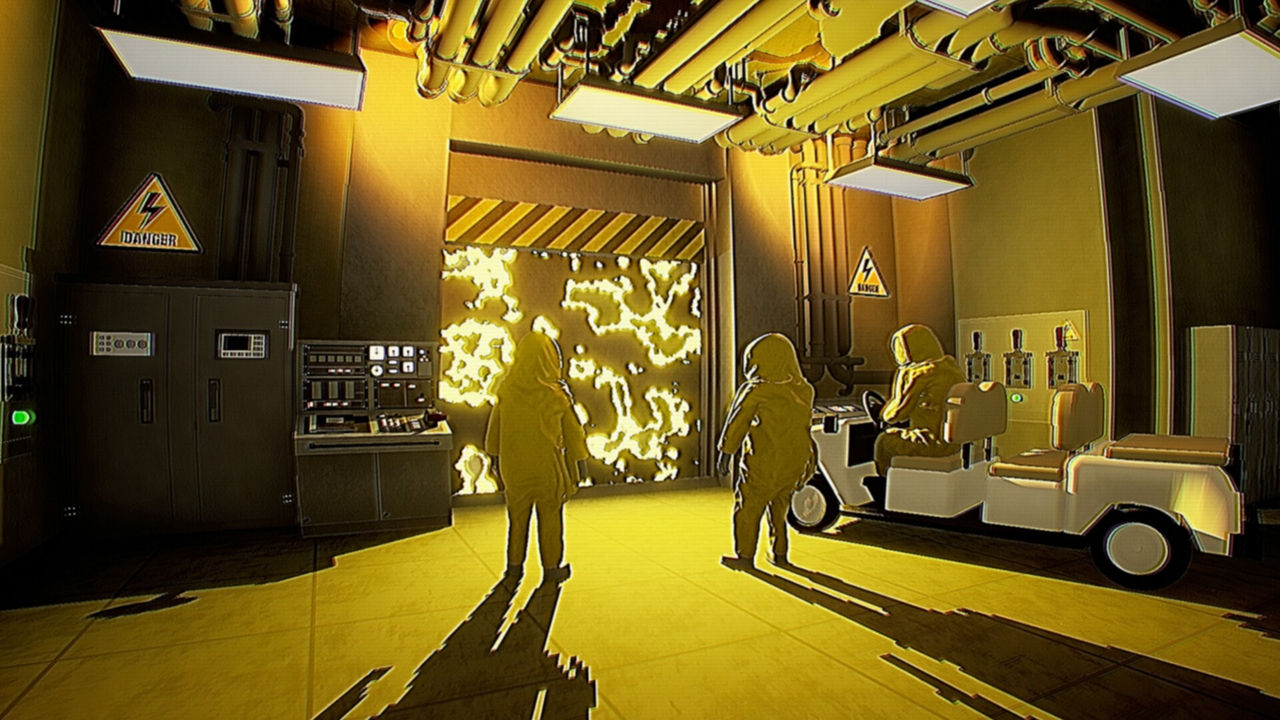
A Backrooms Code Yellow guide is, at heart, a guide to a job. GameMechanic's co-op horror game launched into Steam Early Access on 25 September 2026, and its own store description frames the whole thing as work: explore an infinitely massive complex, complete tasks, collect data, and return so the crew earns funding for the next day. There is no linear story to finish and no authored ending to spoil, so the useful guidance is about the systems you touch, the task types the community has documented, and the parts of the build the developer has not explained yet. Everything below separates official Steam facts from community-reported detail, and anything with a single source is flagged rather than stated as settled.
What Backrooms: Code Yellow Is
The Steam store page calls it an online 1-6 player co-op game about investigating and collecting data in the infinitely massive Backrooms with your fellow employees, under the tagline "Explore. Do your job. Return alive." It is developed and published by GameMechanic, runs on Windows through Steam, and is sold as an Early Access title. Steam tags it Action, Adventure, Indie, Early Access, and adds psychological horror, online co-op, first-person, 3D, exploration, PvE and procedural generation in the community tag list. The official about text expands the pitch: you delve into an infinitely massive, unpredictable realm of endless rooms, hallways and distorted architecture, work together to complete tasks and collect data, and are warned that you may not be alone.
| Official fact | Value |
|---|---|
| Developer / publisher | GameMechanic |
| Release | 25 September 2026 (Early Access) |
| Platforms | Windows via Steam only |
| Players | 1-6 online co-op, single-player supported |
| Price | $7.99 with a 20% introductory discount off $9.99 |
The Core Loop: Explore, Document, Get Paid
The loop repeats in days rather than in chapters. Your squad enters the complex, splits work across the current task list, documents what it finds, and extracts before the crew is lost, then the returned data pays for the next day's dive. Because generation is fresh each run, the practical skill is not memorising a layout but managing time, light and distance while keeping the group together.
| Stage | What happens | Source |
|---|---|---|
| Load in | The squad spawns with a fresh task list for the day | Steam description |
| Split work | Players fan out to cover multiple objectives at once | Steam description |
| Document | You record what you find and collect data as evidence | Steam description |
| Extract | The crew returns alive with the day's data | Steam tagline |
| Fund | Returned work pays for the next day's dive | Steam about text |
A few habits follow from that structure:
- Treat the task list as a route plan, not a checklist to clear in order, since distance costs time you cannot get back.
- Keep at least one pair together rather than fully splitting the squad, because a solo player has no one to call for help.
- Bank progress by returning, not by pushing one more room deeper, because funding depends on what you bring back.
- Read the architecture as you move, since odd geometry tends to be where the day's objectives are placed.
Confirmed Task Types in the Early Access Build
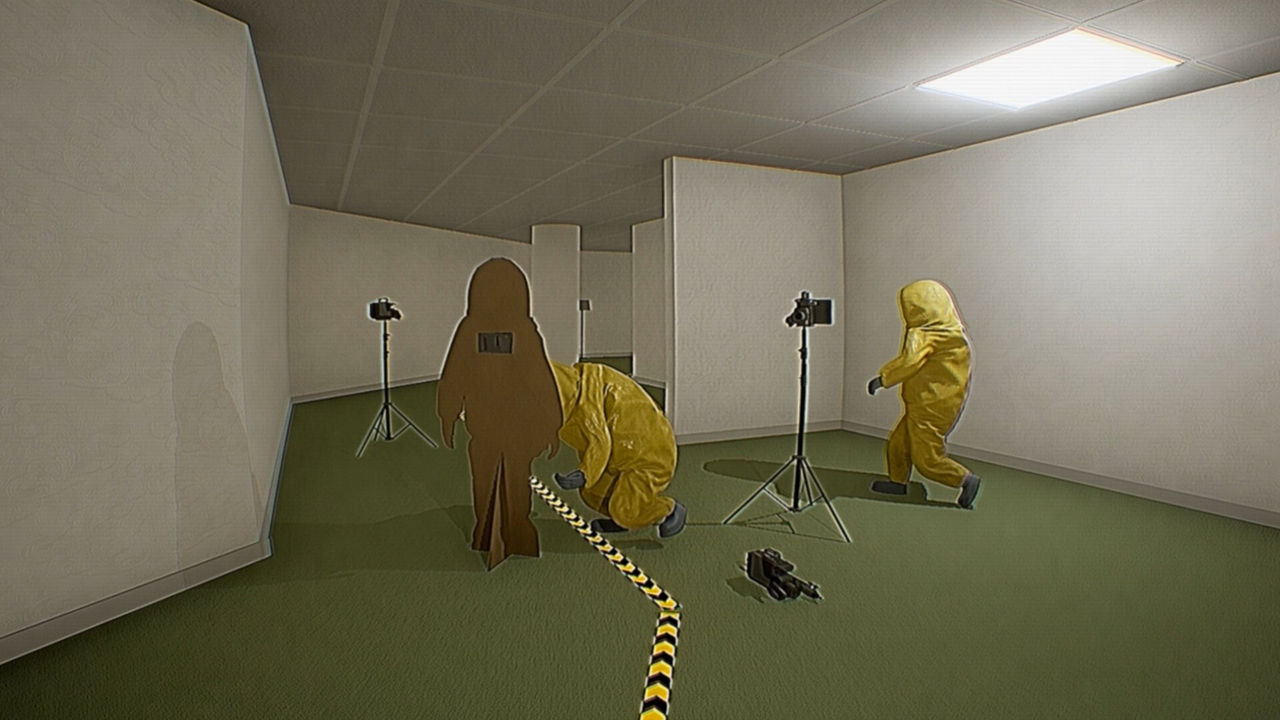
The official listing confirms only the broad shape of the work: complete tasks, collect data, return, get funded. The specific job types come from the community fan guide, which lists them as checked against the launch build and labels its pages when something is unconfirmed. Until GameMechanic publishes a task list, treat this table as the best available summary rather than a developer-confirmed spec.
| Task type | What it involves | Confidence |
|---|---|---|
| Recording creatures | Capture evidence of what is down there | Community-documented |
| Photographing architecture | Document unusual or distorted structures | Community-documented |
| Recovering lost employees | Find and bring back missing staff | Community-documented |
| Installing remote cameras | Place cameras to extend coverage | Community-documented |
| Collecting strange objects | Recover items for the lab | Community-documented |
The same fan guide describes the complex as seed-style procedural generation mixed with hand-tuned points of interest, and says that travelling far enough takes you past the yellow rooms into differently coloured, differently furnished zones that stay connected with no loading screens. That is a single-source claim, so mark it to confirm until the developer states it directly.
What the Launch Patches Changed
The Steam community hub shows three rapid post-launch patches, which tells you the Early Access build is moving fast and that any guide written on launch day already drifts. Read the patch list before assuming a behaviour is a bug.
| Patch | Date | Headline changes |
|---|---|---|
| Patch #16 | 28 September 2026 | Lost Employee pathing stability, disabled unintended punching while grabbed, fixed a stuck camera overlay on the ESC menu |
| Patch #17 | 30 September 2026 | Expanded settings menu, added push to talk, FPS limit and mouse sensitivity options |
| Patch #18 | 2 October 2026 | Fixed main menu settings leaving the player with no UI |
Patch #16 is the most informative for players: it confirms that a lost-employee rescue behaviour exists, and it removes punching while you are being grabbed, which is worth knowing before you build a plan around fighting back. Patch #17 added push to talk, which matters in a co-op game built around voice coordination.
Where the Official Facts Stop
Several things players search for are simply not documented yet, and inventing them would be worse than leaving the gap visible:
- No official task list, funding table, or reward breakdown has been published.
- No official map or zone list exists, and the game's own description of endless generated rooms argues against a fixed one.
- No achievements are listed on the Steam store page, so there is no completion checklist to work from.
- No official wiki is linked from the store page; the community fan guide is explicitly unofficial.
- No console version, and therefore no controller-generation or cross-platform advice, has been announced.
- Review counts and sentiment are moving week to week in Early Access, so any number here is a snapshot rather than a rating.
Where to Go Next
- Start with the Backrooms Code Yellow how to play page for the session setup, task flow and first-dive checklist.
- Check the Backrooms Code Yellow wiki page for the official-facts-only reference and the current state of community guides.
- Confirm the current cost on the Backrooms Code Yellow price page before buying into Early Access.
FAQ
Is there a story to finish in Backrooms: Code Yellow?
The developer's own framing, as reported by the community fan guide, is open-ended exploration and research rather than a linear story. The Steam description matches that: explore, complete tasks, collect data, and return to earn funding for the next day's work rather than to reach a scripted ending.
What tasks can you actually do in Backrooms: Code Yellow?
The fan guide lists recording creatures, photographing unusual architecture, recovering lost employees, installing remote cameras, and collecting strange objects for the lab as confirmed task types. Only the general loop of completing tasks and collecting data is confirmed on the official Steam listing, so treat the specific list as community-documented rather than developer-published.
How does funding work in Backrooms: Code Yellow?
The Steam page states that you complete tasks, collect data, and return to earn funding for the next day's work. That suggests a day-by-day cycle where returned data pays for the following dive, but no official breakdown of funding amounts or costs has been published, so exact numbers are not documented yet.
Does Backrooms: Code Yellow have a best route or a guaranteed safe path?
No authored route exists to memorise. The Steam page describes an infinitely massive, unpredictable realm of endless rooms and distorted architecture, and the fan guide says generation is seed-style with hand-tuned points of interest. Routes are improvised per run, so advice about direction and landmarks is more useful than a fixed map.
How many guides has the Steam community published for Backrooms: Code Yellow?
The Steam guides hub listed 10 player-written guides as of 4 October 2026, sorted into categories such as Gameplay Basics, Walkthroughs, Characters, Weapons and Achievements. Several are marked in progress, so coverage of late-game systems is still thin.
More in Game Guides
More game guides pages in Backrooms: Code Yellow.
- Backrooms Code Yellow Wiki — Official Facts and Community GuidesIndexUpdated 2026-10-04
References
- Backrooms: Code Yellow on Steam
- Backrooms: Code Yellow — Steam Community Hub
- Backrooms: Code Yellow — Steam Guides
- Backrooms: Code Yellow on SteamDB
- Backrooms: Code Yellow unofficial fan guide
Facts on this page are compiled from the references above. Items marked "to confirm" are single-source and not yet verified.