
Alchemy Factory · Economy · Guide
Alchemy Factory Best Items to Sell — Shop, Wholesale and Commissions
Alchemy Factory best items to sell: potions, jewellery and relics for the shelves, why wholesale beats the storefront, and how to fix a shop nobody enters.
By the New Game Wiki team · Updated 2026-10-04
On this page (8)
Alchemy Factory expects you to sell potions, jewellery and relics, but the community consensus is that wholesale — not the shop counter — is where the money is for most of a run. The official description sets out the shopkeeping loop of stocking shelves, serving customers and completing commissions, while the community guide argues that wholesaling far outstrips the storefront and recommends saturating it before anything else.
How Selling Works
There are three revenue channels: the storefront, wholesale contracts, and commissions or quests. Sales Ability scales shop profit, Negotiation Skill scales purchase contracts, and Customer Management scales quest rewards, which is the upgrade tree telling you the three channels are separate systems rather than one. The 1.0 release also rebuilt the Reputation System, and the guide notes that customer reputation drives foot traffic — the storefront's real constraint.
| Channel | Scaled by | Community verdict |
|---|---|---|
| Storefront | Sales Ability | Small share, needs traffic and reputation |
| Wholesale | Negotiation Skill | Best passive income through the midgame |
| Commissions and quests | Customer Management | Good per unit, small share, not worth upgrade points |
What to Sell
The official description names potions, jewellery and relics, and the community route adds specific high-value lines. The mid-late game thread points at cauldron outputs — Coke, Clay and Salt — as the base for Growth Potions, Black Powder and Gloom Shrooms, all produced from plants, fertilizer and fuel. Bandages are the guide's recommended wholesale staple, because the bandage contract comes early and scales.
| Item | Why players sell it |
|---|---|
| Potions | Named in the official shop description; steady demand |
| Jewellery | Named in the official shop description |
| Relics | Named in the official shop description; unlock from level 5 |
| Bandages | Guide's wholesale staple; early contract |
| Gold coins | Endgame cauldron chain output |
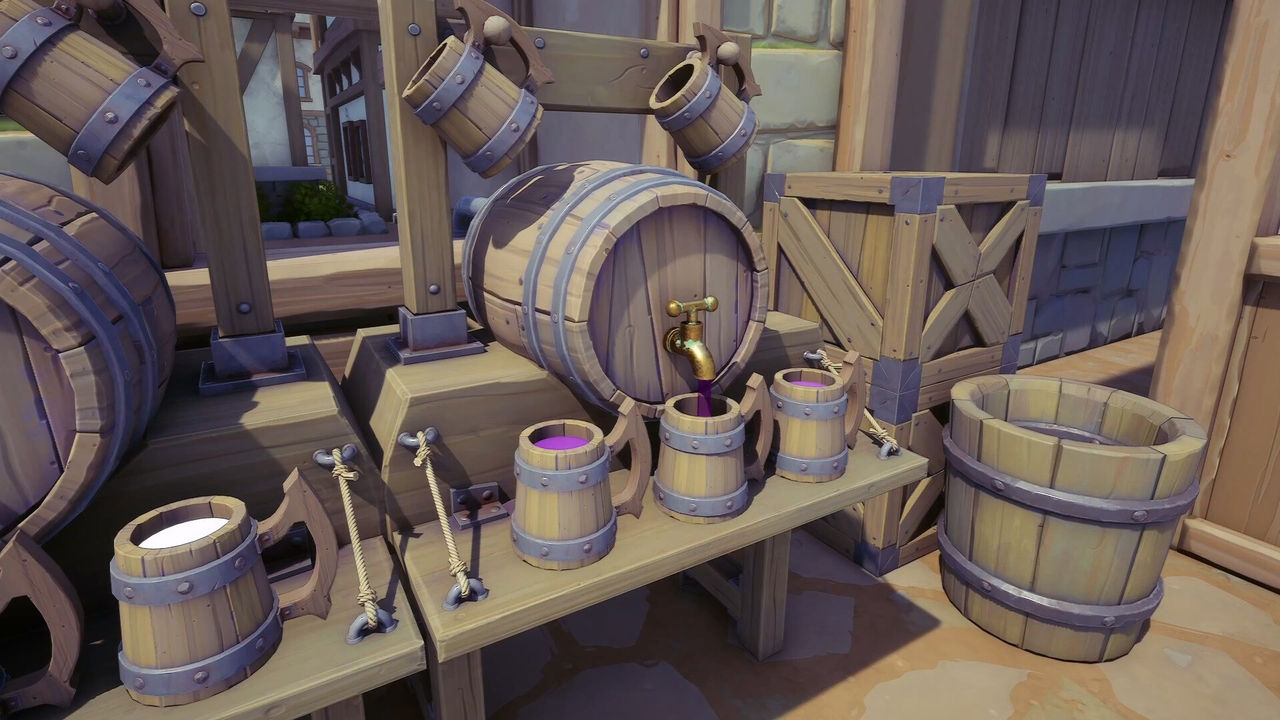
Fixing a shop customers walk past.
The most common shopkeeping problem has a mundane cause. In the thread titled "How to actually sell things", a player with a stocked table, an Open sign and browsers outside but nobody entering is told that the yellow exclamation mark shown on the shelves means customers cannot get to them. That single diagnostic resolves most empty-shop reports before you touch prices or reputation.
- Check every shelf for the yellow exclamation warning.
- Clear a path so customers can reach each shelf and the till.
- Make sure a cash register is available so checkout can be automated.
- Watch reputation, because the guide ties customer traffic to it.
- Do not over-invest in the storefront before wholesale is saturated.
Wholesale vs Storefront
The guide's position is blunt: wholesaling is easier passive income than managing customer happiness or quests, and the midgame should be spent saturating bandage wholesale rather than optimising the shop. It does concede that the storefront and quests have better return on investment per unit, but argues their market share is a fraction of what a few points in negotiation unlocks — which is why it advises against spending upgrade points on them.
- Saturate wholesale before optimising the shop.
- Put points in Negotiation to raise purchase contract amounts.
- Re-integrate the shop and quests only once wholesale is capped.
- Chase the gold-dust chain rather than customer foot traffic for top-end income.
The exact shelf capacity per furniture item, the reputation thresholds that change foot traffic, and the current wholesale caps after 1.0 are not documented yet. For the cauldron recipes behind the high-value goods, see cauldron recipes, and for what to prioritise, see the guide.
FAQ
What should I sell in Alchemy Factory?
The official Steam description names potions, jewellery and relics as the goods you stock your shelves with, and that you serve customers and complete commissions with them. The community guide's emphasis is narrower: automate and saturate wholesale first, and treat the storefront and quests as secondary revenue.
Why do customers not come into my shop?
The most likely cause is reachability. In the Steam thread 'How to actually sell things', a player with a stocked table and an Open sign gets the answer that the yellow exclamation mark on the shelves means customers cannot get to them. If your shelves show that marker, rearranging access comes before anything else.
Is wholesale better than selling to customers?
The community guide says yes for most of the game. It argues that the profit from wholesaling far outstrips the storefront and provides easier passive income than managing customer happiness or quests, and recommends focusing strictly on wholesaling through the midgame rather than splitting attention.
What is the best late-game item to sell?
Gold coins made from the cauldron chain. The guide's endgame loop produces Pure Gold Dust from Adamant plus Resonant Catalyst plus Gold Dust, pushes that through Crucibles into a Gold Ingot, and then processes the ingot into a gold coin — a route it describes as the real way to make money without managing reputation or traffic.
Do commissions and quests pay well?
The guide rates storefront and quest revenue as better return on investment per unit than wholesale, but with a fraction of the market share, which is why it advises not spending upgrade points on them. Treat them as a supplement to wholesale rather than the main line.
References
- How to actually sell things :: Alchemy Factory General Discussions
- Tips for mid-late game? :: Alchemy Factory General Discussions
- Guide :: Becoming the ultimate alchemist
- Alchemy Factory on Steam
Facts on this page are compiled from the references above. Items marked "to confirm" are single-source and not yet verified.